
As healthcare policy shifts and new federal provisions reshape the landscape of public health insurance, comprehensive tracking of Medicaid and the Children’s Health Insurance Program (CHIP) remains vital for understanding coverage trends across the United States. Recent reports and ongoing program tracking offer critical insights into historical enrollment shifts, current population figures, and the profound impacts left behind by the post-pandemic "unwinding" period.
The data, compiled through monthly reporting metrics from the Centers for Medicare & Medicaid Services (CMS) as part of the Performance Indicator Project, captures enrollment patterns for both children and adults. While these figures provide a foundational view of national health coverage trends, experts note that they primarily capture full-benefit enrollees. Individuals receiving limited benefits, such as those strictly enrolled for family planning services, are excluded from these counts. Consequently, these metrics do not represent an exhaustive tally of every resident interacting with Medicaid, nor do they track granular changes across specific eligibility pathways, such as adults qualifying under the ACA Medicaid expansion group.
Legislative Shifts and Future Projections
The broader regulatory landscape for public health insurance is undergoing substantial transformation. The federal budget reconciliation legislation enacted in 2025 introduced major structural modifications to Medicaid guidelines. Notably, the legislation mandates that adults in the expansion group and participants in certain Section 1115 waiver programs must satisfy rigorous work and reporting requirements beginning in January 2027.

Health policy analysts project that these new administrative mandates will result in a gradual reduction in overall Medicaid enrollment over the subsequent decade compared to baseline trajectories under previous law. These anticipated shifts underscore the importance of continuous monitoring, with specialized trackers following how individual states implement the 2025 reconciliation rules and how these changes subsequently influence enrollment stability.
Historical and Current Enrollment Trends
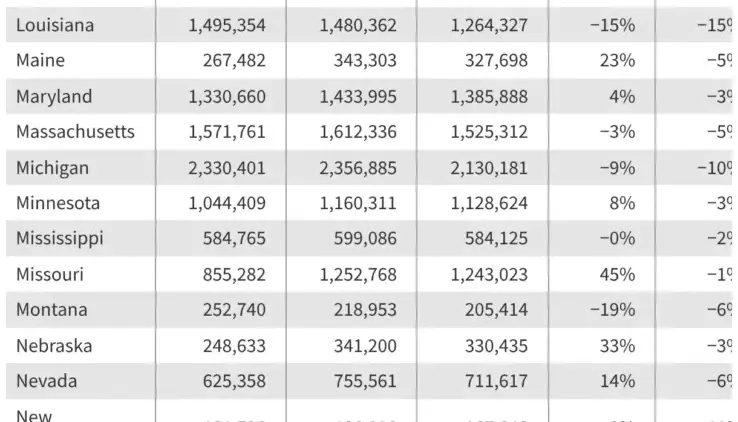
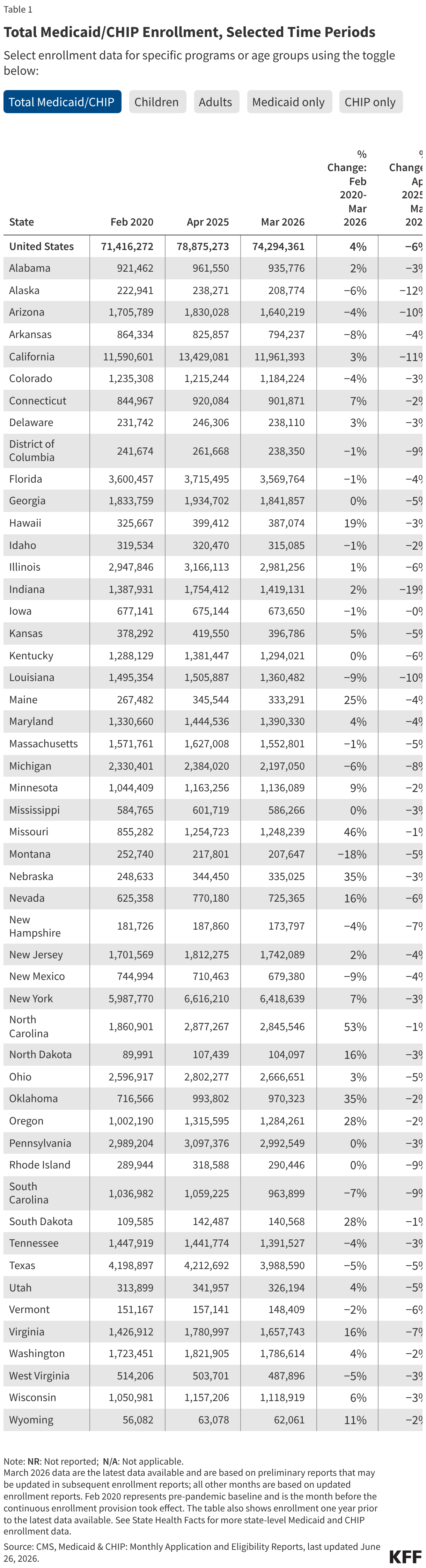
To understand the trajectory of public health programs, analysts examine timelines stretching back to the onset of the COVID-19 pandemic in early 2020. February 2020 serves as a critical pre-pandemic baseline, marking the period immediately preceding the implementation of the continuous enrollment provision that temporarily paused disenrollments nationwide.
Current datasets extending through June 2026 provide preliminary insights into how post-unwinding populations have stabilized. According to CMS reporting highlights, national totals incorporate data across multiple categories, tracking total combined Medicaid and CHIP numbers alongside segmented totals for children, adults, standalone Medicaid programs, and separate CHIP initiatives. Because complete child and adult data remain unavailable for certain months, national totals consistently exclude Arizona to maintain statistical integrity.
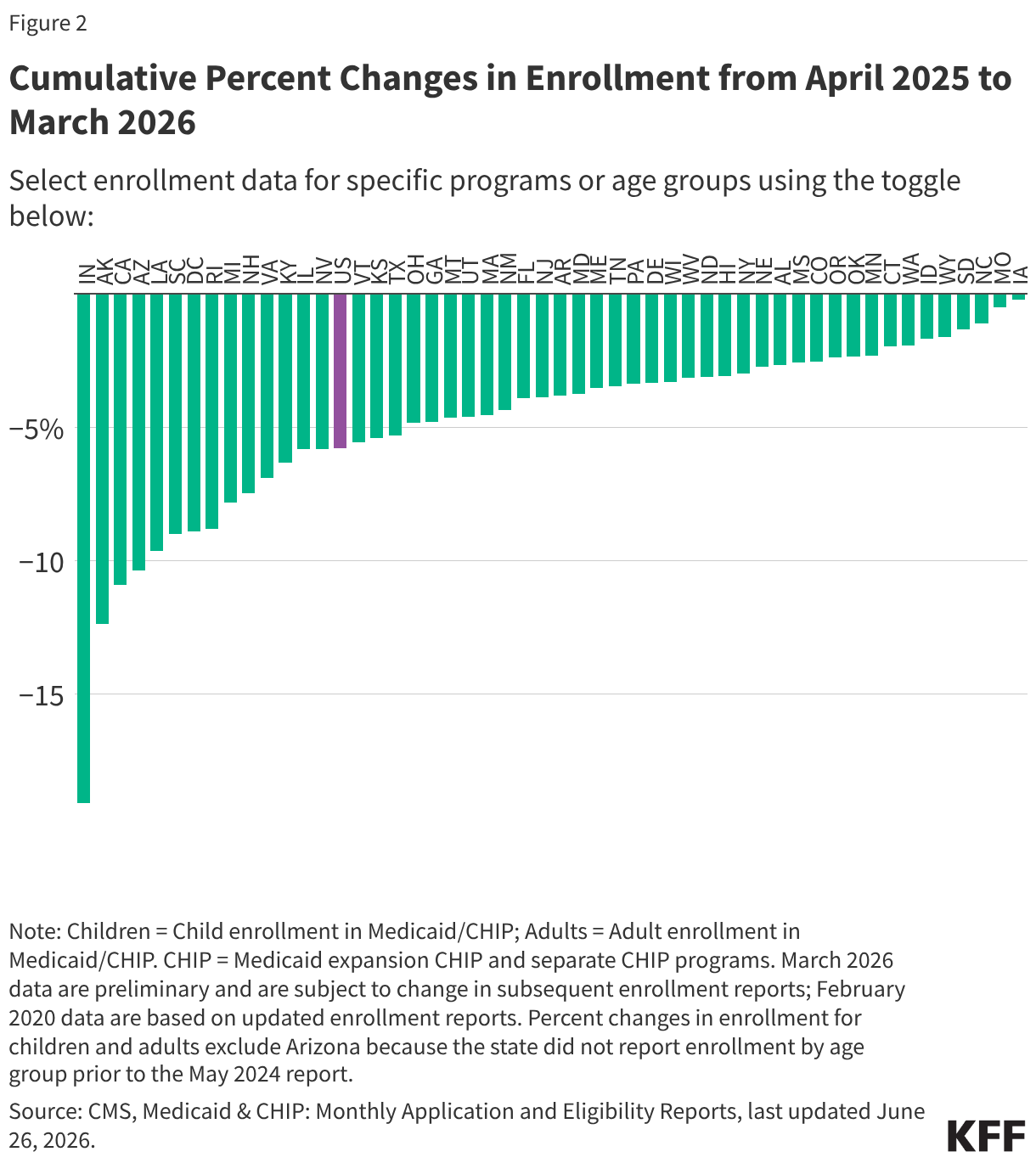
Monthly reporting updates continue to refine these figures. While preliminary reports offer an immediate window into ongoing health coverage metrics, subsequent updates capture retroactive adjustments from state agencies. State Health Facts platforms provide deeper localization for researchers seeking granular breakdowns by state.
Archival Insights: The Medicaid Unwinding Period
While current data highlights ongoing enrollment patterns, a massive chapter in public health administration recently concluded with the completion of the nationwide Medicaid unwinding. Following the expiration of the continuous enrollment requirement, states resumed routine eligibility renewals and redeterminations, initiating a multi-month operational challenge to verify the eligibility of tens of millions of enrollees.
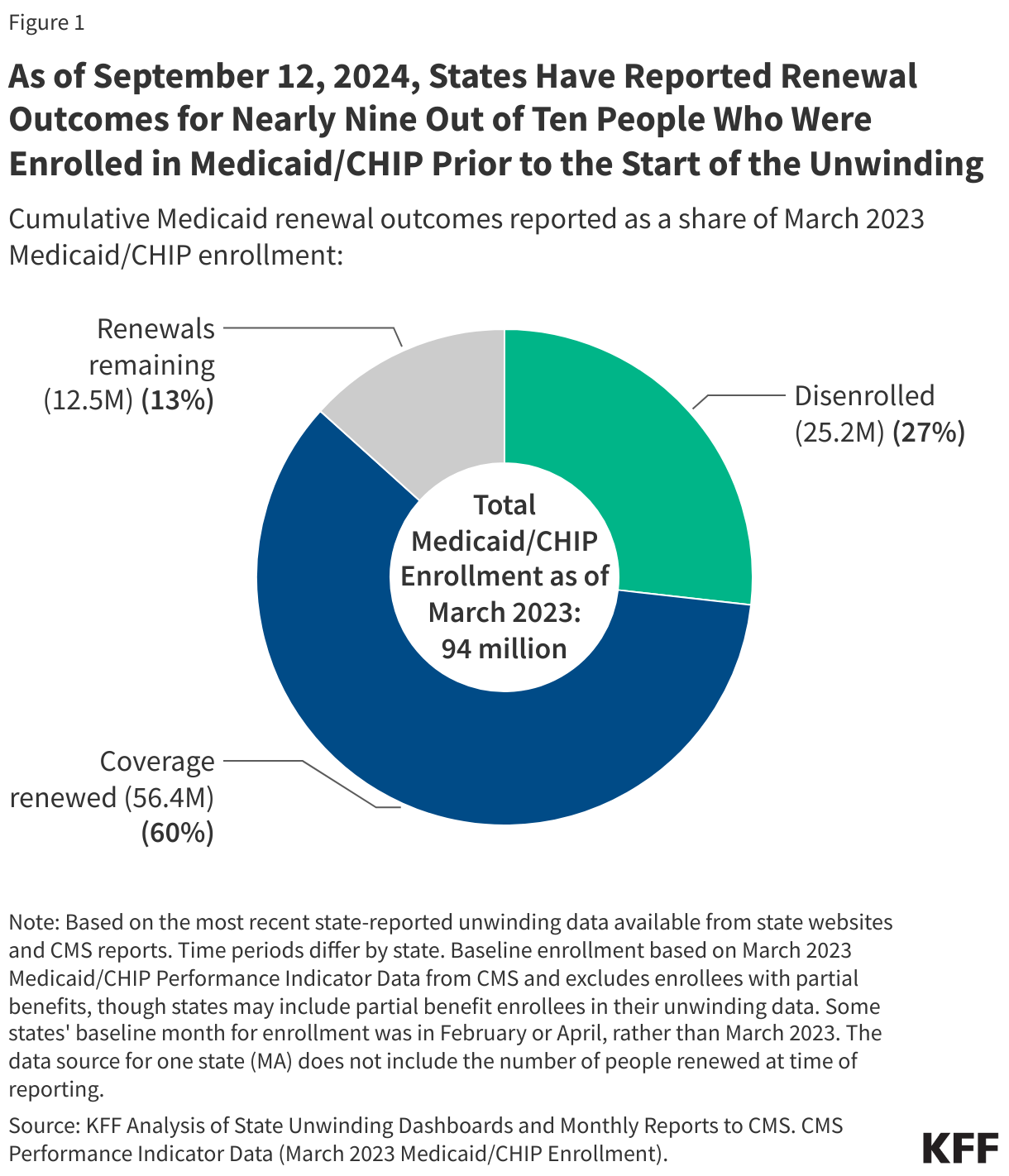
Archived data finalized in late 2024 offers a definitive look at the scope of the unwinding process. By September 12, 2024, states had successfully reported renewal outcomes for nearly nine out of ten individuals who were enrolled in Medicaid or CHIP immediately prior to the start of the unwinding period. This massive administrative undertaking resulted in millions of coverage renewals alongside unprecedented volumes of disenrollments.
Cumulative data compiled across reporting states revealed that at least 25,198,000 Medicaid enrollees were disenrolled from the program, while 56,378,000 successfully had their coverage renewed. However, the operational execution of these renewals varied drastically from state to state. Disenrollment rates among completed redeterminations showed wide divergence across the country, stretching from a high of 57 percent in Montana down to 12 percent in North Carolina.
Procedural Terminations and Renewal Mechanisms
A central finding of the unwinding period involved the high prevalence of procedural disenrollments—cases where individuals lost coverage not because they were formally determined ineligible, but because they failed to complete the administrative paperwork required for renewal.
Analyses of state-reported data demonstrated that among all individuals who were disenrolled, approximately 69 percent were terminated for procedural reasons. When evaluated as a share of all completed renewals, procedural terminations accounted for roughly 21 percent of outcomes. Furthermore, when factoring in all renewals due—including cases that remained pending—procedural disenrollments accounted for about 20 percent of the total pool.
These procedural losses highlighted persistent communication and administrative hurdles, such as outdated mailing addresses or difficulties navigating state renewal portals. In response, many states implemented targeted mitigation strategies, though the sheer volume of paperwork overwhelmed administrative systems in numerous jurisdictions.
Conversely, millions of beneficiaries retained their health coverage through automated processes. Overall, approximately 61 percent of people who successfully retained their Medicaid coverage during the unwinding were renewed automatically through "ex parte" processes, where state agencies utilized existing electronic data sources, such as wage databases, to verify ongoing eligibility without requiring action from the enrollee.
Federal Versus State Data Reporting
Discrepancies frequently emerged between cumulative unwinding metrics published directly by CMS and the data tracked independently by state health agencies. State-level dashboards and monthly reports often captured more timely or comprehensive information, particularly when accounting for the resolution of pending cases three months after initial reporting periods.
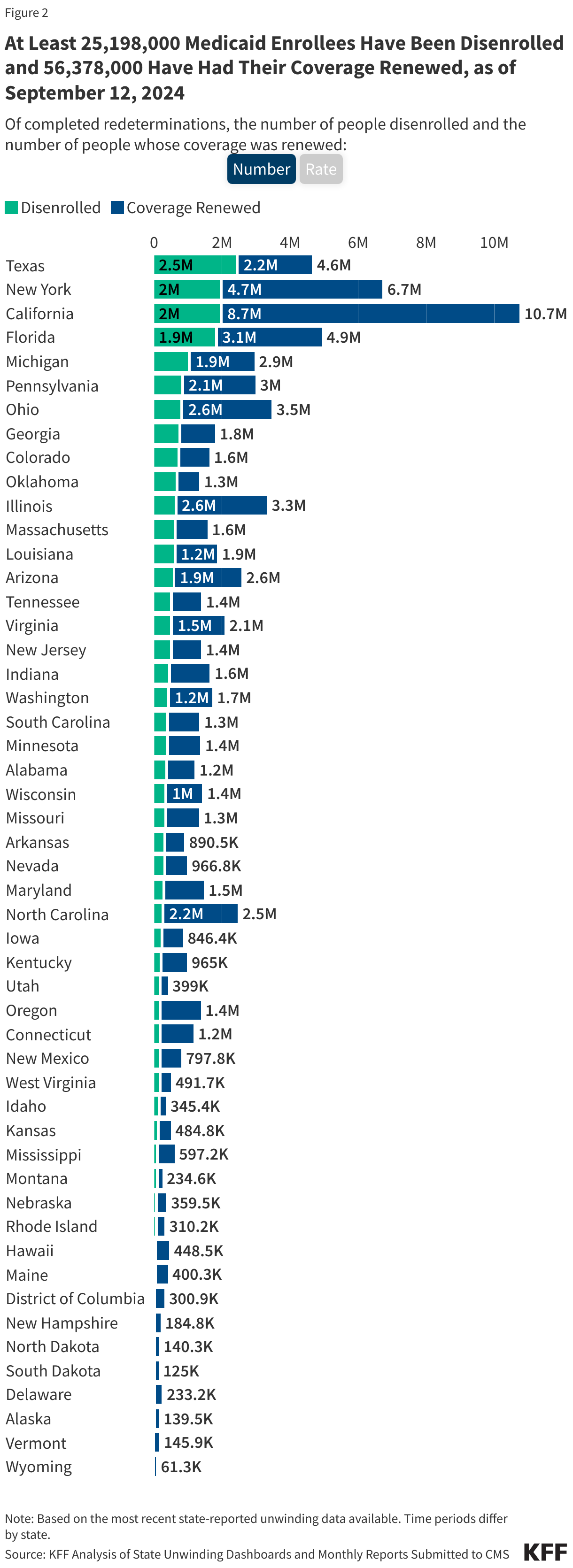
Federal data reported by CMS often carried a multi-month reporting lag, and certain states utilized case-level rather than individual-level tracking for specific periods. Additionally, unique state-level factors—such as delayed system modifications requiring the simultaneous initiation of two months’ worth of renewals, or localized pauses on procedural terminations—influenced the final metrics.
Despite these reporting variances, the combined repository of state and federal data provides an unprecedented historical record of public health administration during a period of massive transition. Stakeholders and researchers seeking further clarification or technical details regarding the national enrollment trackers can direct inquiries to program administrators at [email protected].



