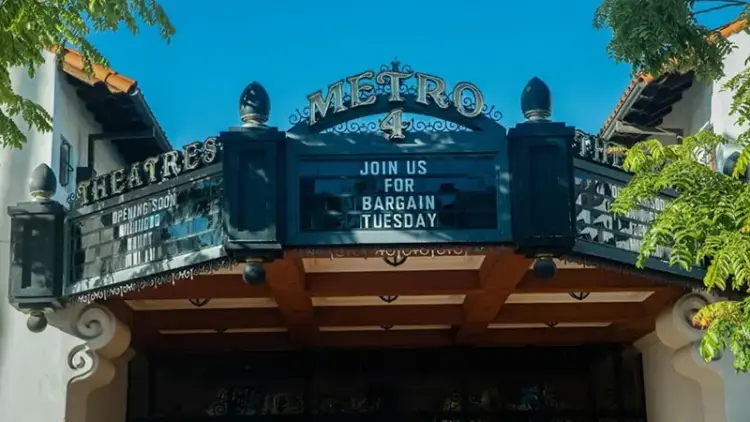
"Want to go see a movie today?"
For millions of people living with hearing loss, a simple trip to the local cinema is rarely a straightforward decision. Instead of anticipating an afternoon of cinematic escapism, moviegoers with hearing impairments are frequently met with a familiar wave of uncertainty. Will the theater have closed-captioning devices available at the box office? When you finally secure one, will it actually be charged, or will it malfunction halfway through the main feature? Will the awkward, heavy equipment slide out of place, detracting entirely from the film? For far too long, the answer to these questions has been a frustratingly frequent no, turning what should be a shared cultural pastime into an exercise in logistical anxiety.
That pervasive uncertainty is precisely what galvanized a coalition of accessibility advocates across Virginia—including dedicated members of the Hearing Loss Association of America (HLAA)—to push for a better, more equitable solution. Their tireless advocacy ultimately culminated in the passage of House Bill 602 (HB 602), a transformative piece of legislation that establishes mandatory open-captioned movie screening requirements throughout the commonwealth.
Since taking effect on July 1, 2026, the law requires movie theater chains and independent operations with five or more locations across Virginia to offer regular open-captioned showings for widely released films. By embedding dialogue and critical sound cues directly onto the main movie screen for all to see, the legislation ensures that more individuals can seamlessly share the communal moviegoing experience with their families and friends, completely free of the barriers imposed by specialized, individual equipment.
For advocates like Claire Fornsel, co-vice president of the HLAA Virginia Beach Chapter, the legislation represents a deeply personal victory.
"My husband Ken has hearing loss," Fornsel explains. "In the past, he would go along to movies he couldn’t hear, just because he loves me. Now, with the passage of the Virginia movie theater open captioning legislation, we can enjoy the entertainment together."
Unlike closed-captioning devices that rely on personal hardware prone to loss, breakage, or general discomfort, open captions display text visibly for the entire audience. This universal approach eliminates the friction of technical troubleshooting at the concession stand. Furthermore, HB 602 addresses the persistent challenge of public awareness by requiring theaters to clearly label these designated viewings with an "OC" designation in their schedules. Facilities must also provide transparent information regarding how patrons can request open-captioned formats later in a film’s theatrical run.
Together, these regulatory changes empower individuals with hearing loss—as well as anyone else who simply prefers or benefits from open captions—to make weekend plans with the exact same confidence as any other moviegoer. The policy effectively replaces systemic uncertainty with inclusion, dignity, and equal access.
The legislative journey of HB 602 began in earnest in August 2025, when accessibility advocates approached Delegate Phil Hernandez of the 94th District, inspired by successful open-caption policies implemented in a handful of other states. Hernandez, whose sister is deaf, immediately embraced the policy proposal as a vital extension of his broader legislative commitment to making the commonwealth more accessible for all residents.
To craft a robust and viable bill, Delegate Hernandez sought expert guidance from Neil Snyder, the HLAA director of public policy, alongside specialized advocacy organizations such as Access Virginia and the Virginia Department for the Deaf and Hard of Hearing (VDDHH). Armed with community input and administrative backing, the bill was formally introduced in January 2026. It moved swiftly through both chambers of the Virginia General Assembly, ultimately earning the signature of Governor Abigail Spanberger on April 6, 2026.
The legislative victory was fueled significantly by grassroots advocacy led by members of the HLAA Virginia Beach, Virginia Peninsula, and Greater Richmond Chapters. Among them was Kenneth Reichert, president of the HLAA Virginia Beach Chapter. A 30-year veteran of the U.S. Navy living with service-connected hearing loss, Reichert publicly articulated the urgent need for universally accessible cinematic experiences during a community town hall hosted by Delegate Hernandez.
Reichert’s testimony was amplified by a dedicated network of HLAA chapter leaders across the state, including Angela Hill, Kathy Richter, Keith McAllister, Claire Fornsel, Richard Wiltse, Bobby Graves, and Larry Herbert. These advocates consistently reached out to state lawmakers, sharing personal stories and professional insights to urge swift bipartisan support. The successful outcome underscores how deeply impactful grassroots mobilization can be when local citizens collaborate directly with elected officials and community organizations.
The positive ripple effects of the new law extend far beyond the deaf and hard-of-hearing community. As Claire Fornsel and Ken Reichert’s experiences illustrate, individuals who do not personally require captions can now share cinematic moments side-by-side with loved ones who do.
"Imagine grandparents taking their grandchildren to see the latest Disney or Pixar film," Ken Reichert notes. "In the past, hearing loss might have made the outing frustrating or even impossible. With open-captioned screenings, the whole family can enjoy the film together without the need for specialized equipment."
Education and language development experts also point out secondary benefits. Viewing movies and videos with real-time text reinforcement can actively support literacy skills in school-age children, regardless of their hearing status, by visually connecting spoken vocabulary with written words. English-language learners frequently rely on captions to accelerate comprehension, while a rapidly growing demographic of younger viewers simply prefers watching media with captions enabled by default.
With the enactment of this legislation, Virginia proudly joins a burgeoning national movement that includes Hawaii, Maryland, Washington, D.C., New York City, and Washington State, all of which have previously adopted open-captioning regulations. Each regional victory helps pave a smoother path for other states considering similar measures. For advocates nationwide, these legislative milestones serve as a powerful reminder that enduring social change invariably begins when community members raise their voices and work toward a common goal.