Carlos Murillo does not believe that living with a disability should limit adventure, purpose, or human potential. At 32 years old, the Illinois resident is spending his 30s actively proving that physical limitations do not dictate what a person can accomplish.
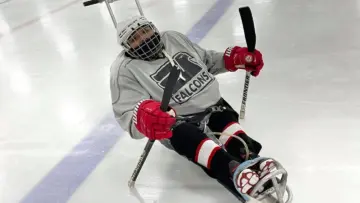
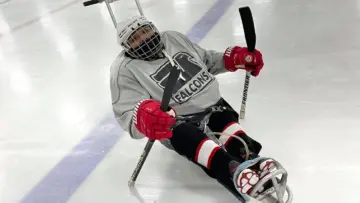
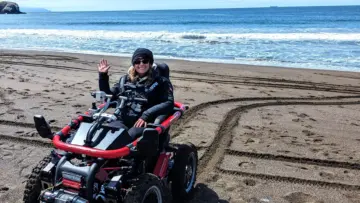
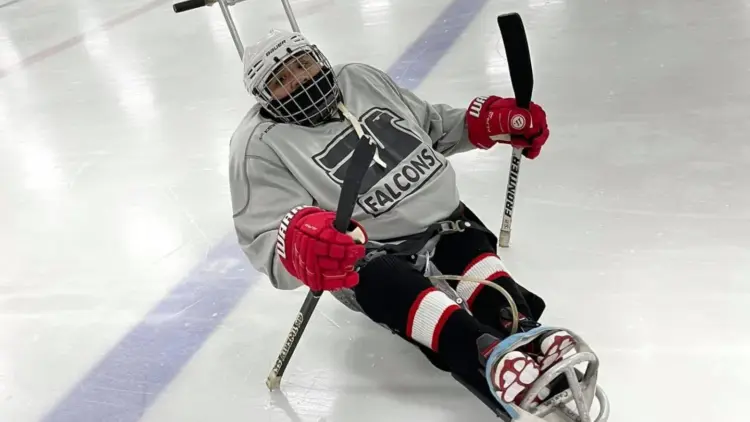
Born with spina bifida—a congenital condition in which the spinal column fails to close completely during fetal development—Murillo began using a wheelchair at just three years old. Rather than letting mobility challenges restrict his horizons, he has spent decades pursuing high-energy sports and outdoor pursuits. To date, his resume of adaptive activities includes zip-lining, waterskiing, kayaking, snow skiing, scuba diving, go-kart racing, sled hockey, wheelchair rugby, archery, horseback riding, and rock climbing.
Yet, Murillo is far from finished. He maintains an ambitious bucket list filled with high-adrenaline experiences, including driving or riding in NASCAR vehicles, exotic supercar rides, adaptive paragliding, helicopter flights, parasailing, adaptive surfing, whitewater rafting, adaptive mountain biking, and skydiving. Alongside his athletic pursuits, Murillo is also an avid sports fan engaged in a long-term project to visit sports venues across the United States and internationally, spanning professional leagues, college sports, and minor league ballparks.
Through a combination of adaptive sports programs, careful travel planning, and a personal philosophy centered on persistence, Murillo is demonstrating how adaptive opportunities can transform lives. In a detailed interview, he reflected on how his journey began, the lessons he has learned along the way, and where his passion for adventure will take him next.
Origin Story and Mindset
Murillo’s entry into the world of adaptive sports began nearly two decades ago. His initial introduction occurred in 2007 during a Christmas holiday event organized by the Great Lakes Adaptive Sports Association (GLASA), where he tried wheelchair basketball for the first time. That initial experience opened his eyes to the possibilities of adaptive athletics, though his approach toward systematic goal-setting evolved later in life.
It was only two years ago that Murillo decided to turn his casual interests into a structured personal mission. He realized there were numerous activities he wanted to experience but lacked a clear path to accomplish them. Creating a formal bucket list provided the focus and structure necessary to turn those aspirations into reality.
Looking back, Murillo notes that entering his 30s marked a distinct shift in his perspective on personal achievement and exploration. He explains that his current decade has yielded far more fulfillment and discovery than his 20s ever did.
When asked whether he ever experienced moments of doubt or self-questioning early in his journey, Murillo’s response reflects a straightforward, resilient mindset. He maintains that he does not look back on his choices with doubt or regret, viewing every unexpected challenge or setback not as a failure, but simply as a practical lesson to carry forward into the next challenge.
Adaptive Sports
Murillo’s adventure sports career encompasses an exceptionally broad spectrum of disciplines, ranging from water sports and winter athletics to high-speed motorsports and contact sports.
Among all the sports he has attempted—including sled hockey, rock climbing, scuba diving, and wheelchair rugby—zip-lining surprised him the most. For a long time, he assumed zip-lining was entirely off-limits to wheelchair users due to equipment and safety constraints, unaware that specialized adaptive equipment and trained facilitators existed to make the activity accessible.
Each adaptive sport presents unique physical and technical demands. For Murillo, adaptive cycling proved to be the most physically demanding challenge he has faced so far. Negotiating incline gradients presented a severe physical test, as pushing a hand-powered cycle uphill requires tremendous upper-body strength and endurance.
When adapting to new equipment across different sports, Murillo relies less on complex technical theories and more on hands-on trial and error. He notes that mastering new gear usually takes just a few practical attempts before he gains his rhythm and confidence. Among the wide range of sports he has tried, zip-lining, para-motoring, and waterskiing immediately stood out as activities he knew he wanted to continue long-term.
Murillo credits a strong network of specialized non-profit organizations and adaptive programs for making these experiences possible. Entities such as GLASA, H2O Adaptive Sports, Diveheart, the Shirley Ryan AbilityLab, and Wisconsin Adaptive Ski provide the essential infrastructure, equipment adaptations, and trained personnel required for safe participation. For newcomers entering these programs for the first time, Murillo emphasizes that the initial experience is welcoming and engaging, centered on camaraderie among athletes and hands-on exploration of different activities.
Bucket List and What’s Next
Murillo’s current bucket list reflects a strong affinity for speed and elevated vantage points. His desire to experience NASCAR high-speed driving and adaptive paragliding is driven primarily by the intense adrenaline rush those activities provide.
His remaining bucket list items trigger a mix of excitement and nervous anticipation. He looks forward to supercar test rides and parasailing with enthusiasm, while acknowledging a healthy degree of anxiety regarding adaptive surfing and whitewater rafting, where unpredictable natural water conditions introduce additional complexity.
To manage his growing list of goals, Murillo uses a practical selection process. He evaluates new ideas by weighing the logistical pros and cons alongside the overall personal appeal of the activity. Whenever he successfully completes an item, he relies on online research and continuous brainstorming to identify new, compelling challenges to add to his agenda.
Sports Fandom and the Stadium Tour
In addition to participating directly in sports, Murillo is an enthusiastic spectator whose passion has driven him to visit stadium venues across multiple leagues and levels of competition. His arena travel includes Major League Baseball (MLB), the National Hockey League (NHL), the National Basketball Association (NBA), National Collegiate Athletic Association (NCAA) events, rugby venues, and National Women’s Soccer League (NWSL) matches.
A notable feature of Murillo’s venue collection is his frequent attendance at minor league baseball parks. His travel log includes visits to venues in communities such as Kenosha, Schaumburg, South Bend, Midland, and San Antonio.
His preference for minor league venues stems largely from practical financial considerations. Minor league games offer an affordable live sports experience, and Murillo frequently reaches out directly to team front offices via email to inquire about ticket availability or complimentary accommodation for adaptive fans.
Accessibility standards can vary significantly across modern sports facilities. Among all the venues Murillo has visited, the home ballpark of the Schaumburg Boomers in Illinois stood out as an exemplary venue for physical accessibility and fan convenience.
When asked if there is one specific stadium remaining on his wish list that stands above the rest, Murillo notes that his list of desired destinations remains far too extensive to single out just one venue.
Accessible Travel
Executing multi-state and international itineraries as a full-time wheelchair user requires extensive logistical preparation. Murillo’s travel history includes trips across California, Texas, Florida, Michigan, Indiana, Minnesota, and Wisconsin, as well as international excursions into Mexico and Canada.
He notes that successful travel depends entirely on thorough advance planning. Every detail must be verified beforehand, from selecting suitable hotel accommodations with accessible roll-in showers to arranging ground transportation and identifying accessible public venues at the destination.
In terms of regional infrastructure, Murillo found that Texas and California stood out as the most accommodating destinations for wheelchair users, offering modern accessibility features across public transport and facilities. Conversely, historical destinations in Mexico presented significant physical obstacles, particularly older urban areas featuring irregular cobblestone streets that make manual wheelchair navigation exceptionally difficult.
Looking ahead, Murillo is preparing for an international cruise that will take him to Honduras, the Bahamas, and coastal Mexico.
For other wheelchair users who may feel hesitant about taking their first solo trip, Murillo’s advice is straightforward and uncompromising: be fearless and take the initiative to go. At the same time, he cautions that travel resources often gloss over real-world barriers, noting that travelers must remain prepared for the reality that many places are still not fully accessible.
Advocacy, Impact, and Personal Drive
Through his personal journey, Murillo hopes to raise awareness about the availability and scope of adaptive sports. He emphasizes that opportunities exist for individuals of all physical abilities, but finding them often requires deliberate effort and research.
For individuals who have recently acquired a disability and fear that their active days are over, Murillo offers a message of encouragement: maintain an open mind, resist fear, and embrace new experiences fully.
Murillo credits his ongoing motivation to a combination of internal determination and guidance from his coaches. He operates under a simple personal boundary: giving up is never an option. Reflecting on his accomplishments, he expresses pride in every activity he has attempted, noting that if an experience was not meaningful, he would not have invested the time and effort to accomplish it.
Among his many achievements, reaching the point where he could experience zip-lining remains one of the most emotionally resonant milestones of his life—a goal he once believed was unattainable due to structural barriers.
Ultimately, Murillo views his journey as proof that physical circumstances do not have to define the boundaries of an active life. His core message to others navigating similar paths is simple: meaningful achievements and memorable adventures are entirely possible, provided one is willing to put in the work required to realize them.