A major study published in JAMA Neurology has delivered a stark and sobering projection for the coming decades: the number of new dementia cases is projected to double worldwide by the year 2050. For family caregivers who are currently taking care of a loved one with cognitive decline, as well as individuals looking ahead at their own long-term health, projections of this magnitude can feel overwhelming given the immense societal and economic ramifications.
Understanding the driving forces behind these numbers is widely considered the first step toward effective prevention and better healthcare planning. However, public health experts emphasize that getting this escalating issue under control will require coordinated global leadership, targeted advocacy, and substantial investments in medical research.

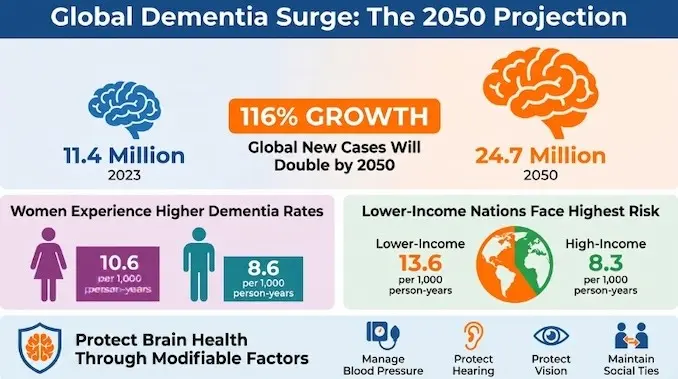
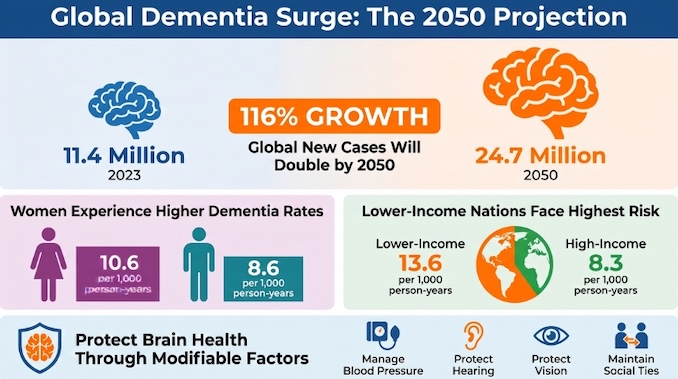
According to the data released in the study, the global landscape of neurodegenerative diseases is shifting rapidly. In 2023, there were an estimated 11.4 million new dementia cases globally. By 2050, that annual figure is projected to surge to 24.7 million new cases every year, representing a staggering 116% increase.
Public health researchers emphasize that this dramatic spike is not primarily driven by the disease itself becoming more aggressive or biologically virulent. Instead, the primary catalyst is the rapid aging of the global population. Age remains the single biggest risk factor for the development of dementia, and as medical advancements and public health standards improve, people around the world are living longer than ever before.
Dr. Emer MacSweeney, a consultant neuroradiologist, noted that this anticipated increase should be viewed as a vital wake-up call to accelerate prevention, early diagnosis, and treatment pathways, rather than accepting cognitive decline as an inevitable consequence of getting older.

Beyond the raw global totals, the study revealed significant and notable disparities regarding who is most at risk of developing the condition. Most prominently, the research highlighted a distinct gender gap in dementia incidence. The study found that the incidence rate for women was 10.6 new cases per 1,000 person-years, compared to just 8.6 new cases per 1,000 person-years for men.
While women generally enjoy longer lifespans than men—and age remains a primary risk factor—researchers point out that longevity alone does not fully explain the observed gap. Sex-specific biological factors, including the hormonal shifts experienced during menopause and lifelong estrogen exposure, likely play a substantial and complex role in brain health. This underlying biological reality underscores the critical need for women to prioritize cognitive and cardiovascular health well before they reach their senior years.
The research also shed light on a profound geographical divide, pointing directly to the well-documented connection between heart health and brain health. The study highlighted that low- and middle-income countries face a notably higher incidence of dementia, averaging 13.6 cases per 1,000 person-years, compared to just 8.3 cases per 1,000 person-years in high-income countries.

This stark geographical discrepancy is closely tied to broader socioeconomic and cardiovascular health trends. Over recent decades, high-income nations have experienced steady declines in smoking rates, alongside better detection and management of untreated high blood pressure and elevated cholesterol. Conversely, many low- and middle-income regions are currently experiencing rising rates of obesity, stroke, and cardiovascular disease. Medical experts point out that these trends reinforce a fundamental physiological reality: maintaining cardiovascular health is essential for protecting long-term brain health.
While individuals cannot stop the natural aging process, medical experts emphasize that a significant portion of a person’s cognitive trajectory is influenced by modifiable risk factors. Healthcare professionals consistently recommend focusing on the foundational elements of wellness to support long-term brain health. These include managing chronic conditions like hypertension and diabetes, protecting sensory health such as hearing and vision, and maintaining active social connections to buffer against cognitive decline.
Public health advocates argue that addressing these factors on a population scale requires systemic changes. Without concerted international efforts to improve healthcare infrastructure, manage chronic cardiovascular risks, and expand access to preventative medicine, the human and economic costs of the projected surge will fall heavily on healthcare systems and family caregivers alike.
Medical professionals and researchers maintain that the projection of 24.7 million annual dementia cases by 2050 serves as a serious warning, but it does not represent a fixed or predetermined future. By recognizing the powerful link between heart health and cognitive function, individuals and healthcare providers can take practical steps to mitigate personal and population-level risk. Ultimately, confronting the rising tide of global cognitive decline will require a combination of individual lifestyle awareness, advanced clinical care, and unified global leadership before the midpoint of the century.