
The Medicare program continues to serve as a critical lifeline for healthcare coverage, providing essential insurance benefits to more than 70 million individuals across the United States. This population primarily consists of adults aged 65 and older, alongside younger individuals living with long-term disabilities. While the federal program covers a broad and comprehensive spectrum of medical care, beneficiaries are generally required to absorb out-of-pocket expenses, including monthly premiums, annual deductibles, and various cost-sharing fees for covered services.
In recent years, these financial obligations have mounted steadily. Financial projections indicate that Medicare premiums and other cost-sharing requirements will continue their upward trajectory over the coming decade. At the same time, a significant share of the Medicare population lives on modest economic means. Statistical records show that one in four Medicare beneficiaries subsisted on incomes below $24,600 per person in 2024. Furthermore, out-of-pocket spending dedicated strictly to Medicare premiums and cost-sharing expenses consumed more than a third—specifically 36 percent—of the average beneficiary’s total Social Security income in 2023.
Out-of-pocket expenses can fluctuate significantly depending on the structural coverage choices beneficiaries make when joining the program. Enrollees may choose to receive their health benefits through traditional Medicare or via a privately administered Medicare Advantage plan. Individuals enrolled in traditional Medicare have the option to secure outpatient prescription drug coverage by signing up for a stand-alone Part D plan. They may also purchase supplemental insurance policies, commonly known as Medigap, to help offset traditional Medicare cost-sharing requirements.
Conversely, Medicare Advantage plans typically bundle prescription drug coverage directly into their packages and impose annual limits on how much enrollees must pay out of pocket for Medicare-covered services. This stands in direct contrast to traditional Medicare, which features no out-of-pocket spending limit. However, most Medicare Advantage plans require enrollees to utilize a specified network of healthcare providers, frequently charging higher cost-sharing rates or denying coverage entirely for services rendered by out-of-network providers.
Navigating these diverse choices can prove remarkably complex, and the resulting financial burdens can be substantial, particularly for beneficiaries managing high medical needs. A comprehensive cost breakdown details the financial landscape for participants across traditional Medicare, Medicare Advantage, and Medicare Part D, highlighting premiums, deductibles, copays, and coinsurance structures.
Premiums for Medicare Part A and Part B
For most participants, the monthly premium for Medicare Part A stands at zero dollars. Part A is designed to cover inpatient hospital stays, short-term care in nursing facilities, hospice care, and specific home health services. Individuals typically qualify for premium-free Part A if they, or a spouse, have accumulated at least 40 quarters, equivalent to 10 years, of employment in jobs where they paid Medicare payroll taxes.
Individuals who are otherwise eligible for Medicare but fall short of this employment threshold may still enroll in Part A by paying a monthly premium. The Part A premium is set at $311 per month, totaling $3,732 for the year, for beneficiaries with between 30 and 39 quarters of covered employment. For those with fewer than 30 quarters of covered employment, the monthly premium rises to $565, or $6,780 annually.
Late enrollment rules introduce additional financial penalties for those who delay. If a Medicare-eligible person is required to pay a Part A premium but delays enrollment past their initial window without qualifying group coverage, they face a late enrollment penalty. This penalty increases their monthly Part A premium by 10 percent and remains active for twice the number of years that enrollment was delayed. For example, a person with 30 quarters of covered employment who delayed enrollment for two years would incur penalties through the decade, resulting in an elevated monthly payment.
Meanwhile, all beneficiaries must pay a monthly premium for Medicare Part B, regardless of whether they choose traditional Medicare or a Medicare Advantage plan. Part B covers essential outpatient services, including physician visits, outpatient hospital care, preventive screenings, diagnostic tests, and drugs administered directly by doctors. The standard Part B premium is established at $202.90 per month, or $2,434.80 annually.
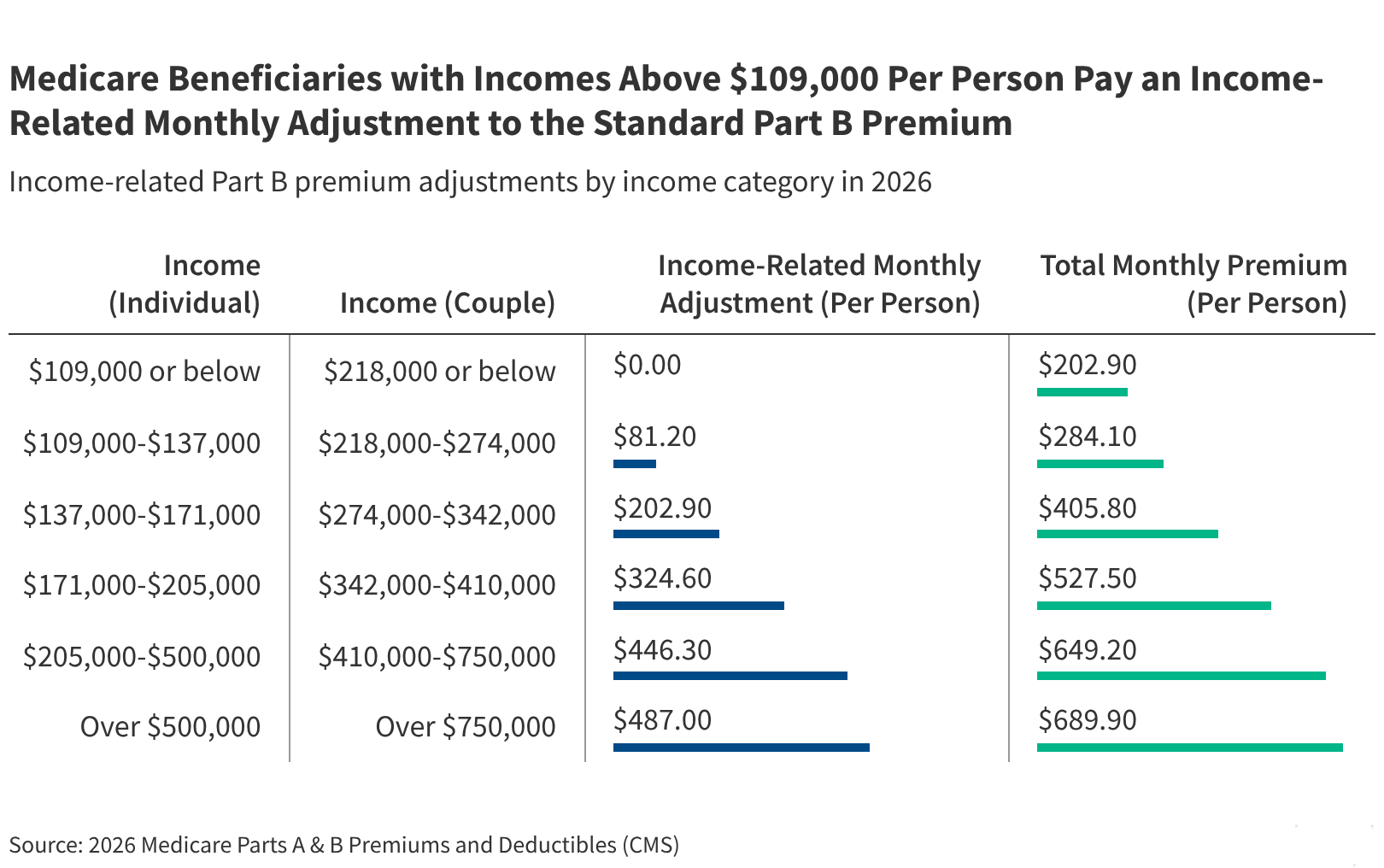
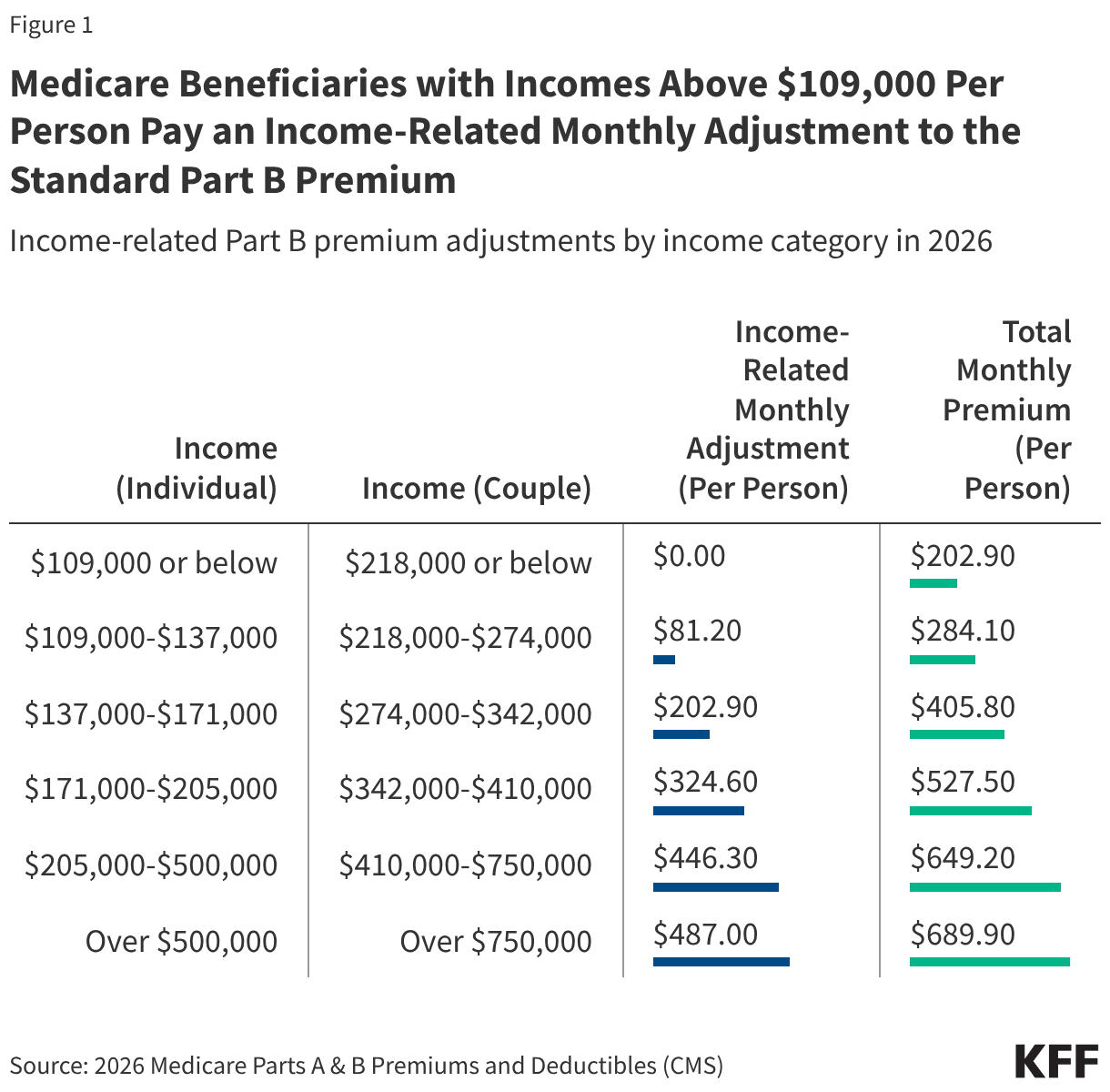
Higher-income beneficiaries face income-related monthly adjustment amounts. Individuals with annual incomes exceeding $109,000, or married couples filing jointly with incomes above $218,000, pay an income-adjusted Part B premium ranging from $284.10 to $689.90 per person per month. Conversely, beneficiaries with low incomes and limited assets may qualify for financial assistance through state Medicaid programs to cover these Part B premiums.
Delaying Part B enrollment without qualifying group health coverage triggers a permanent lifetime late enrollment penalty. This penalty adds 10 percent to the standard monthly Part B premium for every full 12-month period that enrollment was postponed. For instance, an individual who delayed Part B enrollment by two years faces a permanent 20 percent monthly surcharge.
Cost-Sharing Requirements in Traditional Medicare
Inpatient hospital services governed by Medicare Part A are subject to an initial deductible of $1,736. Unlike most insurance structures that reset annually, this deductible applies per benefit period. Consequently, beneficiaries hospitalized multiple times throughout a calendar year may find themselves paying the deductible more than once. Additional cost sharing under Part A is triggered only after the first 60 days of a continuous hospital stay, requiring daily coinsurance payments that scale upward for extended hospitalizations and lifetime reserve days.
For skilled nursing facility care following a qualifying hospital stay, beneficiaries face zero cost sharing for the first 20 days. For days 21 through 100, daily coinsurance applies. Medicare covers a strict maximum of 100 days of skilled nursing facility care per benefit period, after which patients assume full financial responsibility for any subsequent care. Other Part A offerings, such as home health and hospice care, generally feature no deductibles or coinsurance, save for modest charges associated with specific comfort medications or respite care.
Services covered under Medicare Part B are generally subject to an annual deductible of $283, alongside a standard coinsurance rate of 20 percent for approved medical services. However, a wide array of preventive services—including annual wellness visits, standard immunizations, mammograms, and specific cancer screenings—are exempt from both the deductible and coinsurance requirements.
Because traditional Medicare lacks an absolute ceiling on out-of-pocket spending, many participants purchase supplemental Medigap insurance policies. These private policies help cover out-of-pocket deductibles and coinsurance costs, protecting beneficiaries from potentially catastrophic healthcare expenses. Beneficiaries purchasing Medigap must pay a separate monthly premium directly to the insurer, alongside their standard Part B premium.
Beyond Medigap, certain beneficiaries rely on employer-sponsored retirement plans or state Medicaid programs to assist with out-of-pocket expenses. Low-income individuals who do not qualify for full Medicaid benefits may still receive targeted financial help from state programs to clear Medicare deductibles and cost-sharing obligations.
Costs Under Medicare Advantage
Medicare Advantage plans operate as private insurance alternatives to traditional Medicare, contracting with the federal government to deliver Part A and Part B benefits. Most of these plans integrate prescription drug coverage and extend supplemental benefits beyond traditional program limits, such as routine dental, vision, and hearing care. While Medicare Advantage plans often feature lower upfront cost-sharing requirements for specific medical services, they frequently rely on narrow provider networks, mandatory referrals, and strict prior authorization rules to manage patient care.
Participants in Medicare Advantage plans must continue paying the standard monthly Part B premium, along with any applicable income-related surcharges and Part A premiums if they lack work history credits. Additionally, some plans levy their own monthly participation premiums. However, approximately 75 percent of all Medicare Advantage enrollees with drug coverage are enrolled in plans that charge no additional monthly premium beyond the standard Part B obligation.
Some Medicare Advantage plans utilize federal rebate dollars to reduce a portion of the enrollee’s Part B premium. Roughly one-third of enrollees participate in plans that offer this premium reduction, typically lowering the monthly obligation by modest amounts.
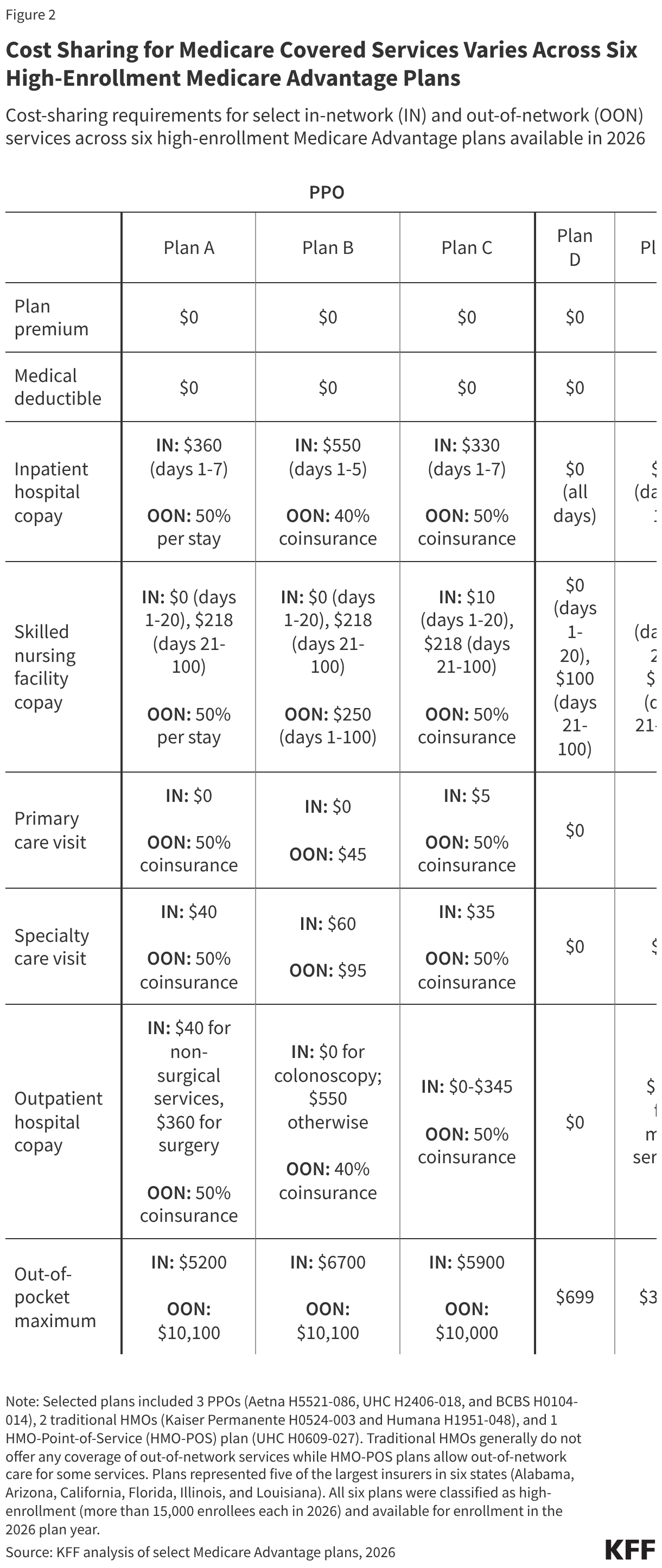
While federal rules dictate that Medicare Advantage plans must cover all standard Part A and Part B benefits without exceeding traditional Medicare cost-sharing limits overall, specific charges vary widely by plan. Health maintenance organizations generally restrict coverage strictly to in-network providers, whereas preferred provider organizations permit out-of-network care while charging higher cost-sharing rates.
Federal regulations mandate that all Medicare Advantage plans include an annual limit on enrollee out-of-pocket spending for in-network medical services, with higher combined limits permitted for plans that cover out-of-network care. These spending caps provide enrollees with a definite safety net against unexpected medical expenditures, though the specific limit thresholds vary substantially across different insurance providers and geographic regions.
Costs for Part D Prescription Drug Coverage
Medicare Part D provides voluntary outpatient prescription drug coverage through private plans. Beneficiaries can obtain this coverage either by joining a stand-alone prescription drug plan alongside traditional Medicare or by selecting a Medicare Advantage plan that bundles medical and drug benefits together. Monthly premiums, annual deductibles, pharmacy networks, and drug formulary tiers vary significantly across these plans.
Many Part D enrollees pay a monthly premium, though average costs differ between stand-alone prescription drug plans and Medicare Advantage drug plans. High-income beneficiaries face income-related surcharges added directly to their monthly drug plan premiums. Conversely, individuals with limited financial resources can qualify for the Part D Low-Income Subsidy program, which significantly reduces or eliminates premiums, deductibles, and copayments for qualifying prescription drugs.
Failing to maintain continuous prescription drug coverage for 63 consecutive days or more without equivalent creditable coverage triggers a permanent Part D late enrollment penalty. This penalty adds a monthly surcharge to the beneficiary’s baseline premium for every month coverage was delayed.
The standard Part D deductible stands at $615, though individual plans have the flexibility to offer reduced or zero-dollar deductibles through enhanced benefit structures. Cost-sharing requirements for filled prescriptions typically rely on tiered formularies, where generic drugs and preferred brand-name medications carry lower copayments or coinsurance rates, while specialty medications and non-preferred drugs command higher cost-sharing percentages.
Out-of-pocket spending for Part D enrollees is subject to an annual statutory cap of $2,100. Once an enrollee reaches this maximum spending threshold, they incur no additional out-of-pocket costs for covered prescription drugs for the remainder of the calendar year. Additionally, Part D participants retain the option to spread their out-of-pocket drug expenses evenly across the calendar year to manage their monthly household budgets more effectively.



