A major policy shift taking effect across the United States is setting the stage for potential healthcare disruptions among some of the nation’s most vulnerable residents. Following the passage of the 2025 reconciliation law, 44 states are now required to condition Medicaid eligibility for adults in the Affordable Care Act (ACA) expansion group—along with enrollees in certain waiver programs—on meeting strict work and community engagement requirements. Set to launch on January 1, 2027, or sooner depending on state choices, these new mandates include mandatory exemptions for individuals classified as "medically frail." However, recent federal guidance released by the Centers for Medicare & Medicaid Services (CMS) reveals that proving eligibility for this medical frailty exclusion could prove exceptionally difficult for individuals with significant health needs, particularly those currently navigating the long and complex process of applying for the Supplemental Security Income (SSI) program.
SSI is a means-tested federal program administered by the Social Security Administration that delivers monthly financial assistance to individuals with limited resources who cannot work due to a disability, while also typically opening the door to Medicaid coverage. Once an applicant is fully approved for SSI, they are exempted from Medicaid work requirements. Yet, the road to approval is notoriously grueling. The application process frequently stretches across many months or even years, leaving applicants completely unable to work and at severe risk of going uninsured. For years, Medicaid has served as a vital safety net, filling these coverage gaps while applicants await a final determination from federal disability officials.
A recent policy analysis underscores just how heavily vulnerable populations rely on this interim coverage. The data reveals that the percentage of new SSI enrollees aged 19 through 64 who possess Medicaid coverage prior to their official SSI entitlement is twice as high in ACA expansion states as it is in non-expansion states. In 2023 alone, more than 100,000 new SSI beneficiaries relied on ACA Medicaid coverage while waiting for their disability claims to be processed. The analysis cautions that the upcoming work requirements, paired with restrictive new definitions of medical frailty outlined in a June 2026 interim final rule, could jeopardize this crucial bridge to care, putting thousands of disabled individuals at risk of losing their health insurance during an already vulnerable period in their lives.
How Medicaid Bridges the Gap During the SSI Application Process
Medicaid historically provides essential health coverage for a substantial share of Americans with disabilities, including those actively seeking federal disability benefits. Federal data shows that roughly one in five Medicaid enrollees lives with a disability, a figure that climbs to 43 percent among adults aged 50 to 64. Interestingly, only about one-third of these individuals receive SSI cash benefits, which automatically qualifies them for Medicaid. The remaining two-thirds secure their healthcare through various alternative eligibility pathways, most notably the ACA Medicaid expansion. Because the timeline for obtaining a disability determination from the Social Security Administration is notoriously protracted, and because applicants are fundamentally unable to work while their claims are pending, Medicaid has become an indispensable lifeline protecting them from catastrophic uninsurance.
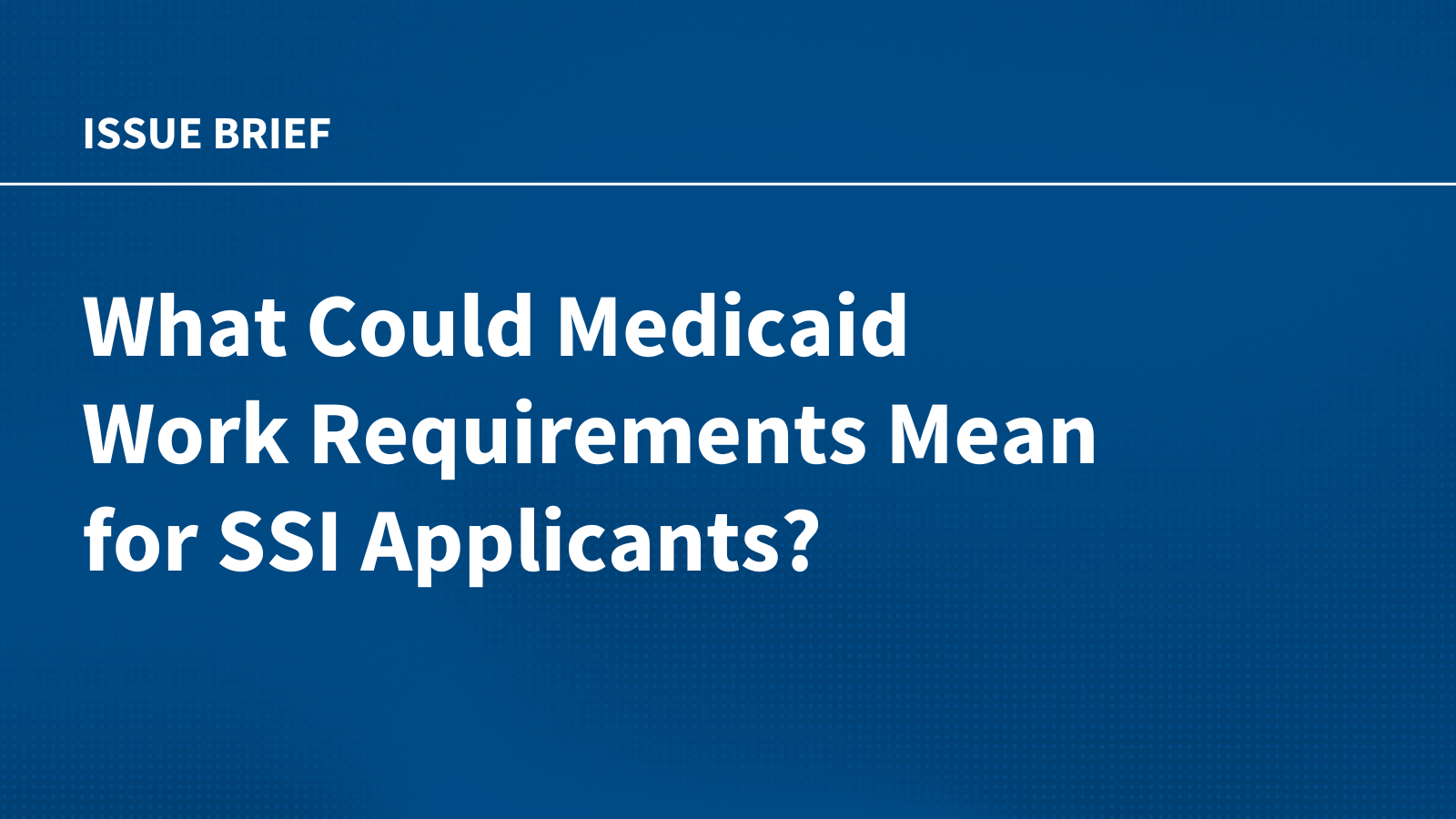
Administrative data from 2023 illustrates the sheer scale of this reliance. During that calendar year, approximately 223,000 SSI applicants between the ages of 19 and 64 maintained active Medicaid coverage while awaiting a final determination, with over 106,000 of those individuals receiving their coverage through the ACA expansion pathway. A deeper look at the numbers reveals stark regional differences driven by state policy decisions. In states that adopted the ACA Medicaid expansion, an overwhelming 76 percent of new SSI enrollees aged 19 to 64 had prior Medicaid coverage through a non-SSI pathway—including 42 percent covered directly through the expansion. In contrast, only 33 percent of new SSI enrollees in non-expansion states had any prior Medicaid coverage. While roughly one in three new SSI enrollees in both expansion and non-expansion states had non-ACA Medicaid coverage, such as pathways for parents and caretakers, the expansion states sheltered an additional 100,000-plus low-income adults who would otherwise have been entirely uninsured due to their inability to work.
Navigating the Complexities of SSI Disability Determination
Demonstrating eligibility for SSI is an arduous journey, particularly for applicants under the age of 65 who must prove they live with a qualifying disability. Federal rules mandate that applicants maintain strictly limited financial resources—capped at $2,000 for individuals and $3,000 for couples—alongside monthly incomes below specific thresholds. For applicants under retirement age, however, proving a disability is universally recognized as the most complicated hurdle of the entire process.
The federal government relies on a rigorous five-step evaluation process administered through state Disability Determination Services offices, which are heavily funded by federal appropriations. The process begins by verifying that an applicant’s current earnings fall well below the threshold of substantial gainful activity. Subsequent steps assess whether the applicant suffers from a severe medical impairment categorized under specific body systems, ranging from neurological and musculoskeletal disorders to mental health conditions, cardiovascular diseases, and cancers. While certain catastrophic conditions qualify for expedited approval through specialized initiatives like the compassionate allowance program, the vast majority of applicants must endure a far more granular assessment.
The final stages of the evaluation require the Social Security Administration to scrutinize an applicant’s residual functional capacity, age, education, and past work history to determine whether they can perform any job existing in the national economy. This requires extensive personal documentation, medical records, and vocational assessments. Compounding the challenge, the agency has historically relied on occupational data from the Department of Labor’s Dictionary of Occupational Titles, a reference tool that was last updated in 1991. Although federal officials have spent hundreds of millions of dollars in recent years developing a modern occupational data survey system, the transition remains incomplete, leaving applicants to be evaluated against outdated labor market standards.
The practical result of these bureaucratic and administrative hurdles is a staggering backlog. As of mid-2026, the average initial processing time for a disability application exceeded six months, with approximately 862,000 individuals nationwide waiting for an initial decision. Many applicants receive initial denials and must navigate lengthy appeals processes, though legal representation can significantly improve approval odds and shorten the timeline to a final resolution.
The Threat Posed by Work Requirements to SSI Applicants
Beginning in January 2027, the implementation of Medicaid work requirements will introduce new hurdles for adults enrolled through the ACA expansion and specific waiver programs. Covered individuals will generally need to document at least 80 hours per month of employment, community engagement, or half-time education to maintain their healthcare benefits, unless they successfully secure an exemption or exclusion.
For individuals applying for SSI, meeting these new mandates will be virtually impossible. Because SSI eligibility requires earnings to remain far below the substantial gainful activity limit, applicants cannot realistically work 80 hours a month, nor can they easily pivot to consistent volunteering or education while managing severe physical or mental impairments. Consequently, these applicants must rely on the medical frailty exclusion to retain their Medicaid coverage. However, the interim final rule issued by federal regulators adopts a strict, two-part test for medical frailty, requiring individuals to demonstrate that a specific health condition actively impairs their capacity to meet community engagement standards. Navigating this verification process while simultaneously waiting for a federal disability determination creates a high-stakes administrative obstacle course.
Furthermore, the disparate timelines governing Medicaid and SSI create a dangerous mismatch. States are legally required to process general Medicaid applications swiftly, and starting in 2027, they must conduct eligibility renewals for expansion enrollees every six months rather than annually. This means many SSI applicants will face mandatory assessments of their work capacity for Medicaid long before the Social Security Administration ever reaches a final verdict on their disability claims. These concurrent, overlapping bureaucratic assessments threaten to impose crushing administrative burdens on individuals already struggling with profound health crises, sharply escalating the risk of coverage loss.
Recent policy guidance from federal health officials attempts to soften these potential blows. The CMS framework encourages states to utilize automated, ex parte verification processes wherever possible, pulling from existing claims data and administrative records to identify medically frail individuals without forcing them to submit fresh paperwork. States have been provided with a tiered framework allowing them to flag medical frailty using claims history, encounter data, or, as a last resort, individualized manual reviews. While self-attestation will be permitted initially in 2027, subsequent rules will severely restrict it, forcing states to collect formal documentation at future renewal intervals. Even with these data-driven safeguards in place, advocates and policy analysts warn that the stringent documentation hurdles will likely cause thousands of vulnerable disabled Americans to slip through the cracks, risking the loss of their health insurance precisely when they need it most.