
Purchasing a medical alert system is widely recognized as a crucial investment in personal safety for aging adults living independently, yet navigating the maze of payment options often presents unexpected hurdles for seniors and their families. Many individuals and caregivers naturally assume that federal healthcare programs will automatically absorb the costs associated with Personal Emergency Response Systems (PERS). However, the reality of coverage is far more fragmented, leaving many to discover that financial assistance depends heavily on specific insurance plans, state of residency, and veteran status.
For families researching how to finance these safety devices, understanding the distinct boundaries between government programs and private insurance is essential. Original Medicare, Medicare Advantage, state Medicaid programs, and the Department of Veterans Affairs all maintain vastly different policies regarding personal emergency response technology. Without prior research, families frequently find themselves facing entirely out-of-pocket expenses during a critical time when safety equipment is most urgently needed.
Original Medicare and Durable Medical Equipment Classifications
The landscape of federal healthcare coverage begins with Original Medicare, comprising Parts A and B. For seniors relying exclusively on Original Medicare, the coverage status for medical alert systems is straightforward, though often disappointing. The Centers for Medicare & Medicaid Services strictly do not classify personal emergency response systems as Durable Medical Equipment (DME).
Because these monitoring devices are not formally deemed medically necessary under the rigid statutory guidelines of Original Medicare, the program provides zero financial assistance. Consequently, beneficiaries who rely solely on Original Medicare must cover 100 percent of the equipment purchase price, activation fees, and ongoing monthly subscription costs out of their own pockets. This policy leaves a significant coverage gap for millions of older adults who depend on standard federal health insurance.
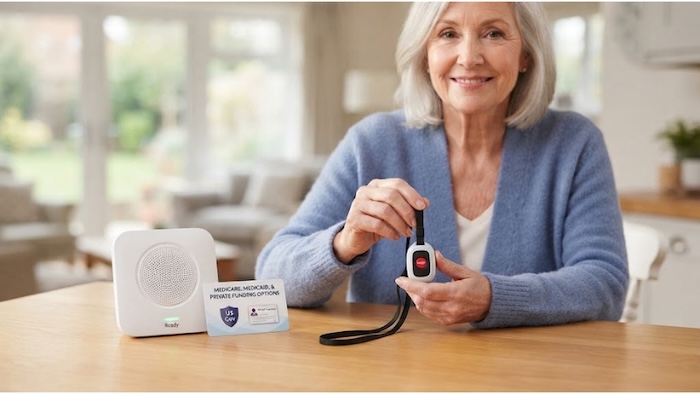
The Flexible Role of Medicare Advantage Plans
In contrast to Original Medicare, Medicare Advantage, or Part C plans, introduce a significant degree of flexibility into the funding equation. Because these alternative plans are administered by private insurance companies rather than the federal government, carriers possess the regulatory leeway to offer supplemental health benefits that extend beyond standard Medicare guidelines.
A growing number of private Medicare Advantage insurers choose to cover partial or even full costs for medical alert systems as part of their strategy to prevent costly hospital readmissions and emergency room visits resulting from unassisted falls. Because coverage policies differ widely from one private insurer to the next—and often vary depending on the specific tier of the plan—policyholders cannot assume automatic coverage. Seniors and caregivers must meticulously review their specific Summary of Benefits document or contact their insurance provider directly to verify whether a particular personal emergency response device qualifies for reimbursement or inclusion under their plan.
Medicaid Policies and Home and Community-Based Services
State-administered Medicaid programs offer a more robust avenue for financial assistance, though accessibility remains heavily conditional and dependent on geographic location. Under Medicaid’s Home and Community-Based Services (HCBS) waivers, numerous states incorporate medical alert systems into approved care packages designed specifically to help vulnerable seniors age safely in place within their residences rather than transitioning prematurely into costly institutional nursing facilities.
Because Medicaid is fundamentally administered at the state level, coverage rules, eligibility thresholds, and approved equipment vendors vary dramatically across state lines. Securing assistance through this pathway typically requires applying for a specific HCBS waiver program within the beneficiary’s home state. When approved, state Medicaid agencies generally remit payment for the monthly monitoring fees directly to the contracted vendor, though these arrangements may restrict patients to specific brand selections approved by the state health authority.

Department of Veterans Affairs Benefits
Among all government options, veterans maintain the most direct and reliable path toward securing comprehensive coverage for personal emergency response systems. The Department of Veterans Affairs provides medical alert systems at zero cost to qualifying veterans who meet specific healthcare criteria.
Rather than purchasing equipment independently and seeking cumbersome reimbursements, eligible veterans must request a formal clinical consultation with their assigned VA primary care provider. If the medical provider evaluates the patient’s living situation and formally determines that a medical alert system is clinically necessary to maintain home safety, the VA orders the equipment directly from an approved commercial vendor. Under this arrangement, the federal government covers both the initial hardware and all ongoing monthly monitoring fees for the duration of the veteran’s need.
Alternative Funding Avenues and Community Resources
For seniors and families who find themselves ineligible for government-backed programs or private insurance supplemental benefits, various alternative avenues exist to help defray out-of-pocket expenses. Many individuals utilize Flexible Spending Accounts (FSAs) or Health Savings Accounts (HSAs) to pay for safety monitoring equipment using pre-tax dollars, depending on current tax regulations and documentation requirements.
Additionally, local community networks—such as regional Area Agency on Aging offices—frequently maintain resource directories, grant opportunities, or localized subsidy programs designed to assist older adults with acquiring necessary home safety technologies. Caregivers often turn to these local resources when standard insurance avenues fail to provide relief.

Ultimately, healthcare advocates emphasize the importance of researching coverage policies well in advance of an actual medical emergency. Waiting until a catastrophic fall or health crisis occurs leaves families scrambling to navigate complex insurance bureaucracies under duress. By proactively contacting insurance providers to inquire about modern medical alert system coverage under specific Part C policies or Medicaid waivers, caregivers can significantly reduce future administrative burdens. While the monthly cost of a personal emergency response system represents a recurring household expense, many families view it as an essential requirement for safe aging at home, far outweighing the devastating physical and financial tolls associated with undetected emergencies.