More than a decade after the landmark passage of the Affordable Care Act (ACA), the national landscape of healthcare coverage continues to evolve as states navigate the complex intersection of federal policy, state budgets, and public health needs. At the heart of this ongoing evolution is the ACA’s Medicaid expansion, a major provision designed to broaden health insurance accessibility for millions of low-income Americans. While a commanding majority of states have integrated the expansion into their healthcare systems, a stubborn group of holdouts continues to debate the merits of adoption, even as emerging policy discussions introduce new complexities surrounding federal funding and state-level legislative triggers.
Under the architecture of the ACA, the Medicaid expansion framework empowers participating states to extend vital health coverage to nearly all adults with household incomes up to 138 percent of the Federal Poverty Level. To put that threshold into perspective for individuals navigating contemporary economic realities, 138 percent of the Federal Poverty Level translates to $21,597 for a single person. Beyond expanding the safety net to vulnerable and working-class populations who previously slipped through the cracks of the healthcare system, the federal government incentivized participation by offering states an enhanced federal medical assistance percentage, commonly referred to as the FMAP. This enhanced matching rate provides substantial federal financial backing to help cover the costs of the expansion population, easing what could otherwise be a heavy burden on state treasuries.
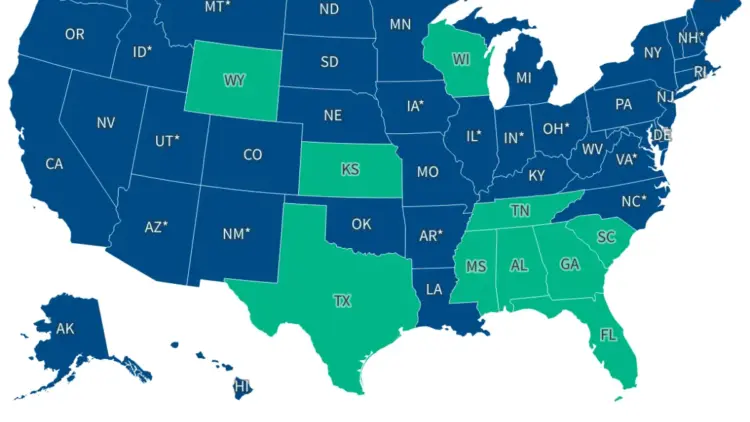
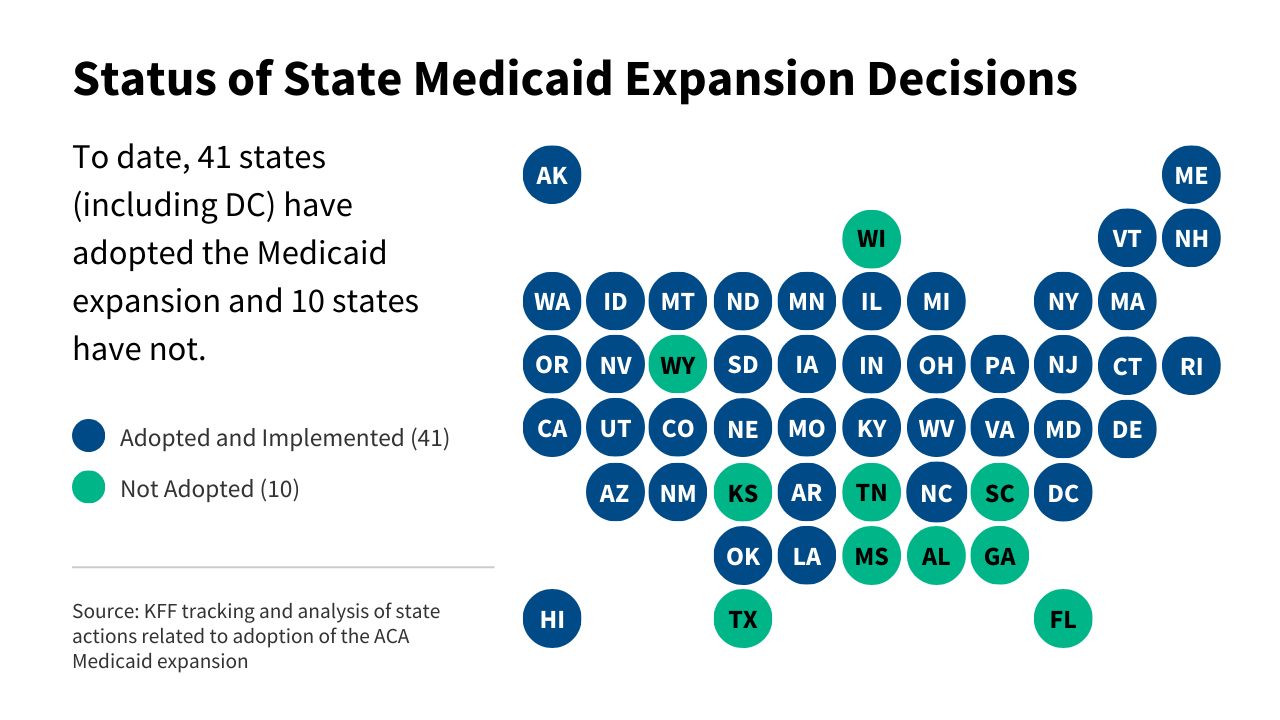
Despite these financial incentives, the decision to adopt the expansion has remained deeply fragmented along political and geographic lines since the U.S. Supreme Court made the provision optional for states in its historic 2012 ruling. Comprehensive tracking and analysis compiled by KFF, a prominent healthcare policy research organization, indicate that to date, 41 states—a total that includes the District of Columbia—have successfully adopted the Medicaid expansion. These jurisdictions have built the framework into their state healthcare systems, providing comprehensive medical coverage to residents who meet the income criteria. Conversely, 10 states have chosen not to adopt the expansion, leaving a distinct coverage gap for low-income residents living within their borders who earn too much to qualify for traditional Medicaid but too little to afford private insurance plans available through the ACA marketplaces.
The current policy environment, however, is far from static. Across the United States, states on both sides of the expansion divide are actively re-evaluating, adjusting, or challenging their existing frameworks through various legislative, executive, and voter-led initiatives. KFF’s detailed tracking of state-level actions provides a window into these dynamic developments, capturing how the debate over healthcare access continues to manifest in statehouses, governor’s mansions, and ballot measures.
For states that have already embraced the expansion, recent policy activity often centers on efforts to implement new requirements, limitations, or administrative structures for the expansion population. Many of these adjustments are pursued through Section 1115 demonstration waivers, which allow states to test new approaches within their Medicaid programs subject to federal approval. These proposals frequently spark intense debates between policymakers who argue for increased personal responsibility and program sustainability through work requirements or premiums, and advocates who warn that such administrative hurdles can create unnecessary barriers to care for vulnerable populations.
At the same time, a new layer of policy complexity has emerged around what are commonly known as "trigger" laws. These legislative mechanisms tie the continuation of a state’s Medicaid expansion directly to the share of federal funding it receives. If federal matching rates were to decrease significantly or face cuts, these trigger laws are designed to automatically scale back or terminate the expansion, potentially resulting in a sudden loss of health coverage for millions of residents.
The debate over these funding-dependent triggers has surfaced in several key states. For instance, lawmakers in South Dakota and West Virginia have considered or enacted measures to put trigger laws in place, reflecting underlying anxieties about the long-term fiscal predictability of federal healthcare commitments. Meanwhile, in Virginia, the legislative landscape saw the introduction of a budget amendment aimed at removing the automatic termination of the expansion from the state’s existing trigger law. Rather than allowing a sudden cancellation of coverage tied strictly to federal funding shifts, the proposed amendment would have instead required a legislative committee to develop thoughtful recommendations on how the state might adjust to any potential loss of federal financial support. Although that specific amendment was ultimately excluded from the final budget, it highlights the growing tension between fiscal caution and coverage stability. Similar proposals seeking to remove or scale back trigger laws have also been introduced in states such as Illinois and North Carolina, signaling that lawmakers are increasingly grappling with the long-term implications of relying heavily on federal matching funds.
In non-expansion states, the conversation frequently revolves around persistent legislative battles, executive branch proposals, and grassroots political movements. While full adoption of the ACA expansion remains elusive in these 10 holdout states, the topic regularly surfaces in legislative committees, floor debates, and gubernatorial campaigns. Actions captured by policy trackers include the introduction and passage of bills in at least one legislative chamber or committee, executive actions such as a governor’s budget proposal or executive order, and voter-led efforts aimed at advancing ballot initiatives to bypass resistant legislatures—a strategy that has proven successful in several conservative-leaning states in past election cycles. Additionally, some non-expansion states have occasionally explored or implemented limited coverage expansions. However, policy analysts note that these targeted initiatives typically do not qualify as full ACA Medicaid expansions and, crucially, do not qualify for the enhanced federal matching funds that make the comprehensive expansion model so financially attractive to state budgets.
The ongoing developments regarding the ACA Medicaid expansion underscore a broader national truth about American healthcare policy: it is an evolving system shaped by constant negotiations between federal incentives and state-level political will. As healthcare costs rise and the demographic makeup of the nation shifts, policymakers, researchers, and healthcare advocates continue to monitor these state actions closely. Whether through the implementation of new waiver requirements in established expansion states, the ongoing legislative tug-of-war over trigger laws, or the persistent grassroots pushes for adoption in holdout states, the future of health coverage for millions of Americans remains inextricably linked to the decisions made in state capitals across the country. Comprehensive data, interactive state maps, and detailed tracking resources compiled by organizations like KFF continue to serve as essential tools for understanding this complex, ever-changing policy map.