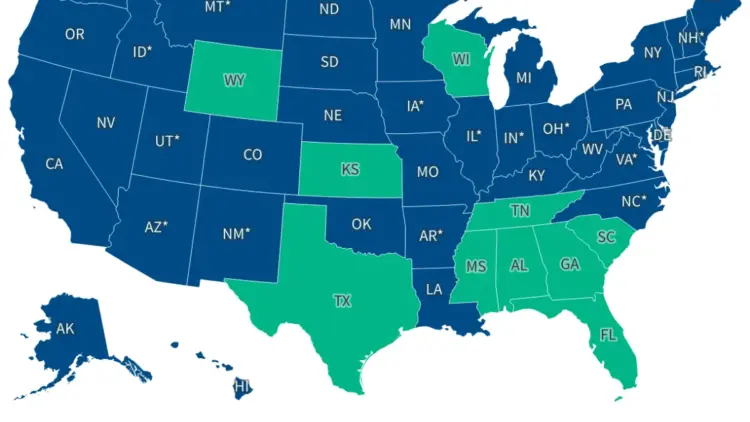
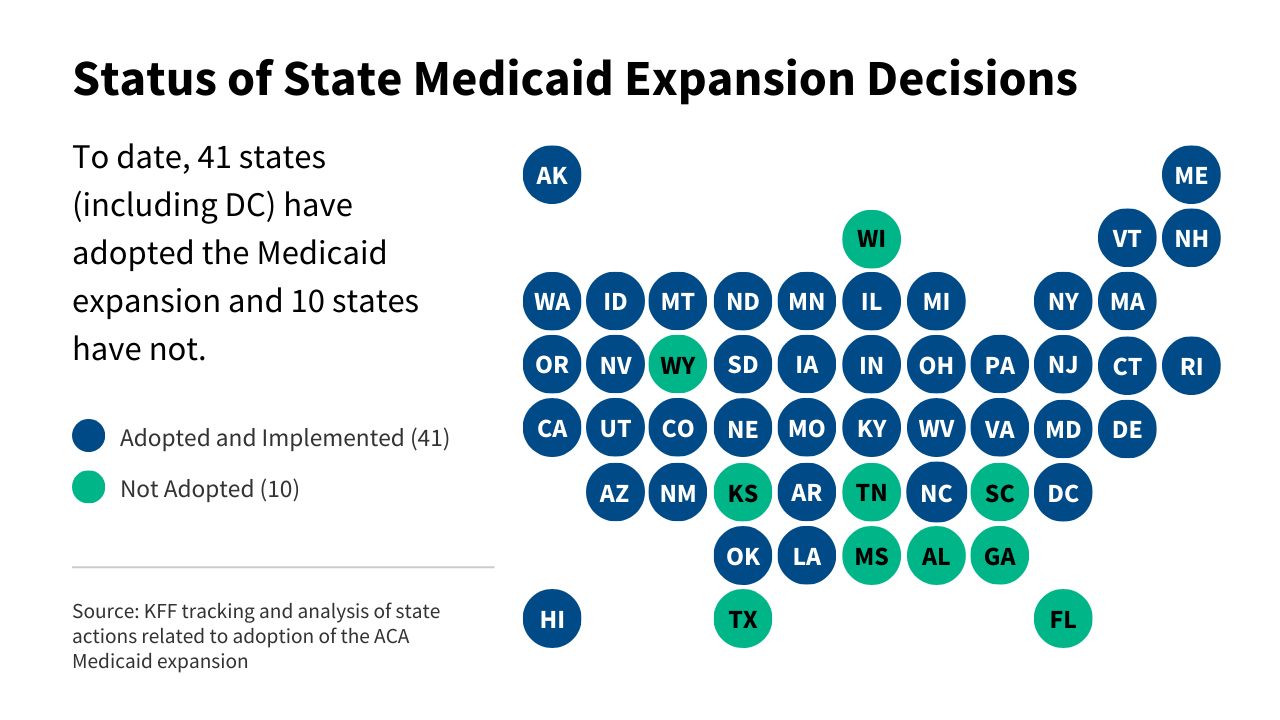
More than a decade after the landmark passage of the Affordable Care Act, the national landscape surrounding its Medicaid expansion provisions continues to evolve, reflecting a complex interplay of state-level politics, budgetary considerations, and shifting policy debates. Recent tracking and analysis from KFF show that 41 states, including the District of Columbia, have officially adopted the Medicaid expansion. Meanwhile, 10 states have chosen not to adopt the program, leaving a distinct geographic and political divide in healthcare access for low-income adults across the United States.
The Affordable Care Act’s Medicaid expansion fundamentally transformed the nation’s healthcare safety net by extending health insurance coverage to nearly all adults with household incomes up to 138 percent of the Federal Poverty Level. For an individual in 2025, this threshold translates to an annual income of $21,597. In addition to broadening eligibility criteria to encompass millions of low-income Americans who previously fell into a coverage gap, the federal government provided participating states with an enhanced federal matching rate, commonly referred to as the FMAP. This financial arrangement was designed to incentivize states to join the expansion by covering a substantial majority of the costs associated with the newly eligible populations.
Despite the financial incentives provided by the federal government, adoption has not been uniform nationwide. The current status of each state—categorized by whether they have adopted or rejected the expansion—is continuously monitored through comprehensive tracking and analysis of state expansion activity by healthcare policy organizations like KFF. These data points are compiled to provide a clear, accessible picture of state-level health policy decisions, often accompanied by visual tools such as choropleth maps and downloadable presentation files that illustrate the ongoing national divide.
Beyond the binary division of expansion and non-expansion states, recent state-level actions reveal a dynamic environment characterized by legislative debates, executive proposals, and voter-led initiatives. In states that have not yet adopted the ACA expansion, policymakers frequently engage in fierce debates regarding the potential economic benefits versus the long-term fiscal responsibilities associated with the program. Actions captured in contemporary state policy trackers include legislative measures such as the introduction or passage of bills in at least one legislative chamber or committee, executive maneuvers including gubernatorial budget proposals and executive orders, and grassroots voter-led actions such as progress toward ballot initiatives.
Furthermore, some non-expansion states have explored limited coverage expansions. Policy experts note that these alternative proposals typically do not qualify as full ACA Medicaid expansions and, consequently, do not qualify for the enhanced federal matching funds that have drawn so many other states into the program. These limited measures often target specific vulnerable populations or impose stricter eligibility criteria than the comprehensive framework established under the federal health reform law.
At the same time, states that long ago embraced the Medicaid expansion are not standing still. In several expansion states, recent legislative and executive actions have focused on placing new limits, conditions, or administrative requirements on the expansion population. These efforts are frequently pursued through Section 1115 demonstration waivers, which allow states to test new approaches in Medicaid provided they align with the overarching objectives of the program. Such adjustments often spark intense debates over administrative burdens, work requirements, and the overall balance between fiscal restraint and healthcare access.
A critical dimension of the ongoing state-level debate involves the presence of "trigger" laws tied to the share of federal funding. Several states have considered or enacted legislation containing trigger mechanisms that would automatically roll back or terminate their Medicaid expansion programs if the federal government were to reduce its matching rate or alter its funding structure. For instance, states such as South Dakota and West Virginia have considered or put actions in place to establish such trigger laws, reflecting anxieties over future federal budgetary decisions.
In Virginia, legislative battles have similarly centered around these protective mechanisms. A budget amendment was introduced to remove the automatic termination of the expansion from the state’s trigger law. Instead of an abrupt cancellation of coverage should federal funding drop, the proposed amendment would have required a legislative committee to develop thoughtful recommendations on ways to adjust to any potential loss of federal funding. However, this proposal ultimately was not included in the final enacted budget, leaving the original statutory framework intact.
Similar legislative friction is visible in other parts of the country where lawmakers are attempting to reevaluate existing policies. Proposals aimed at removing or scaling back trigger laws have been introduced in states such as Illinois and North Carolina. These legislative maneuvers highlight a growing apprehension among lawmakers regarding the vulnerability of state budgets to shifts in federal healthcare policy, as well as the profound implications such shifts hold for the millions of residents who rely on the program for their daily health security.
As tracking data from health policy organizations demonstrates, the future of the Affordable Care Act’s Medicaid expansion remains a central battleground in American public policy. Whether through ongoing legislative pushes in the remaining holdout states, administrative redesigns via federal waivers in established expansion states, or fiscal safeguard debates surrounding federal funding cuts, the boundaries of public health coverage continue to be redrawn state by state.