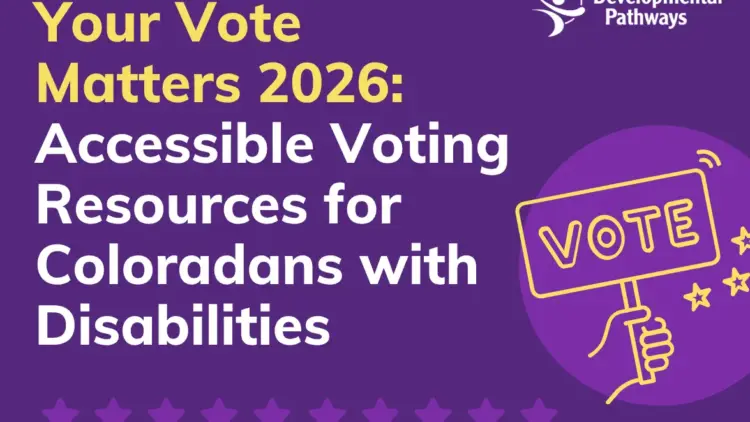
As the political landscape shifts toward upcoming electoral cycles, community organizations across the country are redoubling their efforts to ensure that civic participation is truly open to everyone. A stark statistic from recent federal research underscores the urgency of these initiatives: if voters with disabilities cast their ballots at the same rate as voters without disabilities, roughly two million more voices would actively help shape the democratic process nationwide. Recognizing both the potential and the existing barriers, Developmental Pathways (DP) has stepped forward with a comprehensive initiative aimed at empowering individuals with intellectual and developmental disabilities to fully participate in their communities and make their voices heard in the 2026 election cycle.
Developmental Pathways, an organization deeply committed to fostering inclusive communities, has rolled out a series of informational resources and advocacy tools designed to support Colorado voters with disabilities as they prepare for the ballot box. By bridging the gap between eligible citizens and accessible voting infrastructure, DP aims to dismantle the historical participation gap and ensure that every voter feels confident, informed, and fully equipped to exercise their constitutional rights.
Your Right to Vote
One of the most persistent misconceptions surrounding disability and civic participation involves legal guardianship. Many individuals, family members, and caregivers mistakenly believe that having a designated guardian or other legal decision-maker strips an individual of their voting privileges. However, under Colorado law, this is categorically untrue. In the state of Colorado, having a guardian or legal decision-maker does not affect an individual’s fundamental right to vote.
Any resident who is 18 years of age or older and meets the state’s basic eligibility requirements retains the legal right to cast a ballot and make their own independent choices in the voting booth. To help clarify these protections, state officials and advocacy groups point to comprehensive resources provided by the Colorado Secretary of State, which outlines specific eligibility details and maintains a dedicated Voters with Disabilities Frequently Asked Questions section.
Furthermore, navigating potential hurdles or asserting one’s rights is made easier through Disability Justice Colorado, the state’s designated Protection and Advocacy System. This organization plays a critical role in helping citizens understand their voting rights, learn about accessible voting options, and file formal complaints or seek remediation if their rights are ever violated during the registration or voting process.
Make a Plan to Vote
Transitioning from understanding one’s rights to the actual act of casting a ballot requires preparation, particularly for voters who may require specialized accommodations. To assist with this process, Developmental Pathways has made available a dedicated planning tool known as the "My Voting Plan" sheet, which voters can easily print and utilize to map out their strategy for the 2026 election.
Colorado’s decentralized yet robust election infrastructure provides multiple avenues for citizens to participate. Under state guidelines, every Voter Service and Polling Center (VSPC) is legally required to be fully accessible, ensuring that individuals with physical, sensory, or cognitive disabilities can vote privately and independently. Whether voters choose to utilize accessible voting machines at a polling center, vote early, or vote by mail, the state offers diverse pathways to accommodate individual needs.
To maintain transparency and peace of mind throughout the process, Colorado voters can independently track the status of their mail-in or drop-off ballots online. By utilizing the Secretary of State’s BallotTrax tool, citizens can monitor their ballot every step of the way—from the moment it leaves election offices to when it is safely received and verified by county election officials.
Understanding Your Ballot
While physical accessibility and the mechanics of casting a ballot are vital components of civic engagement, understanding the content of the ballot is equally critical. Navigating complex ballot measures, judicial evaluations, and a crowded slate of candidates can be a daunting task for any voter. Civic leaders emphasize that knowing what is on your ballot matters just as much as showing up to cast it.
To help voters parse through complicated policy issues and candidate platforms, numerous civic and advocacy organizations publish voter guides ahead of election day. These guides vary widely, with some operating on a strictly nonpartisan basis and others taking distinct political stances. Experts advise voters to choose trusted, transparent sources that align with and reflect their own personal values.
In response to this need, Developmental Pathways has gathered a curated selection of ballot guides and informational resources tailored to help individuals make informed, confident decisions in the 2026 election. Recognizing that the information landscape evolves rapidly as campaigns develop and ballot measures are finalized, the organization continues to update its repository, encouraging community members to check back frequently for the latest additions as election day draws nearer.