Carlos Murillo does not believe that living with a disability should limit adventure, purpose, or possibility. At 32 years old, the Illinois resident is spending his 30s actively proving that life in a wheelchair can be packed with high-adrenaline experiences, continuous learning, and boundless exploration.
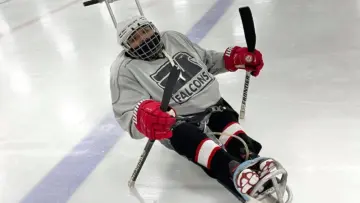
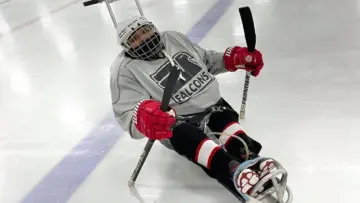
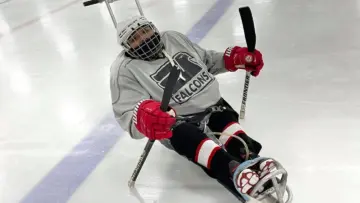
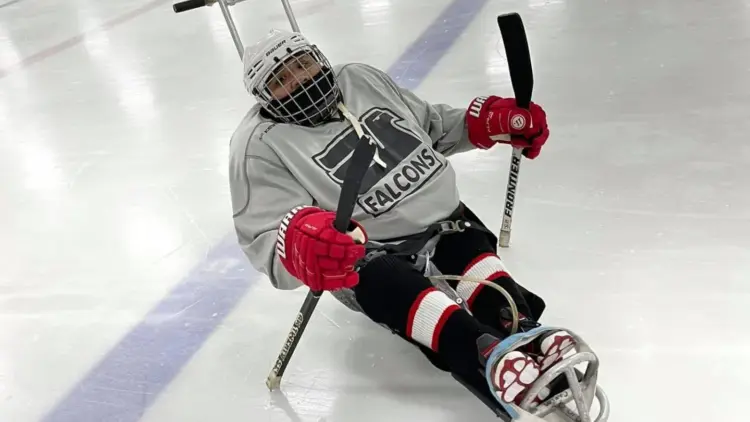
Born with spina bifida, a congenital condition affecting the spine, Murillo received his first wheelchair at three years old. Rather than allowing his mobility requirements to constrain his life, he has spent years seeking out non-traditional physical challenges. To date, his resume of adaptive activities includes zip-lining, waterskiing, kayaking, snow skiing, scuba diving, go-kart racing, sled hockey, wheelchair rugby, archery, horseback riding, paramotoring, handcycling, and rock climbing.
Yet, despite this expansive list, Murillo feels he is only getting started. Over the past two years, he has turned a casual personal bucket list into a focused mission, systematically tackling extreme sports, multi-state travel, and stadium visits across professional, college, and minor league sports.
"I’m finding so much more in my 30s than I ever did in my 20s," Murillo reflected, emphasizing that his journey is guided by adaptive sports, accessible travel, personal determination, and an unwavering refusal to let physical obstacles define what is attainable.
Origin Story and Mindset
Murillo’s journey into the world of organized adaptive athletics began nearly two decades ago. In 2007, while attending a Christmas party, he picked up a basketball and joined a game organized by Great Lakes Adaptive Sports Association (GLASA). That single event introduced him to a community built around modified athletic competition and opened his eyes to opportunities beyond everyday routine.
While sports were a constant presence in his youth, the structured ambition to systematically cross off extreme life goals emerged more recently. About two years ago, Murillo realized there were countless high-adrenaline activities he wanted to attempt, but he lacked a formalized strategy to execute them. Creating a structured bucket list provided the clarity he needed to begin researching specialized programs, reaching out to organizers, and making those dreams actionable.
When reflecting on how his perception of adventure has evolved over time, Murillo noted that maturity has brought a deeper appreciation for the experiences he seeks out. Entering his 30s provided a new wave of motivation to push boundaries and step outside comfortable routines.
Crucially, Murillo approaches the inherent risk and uncertainty of adaptive extreme sports with a pragmatic mindset. When asked about moments of self-doubt or potential missteps along the way, his philosophy remains straightforward: "I don’t have doubts or regrets. I have lessons!"
Adaptive Sports and Physical Challenges
The transition from traditional sports to extreme adaptive pursuits requires navigating specialized gear, varied techniques, and unpredictable environmental conditions. Across his adventures in rock climbing, scuba diving, and wheelchair rugby, Murillo has encountered drastically different physical demands, yet he approaches each new discipline without overthinking the technical learning curve.
According to Murillo, mastering new adaptive sports relies less on complex pre-planned techniques and more on practical, hands-on iteration. "I really don’t have any techniques," he explained. "It just takes a few tries to get the hang of each sport."
Despite his easygoing approach to learning, certain pursuits have presented immense physical hurdles. Out of every activity he has attempted, handcycling pushed his physical and mental limits the hardest. Maneuvering specialized cycling equipment relies entirely on upper-body strength, making incline terrain particularly grueling. "Cycling was hard because going uphill was very challenging," Murillo said. "Pushing a bike uphill is not the greatest."
Conversely, other adventures provided immediate breakthroughs that took him by surprise. Zip-lining was a major eye-opener simply because he had spent years assuming that high-wire aerial activities were entirely inaccessible for wheelchair users. Discovering that adaptive harness systems existed allowed him to experience the activity firsthand, instantly turning it into one of his favorite pursuits alongside paramotoring and waterskiing.
Murillo credits much of his exposure and success in these athletic arenas to a network of dedicated non-profit organizations. Programs such as GLASA Adaptive Sports, H2O Adaptive Sports, Diveheart, the Shirley Ryan AbilityLab, and Wisconsin Adaptive Ski provide the equipment, trained personnel, and accessible instruction required to get participants onto the water, snow, or trails.
For a newcomer walking into one of these programs for the first time, Murillo stresses that the environment is welcoming and invigorating, offering an immediate sense of camaraderie as athletes connect and experiment with different adaptive tools.
Bucket List and Future Pursuits
With numerous sports already conquered, Murillo’s forward-looking bucket list remains remarkably aggressive. His upcoming ambitions include driving or riding in NASCAR experiences, taking supercar rides, participating in adaptive paragliding, taking helicopter flights, parasailing, trying adaptive surfing, tackling whitewater rafting, engaging in adaptive mountain biking, skydiving, and expanding his international travel footprint.
When curating new additions for his list, Murillo weighs practical considerations against the sheer appeal of the experience. "I look at the pros and cons, and also at what looks more appealing to do," he noted. Once an objective is completed, he turns to online research and personal brainstorming sessions to discover the next challenge.
His drive to pursue high-velocity activities like NASCAR drives and adaptive paragliding stems from a simple passion: "I love the adrenaline rush they give me."
However, he acknowledges that different extreme sports bring different emotional responses. While he feels pure anticipation for supercar rides and parasailing, he admits to feeling genuine nervousness about adaptive surfing and whitewater rafting, where unpredictable water currents present unique handling challenges for a wheelchair user.
Sports Fandom and the Stadium Tour
Alongside his athletic pursuits, Murillo is an avid sports fan pursuing an ambitious secondary quest: visiting as many sports venues as possible across North America. His stadium collection spans venues in Major League Baseball (MLB), the National Hockey League (NHL), the National Basketball Association (NBA), the National Collegiate Athletic Association (NCAA), the National Women’s Soccer League (NWSL), rugby leagues, and minor league baseball.
His passion for visiting sports arenas grew naturally out of his love for live competition. "I really love sports, so honestly, I just wanted to go to as many stadiums as possible," he explained.
Minor league baseball parks hold a particularly special place on his itinerary. Murillo has traveled to venues hosting teams in cities such as Kenosha, Schaumburg, South Bend, Midland, and San Antonio. Minor league games offer an intimate fan experience and greater financial sustainability for frequent travel. To keep costs manageable while building his stadium tally, Murillo frequently contacts front offices directly to request accessible ticket accommodations. "The cost of the games [draws me]," Murillo said. "I also usually email the teams to ask for complimentary tickets."
Navigating diverse venues has given Murillo a first-hand look at how modern facilities handle accessibility standards. While accessibility can vary across older and newer structures, he highlighted Wintrust Field, home of the Schaumburg Boomers in Illinois, as a venue that particularly stood out for getting accessible seating and logistics right for wheelchair users.
When asked if there is one ultimate dream venue left on his list, Murillo noted that his aspirations remain too broad to narrow down to a single location, as dozens of venues across the country remain on his radar.
Navigating Accessible Travel
Murillo’s athletic and stadium endeavors have required extensive travel across North America. His journeys have taken him through states including California, Texas, Florida, Michigan, Indiana, Minnesota, and Wisconsin, as well as international destinations in Canada and Mexico.
Traveling as a wheelchair user requires meticulous advance logistics that go far beyond standard vacation planning. Every trip demands detailed verification of hotel accommodations, local transportation infrastructure, accessible shuttle services, and the physical environment of target attractions.
Through his domestic and international travels, Murillo has experienced stark contrasts in accessibility infrastructure. Regionally, states like Texas and California stood out as exceptionally easy to navigate due to widespread compliance with accessibility guidelines and modernized public infrastructure.
On the other hand, older historical environments present significant physical obstacles. During his travels in Mexico, he found the presence of historical cobblestone streets and uneven walkways to be particularly challenging for manual wheelchair navigation.
Despite the inherent friction of long-distance travel, Murillo continues to expand his horizon. His next major voyage involves an international cruise featuring stops in Honduras, the Bahamas, and Mexico.
For other wheelchair users who feel intimidated by the complex logistics of setting out on their first solo journey, Murillo’s advice strips away overthinking: "Just do it. Be fearless."
Advocacy, Awareness, and the ‘Just Send It’ Philosophy
Through his visible pursuits, Murillo hopes to break down persistent societal misunderstandings regarding life with a disability. The biggest takeaway he wants to impart to the public is that adaptive sports and high-adventure travel are fully achievable—they simply require research and awareness.
"That it is out there; you just have to look for it," Murillo said, describing what he wishes more people recognized about accessibility in adventure sports. For those who do not know where to begin, he advises using basic online search tools to locate local adaptive organizations, as dedicated adaptive communities exist in far more places than most people realize.
His message is particularly directed toward individuals who have recently acquired a disability or started using a wheelchair and may feel that their active or adventurous lifestyle has come to an end. Encouraging them to push past fear, Murillo advocates for a direct, proactive mindset toward new experiences: "Don’t be afraid to try new things. Just send it."
Ultimately, Murillo hopes his ongoing travel and athletic accomplishments serve as a practical example for both able-bodied individuals and fellow wheelchair users, demonstrating that physical limitations do not mean compromising on ambition or life experiences.
Personal Drive and Core Motivation
Maintaining the physical conditioning and mental drive necessary to continually tackle new, intimidating sports requires strong internal resolve and external support. When facing a daunting new activity, Murillo relies on encouragement from his coaches alongside his own ingrained work ethic.
Giving up, he stated firmly, is simply not an option.
Looking back on his journey so far, certain memories resonate deeply on an emotional level. Successfully zip-lining stands out as a pivotal personal triumph, proving to him that persistent searching could unlock opportunities he once thought were out of reach.
Above all, Murillo takes quiet pride in every single goal he has crossed off his list, viewing each completed activity as a testament to hard work and determination.
Reflecting on what he would tell his younger self at the start of this journey, armed with the wisdom gained from years of sports and travel, Murillo’s takeaway remains clear and resolute: "That a lot of things are possible. You just have to work for them."