A major study published in JAMA Neurology has delivered a stark projection regarding global health: the number of new dementia cases is projected to double worldwide by the year 2050. For family caregivers who are taking care of a loved one with dementia, as well as those looking ahead at their own cognitive health, projections of this magnitude can feel overwhelming given the profound societal ramifications involved.

Understanding the driving forces behind these numbers is widely considered the first step toward prevention and better care planning, though experts emphasize that getting the issue under control will require real global leadership and advocacy. The data outlines a shifting landscape regarding who is at the highest risk, why these numbers are climbing, and what measures can be addressed today.
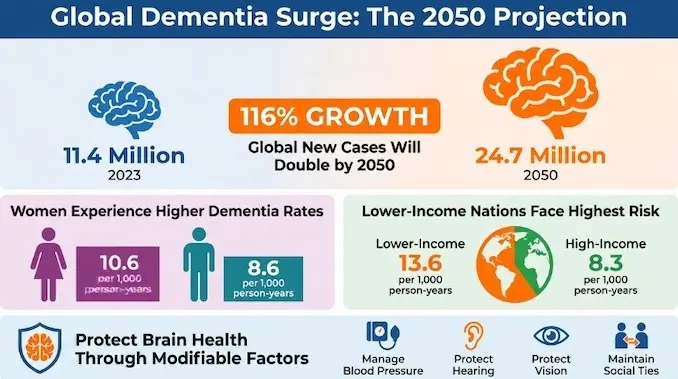
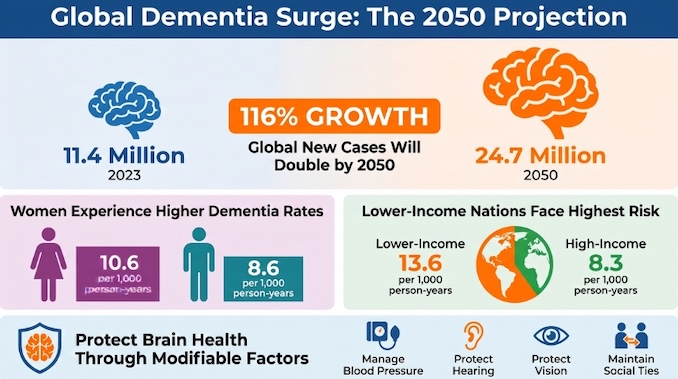
In 2023, there were an estimated 11.4 million new dementia cases globally. By 2050, that annual figure is projected to hit 24.7 million new cases, marking a 116% increase. Researchers stress that this sharp spike is not primarily driven by the disease itself becoming more aggressive, but rather by the rapid aging of the global population. Age remains the single biggest risk factor for dementia, and people across the globe are living longer than ever before.

According to Dr. Emer MacSweeney, a consultant neuroradiologist, this anticipated increase should be viewed as a crucial wake-up call to accelerate prevention, diagnosis, and treatment, rather than as an inevitable consequence of getting older.
The study also revealed a significant gender discrepancy in who develops dementia. The incidence rate for women was documented at 10.6 new cases per 1,000 person-years, compared to just 8.6 new cases per 1,000 person-years for men. While women generally enjoy longer lifespans, researchers indicate that longevity alone does not fully explain the gap. Sex-specific factors, such as biological changes during menopause and lifelong estrogen exposure, likely play a substantial role in brain health. This underscores a critical need for women to prioritize cognitive and cardiovascular health well before their senior years.

Geographical disparities further highlight the complexities of the disease. The research emphasized that low- and middle-income countries face a notably higher incidence of dementia, registering 13.6 cases per 1,000 person-years, compared to 8.3 cases in high-income countries. This geographical divide points directly to the heart-brain connection. High-income nations have experienced a steady decline in smoking rates, untreated high blood pressure, and high cholesterol over recent decades. Conversely, many low- and middle-income regions are experiencing increases in obesity, stroke, and cardiovascular disease. The clear takeaway is that cardiovascular health heavily dictates long-term brain health.
While individuals cannot stop the clock on aging, medical experts point out that much of a person’s cognitive trajectory is influenced by modifiable risk factors. Healthcare professionals recommend focusing on fundamental lifestyle adjustments to support long-term brain health, such as managing blood pressure, protecting sensory health, and staying socially active. These measures remain some of the most powerful defenses against the rising tide of global cognitive decline, though experts reiterate that a unified effort from global leaders is urgently needed to tackle the epidemic before it overwhelms healthcare systems worldwide.
The projection of 24.7 million annual dementia cases by 2050 serves as a sobering statistic for public health officials, but researchers emphasize it is not a predetermined future. By understanding the intricate connection between cardiovascular and cognitive health, individuals and caregivers can take practical steps to mitigate risk.
As the medical community continues to study the multifaceted variables surrounding cognitive decline and dementia risk, professionals recommend consulting with a primary care physician or neurologist to discuss specific risk factors and preventative care plans.