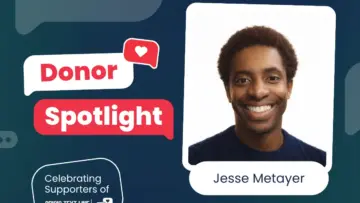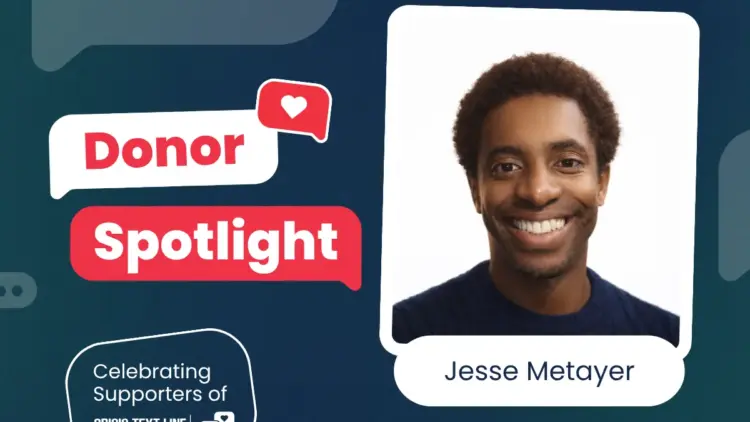
Every text message received by a crisis line is answered because someone believed it mattered enough to make that connection possible. Behind every successful intervention, every de-escalated crisis, and every moment of reassurance is a network of donors, volunteers, and advocates who sustain the infrastructure required to keep critical mental health services running around the clock. This month, the spotlight shines on Jesse Meyer, a dedicated donor, volunteer, and mental health advocate whose financial generosity and hands-on service help train the Crisis Counselors who show up for texters during their most vulnerable and difficult moments.
Meyer’s journey with mental health advocacy is deeply personal. Growing up, he spent most of his childhood feeling different from his peers. He navigated learning disability classes throughout his school years, constantly trying to conceal how difficult everyday academic and social tasks were for him. By the age of 18, the accumulation of these struggles led him to drop out of college, after which he began to isolate himself from friends and family. In what he describes as his darkest moment, Meyer felt as though there was no hope left for his future.
Faced with overwhelming despair, he finally decided to reach out for help. That pivotal decision marked the beginning of a profound personal transformation. When he entered therapy, his therapist listened with genuine empathy and provided vital emotional support alongside practical resources. Meyer was able to utilize those tools to steadily improve his mental health.
That experience fundamentally reshaped his perspective, teaching him the critical importance of seeking professional help when all hope feels lost. Previously, Meyer held a common misconception that therapy was exclusively intended for individuals dealing with severe mental illnesses—a stigma he now recognizes as entirely untrue. Through his own lived experience, he came to understand that anyone, at any given moment, can encounter overwhelming difficulties in life that warrant outside support.
From Personal Recovery to Frontline Intervention
Meyer’s commitment to mental health advocacy soon extended beyond his own healing journey. Eager to give back to the system that helped save him, he completed Crisis Text Line’s rigorous free six-week training program to become a volunteer Crisis Counselor. During the training, he acquired specialized emotional de-escalation techniques that he would later put into practice when interacting directly with texters facing acute crises.
By applying these learned methodologies, Meyer has successfully navigated numerous intense conversations. He has repeatedly experienced the profound impact of turning "hot moments" during initial interactions into "cool moments," ultimately guiding texters to a place of emotional stabilization and empowerment by the end of their chats. For Meyer, knowing that he has made a tangible difference in someone else’s life brings a deep sense of personal satisfaction and validation.
Supporting mental health initiatives and crisis intervention is vital, Meyer explains, because individuals suffering from emotional distress are often the people we encounter first in our daily lives. Through his training, he learned how to support these brave individuals by effectively guiding them through their distress and encouraging them to seek professional help immediately following their conversations. Furthermore, the experience taught him that listening is a cultivated skill that fosters patience and demands critical thinking, allowing a person to truly comprehend another’s words, emotions, and underlying needs.
The Mutual Impact of Giving Back
For Meyer, participating as a volunteer and a financial donor creates a continuous loop of mutual support. Being present for texters reassures them that they can reach out at any time of day or night for immediate, completely free assistance. On many occasions, texters have expressed profound gratitude at the conclusion of their conversations, a reaction that validates Meyer’s sense of self-worth and reinforces his dedication to the platform. By simply showing up and listening with compassion, he helps people navigate moments of severe distress.
His philanthropic giving is similarly driven by a desire to impact lives directly. Crisis Text Line provides free, round-the-clock mental health support to anyone in need. By supporting the organization financially, Meyer helps maintain the infrastructure that keeps the platform active and accessible. Through his volunteer work, he has simultaneously strengthened his own listening skills and empathy while offering nonjudgmental support. He credits much of this growth to the availability of coaches and supervisors who are always on hand to answer questions and provide guidance.
This work has also profoundly influenced his personal and professional life outside of volunteering. Helping individuals suffering from psychological distress brings him a deep sense of fulfillment, but the lessons learned during training extend far beyond the chat interface. Meyer has learned never to make major decisions when his emotions are running high. Slowing down helps clear his mind and enhances his critical thinking capabilities.
He now applies that same patience and empathy to manage stressful situations in his everyday life. Volunteering has underscored the importance of listening before passing judgment, a habit that helps him grasp the full picture and prevents unfair misunderstandings when interacting with friends and family.
Maintaining Well-Being and Expanding the Vision
When asked what he would say to others considering financial contributions to Crisis Text Line, Meyer emphasizes the broad scope of the platform’s reach. Donors are helping individuals who are grappling with natural disasters, systemic poverty, war, and various other profound hardships. Ensuring that mental health services remain entirely free guarantees that those who need emotional assistance the most will not be barred from receiving it due to financial constraints. Donors form the backbone that keeps the platform active 24/7. To anyone currently struggling, Meyer offers a direct message of reassurance: you are not alone, and reaching out is the courageous first step toward hope.
To maintain his own mental health and well-being, Meyer relies on a balanced routine. He attends church, volunteers regularly with Crisis Text Line, and dedicates time to personal projects such as the StarTalk app, which brings him joy and tranquility. He also prioritizes physical health by going to the gym and taking long, restorative walks in local parks, ensuring he remains grounded as he continues to show up for others.