A landmark study published in JAMA Neurology has delivered a sobering projection for the future of global healthcare: the number of new dementia cases is expected to double worldwide over the next quarter-century. For family caregivers currently supporting loved ones with cognitive decline, and for individuals looking ahead at their own long-term health, the findings highlight an escalating public health challenge that will require coordinated global leadership and strategic planning.
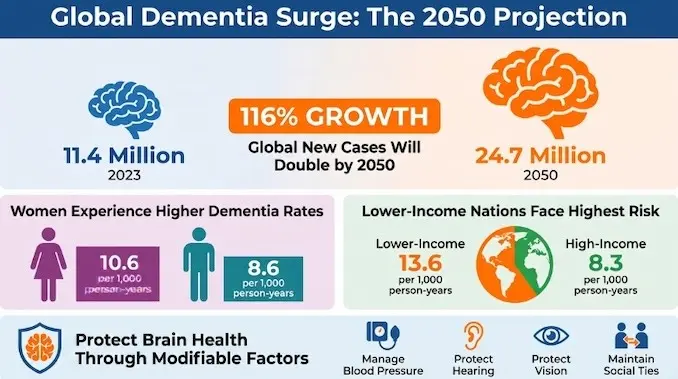
The research indicates that in 2023, there were an estimated 11.4 million new dementia cases globally. By 2050, that annual figure is projected to surge to 24.7 million new cases, representing a staggering 116% increase. Rather than pointing to an increase in the aggressiveness of the disease itself, researchers attribute this anticipated spike primarily to the rapid aging of the global population. Because age remains the single greatest risk factor for dementia, longer human lifespans naturally correlate with higher overall incidence numbers.

Medical professionals view the projections not as an inevitable fate, but as an urgent call to action. Dr. Emer MacSweeney, a consultant neuroradiologist, noted that the data should serve as a wake-up call to accelerate prevention, early diagnosis, and treatment initiatives on an international scale.
The study also shed light on significant demographic disparities regarding who is most affected by the condition. Researchers observed a notable gender gap, finding that the incidence rate for women was 10.6 new cases per 1,000 person-years, compared to just 8.6 new cases per 1,000 person-years for men. While women generally enjoy longer lifespans, experts emphasize that longevity alone does not fully account for the discrepancy. Sex-specific biological factors, including hormonal shifts during menopause and cumulative lifetime exposure to estrogen, are believed to play a substantial role in shaping brain health and vulnerability to cognitive decline. This distinction underscores the importance for women to prioritize cardiovascular and cognitive well-being well before entering their senior years.

Geographical disparities further illuminate the underlying mechanisms of the disease. The research revealed that low- and middle-income countries face a markedly higher incidence of dementia, recording 13.6 cases per 1,000 person-years, compared to 8.3 cases in high-income nations. Public health analysts connect this divide directly to the heart-brain connection. Over recent decades, high-income countries have achieved steady reductions in smoking rates, untreated hypertension, and elevated cholesterol. Conversely, low- and middle-income regions are seeing rising rates of obesity, stroke, and cardiovascular disease, reinforcing the medical consensus that maintaining cardiovascular health is a vital component of protecting brain function.
While systemic factors and global demographics drive the broader numbers, medical experts maintain that much of an individual’s cognitive trajectory is influenced by modifiable risk factors. Managing conditions such as high blood pressure and diabetes, protecting sensory health, and staying socially active remain among the most effective defenses against the rising tide of cognitive decline. However, researchers and advocates stress that individual lifestyle modifications must be supported by broader public health policies and international cooperation to address the underlying drivers of the epidemic before 2050.