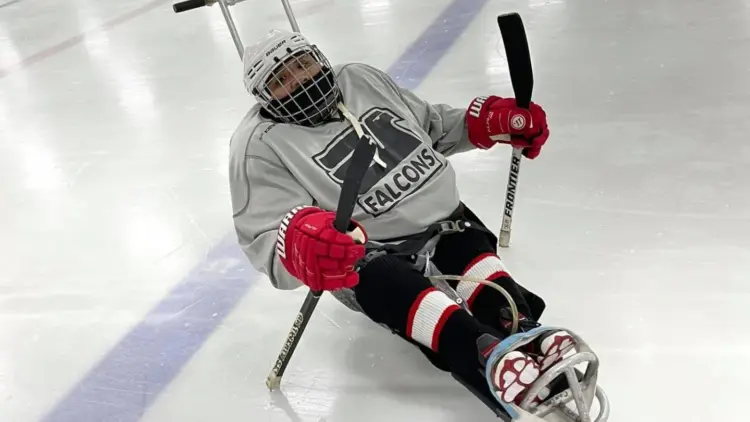
Carlos Murillo does not believe that living with a disability should ever restrict a person’s sense of adventure, purpose, or potential. At 32 years old, the Illinois resident is spending his 30s proving that physical limitations do not dictate what is achievable, building an extraordinary resume of extreme sports, arena tours, and international travel.
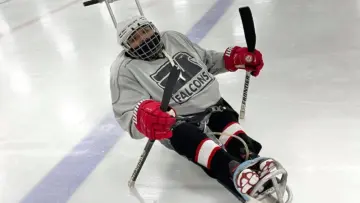
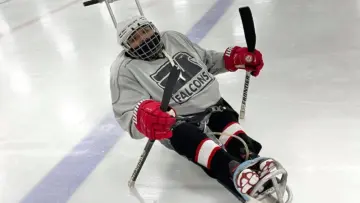
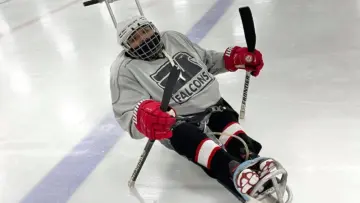
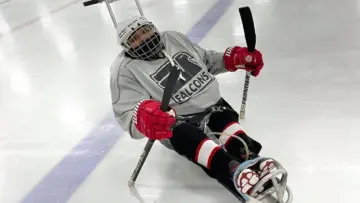
Born with spina bifida—a congenital condition characterized by incomplete development of the spinal cord—Murillo began using his first wheelchair at the age of three. Rather than letting his condition define his boundaries, he has spent decades aggressively seeking out new challenges. To date, Murillo has checked off an incredible array of activities: zip-lining, waterskiing, kayaking, snow skiing, scuba diving, go-kart racing, sled hockey, wheelchair rugby, archery, horseback riding, and rock climbing.
Yet, for Murillo, these accomplishments represent only the beginning. He has systematically curated an ambitious bucket list that includes NASCAR driving experiences, supercar rides, adaptive paragliding, helicopter flights, parasailing, adaptive surfing, whitewater rafting, adaptive mountain biking, and skydiving, alongside extensive international travel. Through his journey, Murillo demonstrates how determination, adaptive technology, and accessible travel can come together to dismantle artificial barriers and redefine what it means to live life to the fullest.
Origin Story and Mindset
Murillo’s journey into the world of adaptive athletics began nearly two decades ago. His initial introduction occurred in 2007 during a holiday gathering, where he participated in a game of wheelchair basketball hosted by GLASA Adaptive Sports (Great Lakes Adaptive Sports Association). What started as a festive social activity quickly revealed the transformative potential of adaptive recreation, opening his eyes to a realm of athletic movement designed for individuals with mobility impairments.
While his engagement with sports began in his teenage years, the shift toward a structured, mission-driven bucket list took shape much more recently. About two years ago, Murillo realized he had built a vast mental catalog of adrenaline-fueled goals but lacked a concrete plan to execute them. Formalizing his aspirations into a dedicated checklist provided the structure necessary to turn distant dreams into actionable itineraries.
Now in his 30s, Murillo views adventure through a vastly different lens than he did during his 20s. For Murillo, his current decade has brought a deeper sense of self-discovery, purpose, and personal fulfillment than his younger years ever provided. When reflecting on the inevitable friction, hesitation, or fear that can accompany high-risk sports, Murillo maintains a strikingly resolute philosophy. He notes that he does not harbour doubts or regrets regarding the obstacles he faces, viewing every setback or difficulty not as a failure, but simply as a valuable lesson learned along the path.
Breaking Boundaries Through Adaptive Sports
The world of adaptive sports relies heavily on specialized equipment, modified coaching techniques, and organizations dedicated to making athletics accessible to athletes of all abilities. Over the course of his athletic journey, Murillo has worked alongside and highlighted a wide network of specialized adaptive organizations, including GLASA, H2O Adaptive Sports, Diveheart, Shirley Ryan AbilityLab, and Wisconsin Adaptive Ski.
When a newcomer steps onto the field, slope, or water with one of these specialized organizations for the first time, Murillo notes that the initial experience is defined by camaraderie and community. Connecting with fellow athletes and experimenting with tailored equipment creates an inviting, fun environment that demystifies activities that initially seem out of reach.
Despite the technical modifications often required for adaptive sports, Murillo approaches new disciplines with a surprisingly straightforward mindset. Rather than dwelling on complex equipment adjustments or hyper-specific biomechanical techniques, he relies on intuition, repetition, and trial-and-error. For Murillo, getting the hang of a new sport usually requires just a few attempts before natural momentum takes over.
However, certain physical challenges stand out as particularly demanding. Among all the activities he has attempted, handcycling pushed his physical endurance to its absolute limits. Negotiating steep inclines proved mentally and physically grueling, leading him to note that pushing a handbike uphill is easily one of the toughest challenges he has encountered.
Conversely, other sports provided profound, exhilarating surprises. Before looking deeply into adaptive programs, Murillo assumed that zip-lining was entirely off-limits for wheelchair users due to the technical and harness requirements involved. Discovering that zip-lining was accessible—and successfully soaring through the canopy—became one of the most emotionally resonant milestones of his life. That moment proved that assumptions about accessibility are often wrong. Along with zip-lining, disciplines like para-motoring and waterskiing instantly captured his heart, quickly turning into lifelong passions.
Chasing the Next Adrenaline Rush
Driven by a love for high-speed excitement, Murillo actively seeks out activities that deliver an unmistakable thrill. It is this demand for speed and flight that attracts him to upcoming goals like NASCAR experiences and adaptive paragliding.
Selecting what makes it onto his bucket list is a methodical process. Murillo routinely evaluates potential activities by carefully weighing the pros and cons while considering the visual and physical appeal of each sport. If an idea captivates his interest and offers a unique challenge, it moves from a passing thought into his official lineup. Once an activity is successfully checked off, Murillo turns to web research and brainstorming sessions to source new concepts, ensuring his list remains dynamic and continually evolving.
Looking ahead at his unfulfilled goals—which include supercar drives, parasailing, adaptive surfing, whitewater rafting, adaptive mountain biking, and skydiving—Murillo experiences a mixture of eager anticipation and honest apprehension. He anticipates the raw speed of supercar rides and the heights of parasailing with pure excitement. On the other hand, water-based extreme sports like adaptive surfing and navigating turbulent currents during whitewater rafting introduce a healthy layer of nervousness. Nevertheless, his overarching drive to push boundaries ensures that these anxieties serve as motivation rather than roadblocks.
The Stadium Tour: A Passion for Live Sports
Beyond his personal athletic endeavors, Murillo is an avid sports enthusiast pursuing another major mission: visiting live sports venues across the nation. His stadium-collecting journey covers a massive cross-section of professional, collegiate, and minor league athletics, taking him to venues hosted by Major League Baseball (MLB), the National Hockey League (NHL), the National Basketball Association (NBA), the National Collegiate Athletic Association (NCAA), professional rugby leagues, and the National Women’s Soccer League (NWSL).
His passion for visiting stadiums stems from a deep love for sports culture and a simple desire to experience as many iconic venues as possible in person. Minor League Baseball venues hold a particularly special place on his travel itinerary. Murillo frequently frequents minor league ballparks, including those in Kenosha, Wisconsin; Schaumburg, Illinois; South Bend, Indiana; Midland, Texas; and San Antonio, Texas.
The draw to minor league parks is practical as well as experiential. Minor league games offer an affordable, intimate, and community-focused atmosphere. To manage costs while maintaining an active event calendar, Murillo frequently takes the initiative to contact team management and front offices directly via email to inquire about complimentary tickets and physical accommodation details.
Evaluating stadium accessibility across the country has given Murillo firsthand insight into how venues handle fans with disabilities. While venue quality varies across leagues, Murillo singles out Wintrust Field, home of the Schaumburg Boomers in Illinois, as an exemplary standard for accessibility, praising its seamless accommodation and welcoming infrastructure for wheelchair users.
Navigating Accessible Travel Across Borders
Murillo’s passion for sports and adventure has turned him into a seasoned traveler. His domestic and international journeys have taken him across numerous U.S. states—including California, Texas, Florida, Michigan, Indiana, Minnesota, and Wisconsin—as well as across international borders into Canada and Mexico.
Travel as a wheelchair user requires meticulous, proactive planning far beyond the requirements of a typical itinerary. Murillo notes that successful trips depend on researching accessible hotel accommodations, securing specialized transportation, and verifying that tourist attractions can actually accommodate mobility devices.
Throughout his travels, Murillo has encountered vast differences in regional accessibility infrastructure. States like Texas and California earned his praise for their commitment to accessible public design, barrier-free transit, and accommodation standards. In contrast, historical destinations present distinct physical hurdles. His travels in Mexico proved particularly challenging due to historic, uneven cobblestone streets that make operating a manual wheelchair exhausting and difficult.
Looking ahead, Murillo is preparing for his next major international voyage: an ocean cruise that will take him to Honduras, the Bahamas, and back to Mexico.
When reflecting on the broader landscape of travel resources, Murillo points out a common shortcoming in conventional accessibility guides. He notes that tourism materials often fail to emphasize a simple reality: not everything advertised as accessible actually is. Despite the planning pitfalls and structural barriers inherent to travel, his advice for other wheelchair users contemplating their first solo journey or major trip remains direct: do not let fear paralyze you; take the leap, remain fearless, and embrace the experience.
Advocacy, Motivation, and Redefining What Is Possible
Through his public journey, Murillo hopes to foster a broader understanding of adaptive recreation among both the general public and the disability community. He wants people to realize that adaptive opportunities exist across nearly every sporting discipline—they simply require research, outreach, and persistence to locate.
When facing intimidating challenges, Murillo draws strength from an internal sense of resolve backed by the encouragement of his coaches. For Murillo, giving up is simply not an option. His message to individuals who are newly navigating life in a wheelchair and fear their adventuring days are behind them is equally urgent: embrace new experiences without hesitation, step outside your comfort zone, and "just send it."
Reflecting on his journey from receiving his first wheelchair at age three to conquering rivers, mountains, and skies in his 30s, Murillo takes immense pride in every obstacle he has overcome. Looking back at where he started, the single most important truth he would share with his younger self is that remarkable things are entirely possible—so long as you are willing to put in the work required to achieve them.