A major study published in JAMA Neurology has delivered a stark and sobering global health projection: the number of new dementia cases is anticipated to double worldwide by the middle of the century. For family caregivers who are currently managing the daily realities of supporting a loved one with cognitive decline, as well as for individuals looking ahead at their own long-term health, these new projections underscore profound societal and healthcare ramifications.
According to the comprehensive research data, understanding the primary driving forces behind these increasing numbers serves as a vital first step toward improving early prevention strategies, diagnosis accessibility, and long-term care planning. However, public health experts emphasize that getting this burgeoning global health challenge under control will ultimately require coordinated international leadership, systemic advocacy, and a unified response from medical communities worldwide.

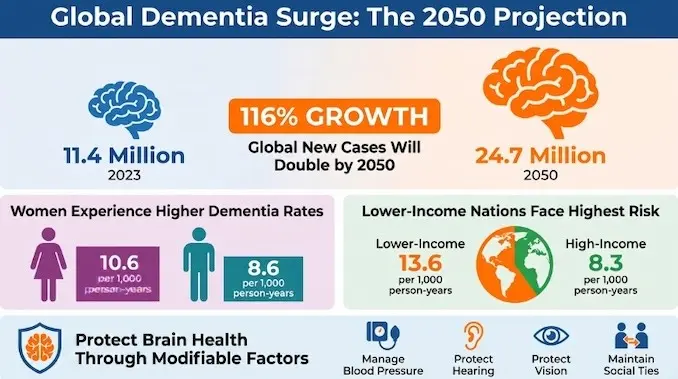
The latest data reveals that in 2023, the global health landscape saw an estimated 11.4 million new cases of dementia. Looking forward to the year 2050, that annual figure is projected to surge to 24.7 million new cases, representing a staggering 116% increase. Public health analysts point out that this dramatic upward spike is not fundamentally driven by the disease becoming biologically more aggressive over time, but rather is the direct result of the rapid and unprecedented aging of the global population. Because advancing age remains the single most significant risk factor for the development of dementia, and because global life expectancies have steadily risen, a larger baseline population is reaching the age brackets most commonly associated with cognitive decline.
Medical professionals view these projections not merely as an inevitable consequence of an aging society, but rather as an urgent call to action. Experts in neurology and neuroradiology have noted that the data should serve as a powerful catalyst to accelerate research into prevention, refine diagnostic tools, and improve therapeutic interventions well before cognitive symptoms begin to manifest in patients.
A closer examination of the data reveals a notable gender gap in the incidence of the disease. The study highlights that women experience a significantly higher incidence rate of dementia, calculated at 10.6 new cases per 1,000 person-years, compared to a rate of 8.6 new cases per 1,000 person-years for men. While statistical studies frequently note that women generally enjoy longer lifespans than men, researchers emphasize that longevity alone does not fully account for the observed disparity. Instead, investigators point toward sex-specific biological factors, including the profound hormonal transitions that occur during menopause and the cumulative lifelong exposure to estrogen, as variables that likely play a substantial role in shaping long-term brain health. This physiological distinction underscores an urgent need for targeted healthcare strategies that help women prioritize both cardiovascular and cognitive well-being decades before they reach their senior years.

Geographical disparities also figure prominently in the research findings, illuminating a distinct connection between systemic physical health and neurological outcomes. The study revealed that low- and middle-income countries face a substantially higher incidence of dementia, registering 13.6 cases per 1,000 person-years, compared to just 8.3 cases per 1,000 person-years in high-income nations. This wide geographical divide points directly to the well-established heart-brain connection. Over recent decades, high-income countries have achieved notable success in reducing smoking rates, improving the management of high blood pressure, and controlling cholesterol levels. Conversely, many low- and middle-income regions are currently experiencing rising trends in obesity, stroke, and broader cardiovascular diseases. For healthcare providers and families alike, the underlying message of these global trends remains clear: protecting cardiovascular health is fundamentally intertwined with preserving long-term brain health.
While individuals cannot alter chronological aging, medical science demonstrates that a significant portion of a person’s long-term cognitive trajectory is influenced by modifiable risk factors. Healthcare specialists consistently recommend focusing on foundational health habits to support cognitive resilience over time. These include the rigorous management of chronic conditions such as high blood pressure and diabetes, maintaining active social engagement to protect mental well-being, and addressing physical health variables that directly impact the brain’s vascular network.
The projected total of nearly 25 million annual dementia cases by 2050 presents an immense challenge for healthcare infrastructure, but researchers reiterate that the future trajectory is not entirely predetermined. By recognizing the direct links between systemic physical health and cognitive preservation, individuals, caregivers, and policymakers can take informed steps to mitigate long-term risks. Mitigating the rising tide of global cognitive decline will ultimately demand a combination of proactive lifestyle management at the individual level and sweeping, collaborative efforts from global healthcare leaders before the full weight of the demographic shift is realized.