Health insurance remains a major household expense, often presenting a significant financial hurdle for individuals and families with lower or moderate incomes. To bridge this affordability gap, the Affordable Care Act (ACA) provides vital financial mechanisms designed to lower monthly premiums and reduce out-of-pocket medical costs for eligible consumers purchasing independent health coverage.
For millions of Americans shopping for independent health plans through the state and federal health insurance Marketplaces—frequently referred to as exchanges—understanding these financial assistance programs is essential. The federal framework relies on two primary pillars of support: premium tax credits, which directly lower monthly insurance bills, and cost-sharing reductions, which minimize out-of-pocket expenses like deductibles, copayments, and coinsurance when patients seek medical care. To secure either form of financial assistance, qualifying individuals and families must enroll directly through an official health insurance Marketplace.
Health Insurance Marketplace Subsidies
The financial assistance ecosystem within the Marketplace is split into distinct categories tailored to address different aspects of consumer healthcare costs. The premium tax credit is designed to make monthly insurance premiums manageable across four distinct tiers of coverage, known as "metal" levels: bronze, silver, gold, and platinum.
Under this structure, bronze plans generally feature the lowest monthly premiums but come with the highest deductibles and other cost-sharing requirements, meaning consumers pay more out of pocket when they receive medical care. At the other end of the spectrum, platinum plans carry the highest monthly premiums but require very little out-of-pocket spending when care is accessed.
In addition to these tiered options, catastrophic health plans are also available on the Marketplace. These plans typically offer even lower monthly premiums and higher cost-sharing thresholds than bronze plans. However, eligibility for catastrophic plans is generally restricted to individuals under the age of 30, and enrollees are strictly prohibited from applying premium tax credits toward their purchase.
Who Is Eligible for the Premium Tax Credit?
To qualify for a premium tax credit for the 2027 coverage year, a Marketplace enrollee must satisfy a specific set of statutory criteria concerning household income, employer-sponsored insurance options, Medicaid eligibility, and immigration status.
Household income serves as a foundational metric for determining premium tax credit eligibility and sizing. For these calculations, household income is defined as the Modified Adjusted Gross Income of the primary taxpayer, their spouse, and any dependents who are legally required to file a tax return. The calculation incorporates multiple revenue streams, including standard wages, salaries, foreign income, interest earnings, dividends, and Social Security disbursements.
Employment-based coverage rules also heavily influence Marketplace eligibility. Under federal guidelines, employer-sponsored insurance is deemed affordable if the required employee premium contribution does not exceed 10.22% of household income for the 2027 coverage year. The Marketplace evaluates both the employee-only cost and, if applicable, the cost for family coverage.
A unique regulatory nuance arises if an employer’s self-only coverage meets the affordability test, but family coverage exceeds the 10.22% threshold. In such cases, dependents may utilize subsidized exchange coverage while the primary employee remains enrolled in the employer’s plan. Furthermore, employer plans must satisfy minimum value standards, requiring the insurance to provide substantial coverage for physician services and inpatient hospital care with an actuarial value of at least 60%, matching the baseline of a bronze-tier plan. These plans must also comply with strict annual out-of-pocket spending ceilings, capped at no more than $12,000 for self-only coverage and $24,000 for family coverage in 2027. Workers offered employer plans that fail to meet these affordability or minimum value standards may qualify for Marketplace subsidies, provided they meet all other criteria.
Medicaid eligibility rules create another division across states. In states that have chosen to expand Medicaid under the ACA, adults earning up to 138% of the federal poverty level are generally funneled into Medicaid rather than receiving Marketplace subsidies. Conversely, in states that have opted out of the Medicaid expansion, adults earning as low as 100% of the federal poverty level may qualify for Marketplace subsidies. However, individuals earning below 100% of the poverty level in non-expansion states typically fall into a coverage gap, rendering them ineligible for both traditional Medicaid and Marketplace tax credits unless they meet narrow state-specific exceptions. Policy research organizations estimate that more than one million Americans reside in non-expansion states within this coverage gap.
Immigration status requirements have also experienced notable shifts. Under federal budget reconciliation legislation enacted in 2025, lawfully present low-income immigrants who lack Medicaid eligibility—frequently due to residing in the United States for fewer than five years—are barred from receiving premium tax credits starting with the 2026 plan year. Beginning in 2027, eligibility for Marketplace financial assistance is restricted to individuals holding specific immigration statuses, such as Lawful Permanent Residents including Green Card holders, Cuban or Haitian entrants, and Compact of Free Association migrants. While other immigration statuses may permit enrollment in baseline Marketplace coverage, they do not grant access to tax credits. Individuals lacking eligible statuses, including recipients of Deferred Action for Childhood Arrivals, remain entirely barred from purchasing Marketplace insurance, receiving tax credits, or enrolling in non-emergency Medicaid and CHIP.
What Amount of Premium Tax Credit Is Available?
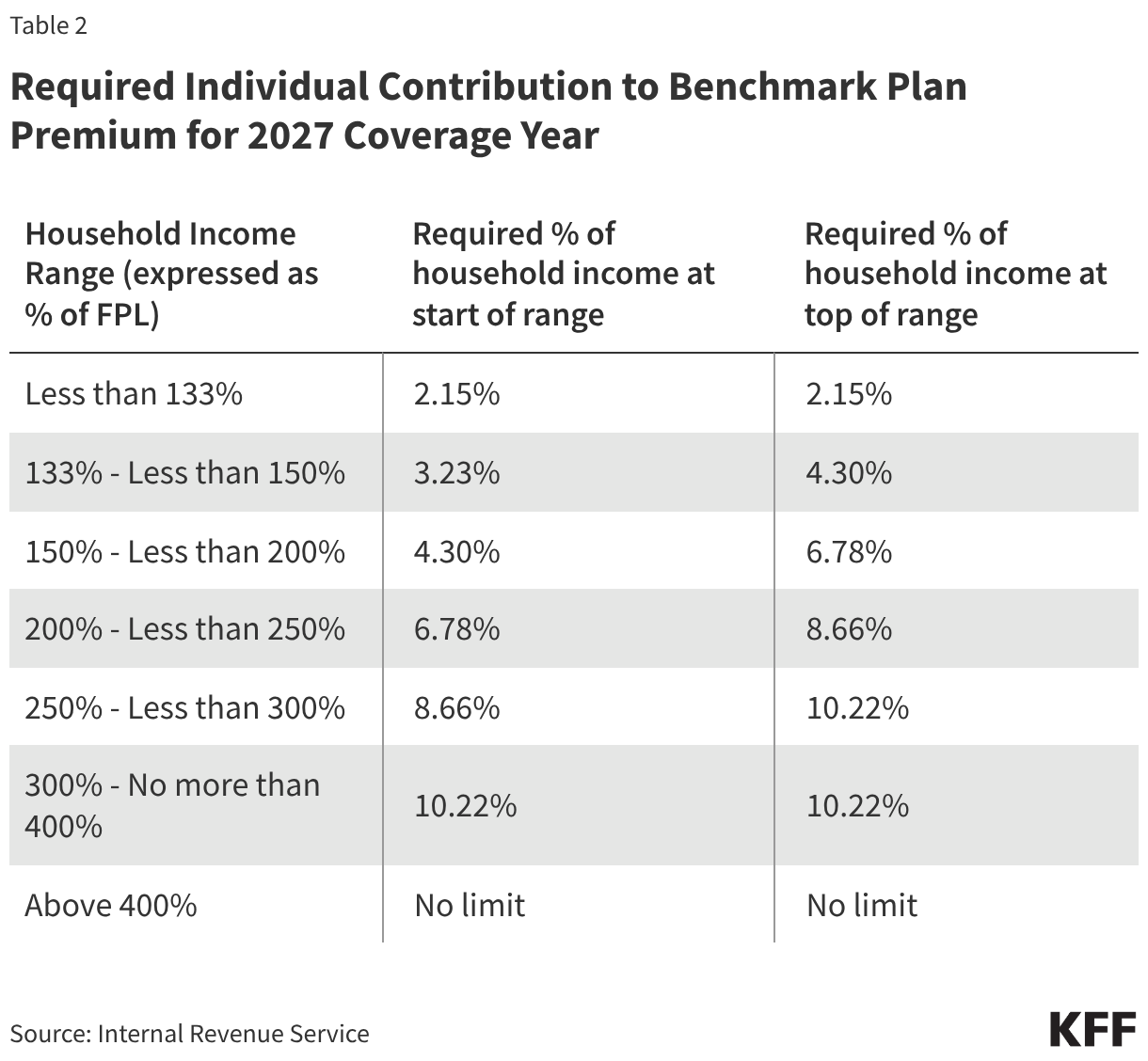
The calculation of the premium tax credit relies on limiting an individual’s personal contribution toward the cost of a designated "benchmark" plan, which is defined as the second-lowest-cost silver plan available in the local Marketplace. This required individual contribution is determined through a sliding income scale.
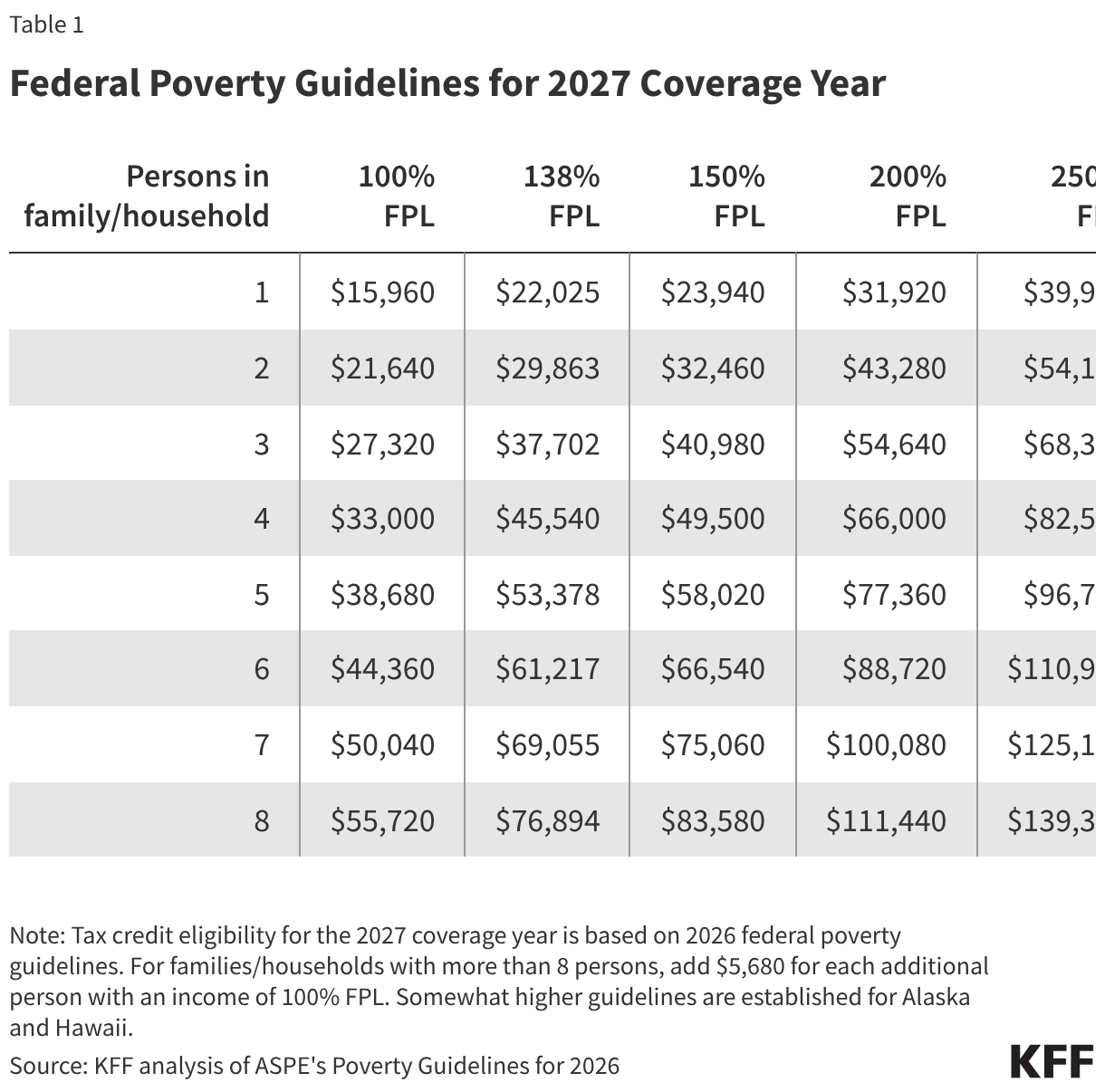
For the 2027 coverage year, individuals with incomes below 133% of the federal poverty level face a required contribution of 2.15% of their income. For those earning between 300% and 400% of the poverty level, the required contribution rises to 10.22%. Individuals earning above 400% of the federal poverty level do not qualify for premium tax credits.
The broader policy landscape surrounding these credits has undergone significant changes in recent years. Temporary enhanced tax credits introduced by the American Rescue Plan Act, and later extended by the Inflation Reduction Act, expired at the conclusion of 2025. These enhanced measures had previously eliminated monthly premiums for enrollees earning up to 150% of the poverty level and capped required contributions at 8.5% of income for higher earners. Following their expiration, the protective cap on contributions for earners above 400% of the poverty level disappeared, exposing them to the full financial weight of unsubsidized premiums. The resulting market adjustments saw average premium payments and deductibles climb significantly as consumers sought out higher-deductible plans to manage rising costs.
The actual dollar value of a premium tax credit is calculated by subtracting an individual’s required sliding-scale contribution from the actual cost of the local benchmark plan. For example, if a benchmark plan costs $6,000 annually, an individual earning 133% of the federal poverty level would have a calculated contribution of a small percentage of that income, resulting in a substantial tax credit that covers the vast majority of the expense.
Consumers are not forced to purchase the benchmark plan; they may apply their calculated tax credit toward any metal-level plan sold on the Marketplace, with the exception of catastrophic coverage. Selecting a more expensive plan means the consumer pays the difference out of pocket, whereas choosing a less expensive bronze or low-cost silver plan allows the fixed tax credit to cover a greater share of the premium, potentially resulting in a zero-dollar monthly premium if the credit exceeds the plan’s cost.
Federal regulations place specific restrictions on how premium tax credits can be applied. Subsidies cannot be utilized for portions of a premium attributable to benefits that fall outside the statutory definition of essential health benefits, such as optional adult dental coverage. Furthermore, federal law prohibits the application of tax credits toward the cost of non-Hyde abortion benefits. Marketplace plans covering these services are mandated to charge a separate $1 monthly premium to cover the benefit, meaning even fully subsidized consumers must pay this separate dollar each month. Tobacco surcharges assessed against smokers are similarly excluded from tax credit coverage.
How Do People Receive the Premium Tax Credit?
To actually secure the premium tax credit, consumers must complete a Marketplace application disclosing their age, residential address, household size, citizenship status, and projected income for the upcoming coverage year. Upon submission, applicants receive an official eligibility determination outlining their qualifying tax credit amount. Consumers then decide whether to receive the assistance in advance, claim it later during annual tax filing, or utilize a hybrid approach.
The advance premium tax credit option allows 1/12 of the calculated tax credit to be paid directly to the insurance carrier every month, lowering the direct monthly invoice sent to the consumer. Because these advance payments rely on projected income rather than verified earnings, enrollees are legally required to reconcile their advance payments when filing federal taxes the following year. If a consumer’s actual income turns out to be lower than estimated, they receive the unclaimed portion of their tax credit as a refundable credit on their tax return. Conversely, federal policy mandates that consumers who underestimate their income must repay the full amount of any excess advance payments received during the year, following the elimination of historical repayment caps under recent federal budget legislation.
Alternatively, consumers may opt to pay their full monthly premiums out of pocket and wait to claim their tax credit as a lump sum when filing their annual income tax return. However, this option remains financially out of reach for the vast majority of Marketplace participants. Because the tax credit is fully refundable, it remains accessible to qualifying enrollees regardless of whether they have an independent federal income tax liability, though filing a return is mandatory for anyone receiving advance payments to maintain eligibility for future assistance.
Cost-Sharing Reductions
Beyond monthly premium assistance, the ACA establishes a secondary layer of financial relief known as cost-sharing reductions. These mechanisms directly lower out-of-pocket expenses—including deductibles, copayments, and coinsurance—when enrollees access medical services.
Eligibility for cost-sharing reductions is restricted to individuals who qualify for premium tax credits and maintain household incomes ranging from 100% to 250% of the federal poverty level. Unlike premium tax credits, which can be applied across any metal tier, cost-sharing reductions are exclusively tied to silver-level plans.
For eligible individuals, selecting a silver plan equipped with cost-sharing reductions alters the structural design of the insurance, transforming the plan’s cost-sharing parameters to resemble those of much more expensive gold or platinum plans. While consumers within the 100% to 250% poverty range remain free to apply their premium tax credits to any metal tier, they forfeit the financial benefit of reduced cost sharing if they bypass silver-level plans.
The depth of cost-sharing reductions is structured along a sliding income scale. The most robust reductions are reserved for individuals earning between 100% and 150% of the federal poverty level. For these consumers, silver plans are modified to drastically lower deductibles and copays, bringing average cost-sharing levels closer to a platinum plan. Silver plans featuring this maximum level of financial adjustment are frequently designated as CSR 94 plans, reflecting an actuarial value of 94%—meaning the insurance plan covers an average of 94% of all health spending, compared to the standard 70% actuarial value of a typical unadjusted silver plan.
Slightly less comprehensive reductions are available for individuals with incomes between 150% and 200% of the federal poverty level, establishing CSR 87 plans that reduce actuarial values to 87%. For consumers earning between 200% and 250% of the poverty level, reductions provide modest relief, establishing CSR 73 plans with an actuarial value of 73%.
While insurance carriers retain regulatory flexibility in structuring specific deductibles and copayments to meet these mandated actuarial thresholds, the federal government simultaneously enforces strict overall limits on annual out-of-pocket spending. For the 2027 coverage year, the maximum out-of-pocket spending ceiling is established at $12,000 for self-only coverage and $24,000 for family coverage across standard qualified health plans, with significantly lower maximum thresholds enforced within cost-sharing reduction plans. Insurers retain the administrative authority to establish even lower out-of-pocket maximums to further protect enrollees from catastrophic medical debt.