WASHINGTON — As national debates over the future of American health care persist, health policy analysts are taking a closer look at the vast ideological and structural gap between the existing federal Medicare program and the expansive proposals bundled under the banner of "Medicare for All."
In a recent analysis published in the JAMA Health Forum, Larry Levitt, Executive Vice President for Health Policy at KFF, breaks down the nomenclature and the reality behind these sweeping reform proposals. According to Levitt, while proposals for a single-payer system routinely promise far more generous benefits than traditional Medicare—often featuring zero premiums, minimal out-of-pocket expenses, and comprehensive coverage for services like dental, vision, and long-term care—the actual legislative and political path to enacting such a program would likely force a dramatic reshaping of those promises. If subjected to the sobering crucible of a serious national debate regarding fiscal realities, implementation hurdles, and inevitable trade-offs, a true "Medicare for All" system might ultimately begin to resemble the very Medicare program Americans know today.
To understand the core of the discussion, policy experts point to the fundamental design of the current Medicare program, which was established in 1965 to provide health insurance coverage to Americans aged 65 and older, as well as younger individuals with specific long-term disabilities. Today, traditional Medicare serves tens of millions of beneficiaries, offering a standardized framework of hospital insurance (Part A) and medical insurance (Part B), alongside optional prescription drug coverage (Part D) and private supplemental insurance policies (Medigap) designed to fill gaps in cost-sharing.
However, traditional Medicare is far from free at the point of service. Beneficiaries typically pay monthly premiums for Part B and Part D, face substantial deductibles, and are subject to coinsurance or copayments for many medical procedures. Crucially, traditional Medicare does not include a cap on annual out-of-pocket spending, prompting the vast majority of beneficiaries to purchase supplemental coverage or enroll in private Medicare Advantage plans to protect themselves against catastrophic medical expenses.
By contrast, prominent legislative blueprints for Medicare for All—championed by various progressive lawmakers over recent years—envision a universal, single-payer health care system that would replace the fragmented public-private mix of American health insurance entirely. These proposals promise a dramatic upgrade in affordability and scope. Under these plans, patients would generally face no monthly premiums, no deductibles, and no cost-sharing whatsoever when visiting a doctor or receiving hospital treatment. Furthermore, the benefit package is typically designed to be far more comprehensive than standard Medicare, absorbing areas of care that are currently excluded or heavily restricted.
Yet Levitt’s analysis highlights the profound political and economic tensions that arise when comparing the rhetorical promises of Medicare for All with the pragmatic mechanics of health care administration and financing. The allure of the name "Medicare" carries immense political capital, drawing on the widespread popularity and public trust associated with the existing federal program. Yet borrowing the name masks the radical divergence in scale and structure between a program designed for seniors and one intended to finance the total health care utilization of the entire U.S. population.
When health economists and policy analysts model the transition to a single-payer system, the discussion invariably centers on the staggering cost and the necessary trade-offs required to sustain it. Financing a universal system without premiums or cost-sharing would necessitate massive federal revenue generation, likely through substantial broad-based taxes affecting a wide cross-section of American workers and corporations. Furthermore, controlling total national health expenditures within a single-payer framework would require strict federal regulation of provider payment rates and the utilization of medical services.
As Levitt points out, if a universal single-payer proposal were to undergo the rigorous legislative vetting and intense public debate required for enactment, lawmakers would inevitably confront difficult choices about resource allocation. To manage the immense fiscal pressure of providing limitless, zero-cost care to more than 330 million people, policymakers would likely have to confront the same kinds of cost-containment measures that plague health systems worldwide. This could include scaling back some of the most generous benefit promises, introducing modest forms of cost-sharing to deter unnecessary utilization, or rationing certain types of high-cost care. Through that process of legislative compromise and fiscal reality-checking, a theoretical Medicare-for-All program would likely shed its most utopian features and evolve into something much closer to the existing Medicare architecture—complete with managed benefits, structural limitations, and ongoing debates over sustainability.
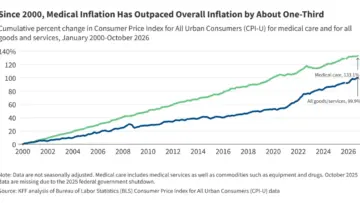
The ongoing discourse over national health care reform takes place against a backdrop of rising medical costs and persistent public anxiety regarding affordability. KFF research consistently shows that health care costs and the financial burdens of medical debt remain a top concern for American families, driving public interest in alternative structural models. While current and historical public opinion polls indicate that broad conceptual support for Medicare-for-All often fluctuates depending on how the questions are framed—frequently dropping when respondents are informed about potential tax increases or the elimination of private insurance options—the debate continues to shape political platforms and policy discussions.
Ultimately, Levitt’s analysis underscores the power of political branding in health care reform. By attaching the trusted name of Medicare to a radically expanded single-payer model, proponents have successfully elevated a transformative vision for the American health care system. Whether that vision can withstand the pragmatic pressures of a national legislative debate without morphing into a system that bears a much closer resemblance to today’s federal health program remains one of the central questions in modern American policy.