As health insurance markets continue to evolve, the administration and publishing format for consumer guidance surrounding the Affordable Care Act (ACA) are undergoing significant adjustments. Federal health resources have transitioned away from maintaining an exhaustive, running list of comprehensive frequently asked questions. Instead, officials have streamlined guidance to focus on the eight most critical topics concerning ACA Health Insurance Marketplace coverage, reflecting updated policies and financial thresholds heading into the 2027 plan year.
For millions of Americans relying on the marketplace for health coverage, understanding how premium tax credits function, who qualifies, and how life changes impact insurance status remains vital. The updated guidance provides essential clarity on these moving parts, ensuring that consumers can make informed decisions about their healthcare options.
How Premium Subsidies Work
At the heart of the ACA marketplace are premium tax credits, commonly referred to as subsidies, which are designed to significantly lower the monthly cost of health coverage for the majority of participants. The exact amount of financial assistance an individual or family receives depends directly on two primary factors: household income and the local cost of marketplace health plans within a specific geographic area.
When evaluating an application, the marketplace calculates an expected personal contribution toward a benchmark mid-range plan, known as a Silver plan. Under the parameters for 2027 coverage, this expected contribution scales upward on a sliding scale based on household income. In practical terms, lower income levels trigger larger government assistance amounts, while higher income levels receive progressively smaller subsidies.
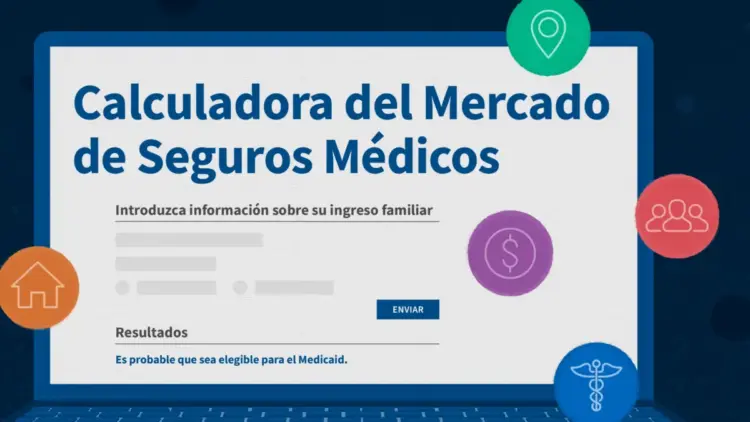
The financial assistance is calculated as the difference between the local benchmark plan’s premium and the consumer’s expected contribution. Crucially, policyholders are never required to pay more than the actual cost of their chosen plan. These credits can be applied toward any tier of marketplace coverage—whether Bronze, Silver, Gold, or Platinum—though they cannot be utilized for catastrophic health plans. Consumers frequently use interactive online marketplace tools, such as the KFF subsidy calculator, to estimate their potential monthly savings before officially submitting an application.
Subsidies can be handled in one of two ways. Individuals may choose to wait and claim the tax credits at the end of the year when filing taxes, or they can opt for advance payments distributed directly to their insurance provider on a monthly basis. When utilizing advance payments, the government covers its portion directly to the insurer, and the consumer is billed only for the remaining balance, if any.
However, utilizing advance payments requires accurate income forecasting. Because income levels may fluctuate throughout the year, applicants must provide their best possible estimate during enrollment. When tax season arrives, the Internal Revenue Service (IRS) reconciles the actual income against the advanced credits received. Consumers who underestimate their income and accept an overly generous subsidy risk having to repay part or all of the difference when filing their federal income tax returns. Conversely, individuals who received less assistance than they were entitled to can claim the remaining balance during tax filing. To avoid substantial year-end financial surprises, policyholders are strongly advised to report any mid-year income changes directly to the marketplace so that subsidies can be adjusted in real time.
Income Eligibility and Qualifying Thresholds
Securing financial assistance through the health insurance marketplace requires meeting specific financial criteria. Premium tax credits are generally available to individuals and families whose household income equals or exceeds the federal poverty level.
To determine official eligibility, the marketplace evaluates what is known as the modified adjusted gross income, or MAGI. This calculation encompasses a broad range of financial streams, including regular wages and salaries, interest earnings, dividend income, unemployment benefits, and several other taxable revenue sources.
Citizenship and legal residency status also play a definitive role in qualifying for marketplace subsidies. Assistance is available to U.S. citizens and specific groups of lawfully present immigrants who purchase coverage through the marketplace and meet the baseline income requirements, which stand at 100 percent of the federal poverty level—amounting to $15,650 for a single adult or $32,150 for a family of four for the 2026 and 2027 planning cycles.
Significant changes are slated for 2027 regarding immigrant eligibility. Moving forward, eligibility for marketplace premium tax credits will be restricted for many lawfully present immigrant groups. Only specific classifications, such as lawful permanent residents, individuals originating from Cuba and Haiti, and residents living in the United States under a Compact of Free Association (COFA), will maintain qualification for subsidized coverage.
Furthermore, individuals cannot qualify for marketplace subsidies if they already have access to public health coverage—such as Medicaid, the Children’s Health Insurance Program (CHIP), Medicare, or military coverage—or if they have an affordable offer of employer-sponsored health insurance. An employer plan is only considered unaffordable if the employee’s share of the premium for self-only coverage exceeds 10.22 percent of their household income for 2027, or if the employer plan fails to meet minimum value standards. Those whose household earnings fall below 100 percent of the federal poverty level generally do not qualify for marketplace subsidies, though state-specific options may be available through local marketplace agencies.
Purchasing Coverage Outside the Marketplace
While financial assistance is exclusive to the official marketplace platforms, consumers retain the right to purchase health insurance outside of the exchange. Many insurance companies offer plans through the marketplace alongside identical counterparts sold directly to consumers off the exchange.
Off-exchange plans that comply with ACA standards still provide robust consumer protections. They are required to cover essential health benefits and are legally prohibited from denying coverage, charging higher rates, or imposing limitations based on pre-existing medical conditions. However, purchasing these plans outside the marketplace means forfeiting any eligibility for monthly premium subsidies or cost-sharing reductions.
Moreover, ACA-compliant plans are generally restricted to the designated open enrollment period, or accessible at other times of the year solely for individuals who qualify for a special enrollment period triggered by major life events, such as losing a job or welcoming a child.
Consumers must also remain vigilant, as numerous non-compliant products—such as short-term insurance policies and hospital indemnity plans—are frequently marketed outside the marketplace. These alternative plans often feature lower upfront premiums because they retain the legal authority to reject applicants with pre-existing conditions and offer significantly restricted benefits. Even individuals who believe they earn too much to qualify for financial assistance are often encouraged to shop within the official marketplace to ensure their chosen plan fully complies with ACA consumer protection standards.
Employer-Sponsored Family Coverage and Marketplace Options
A common dilemma arises for workers whose employers fully cover the cost of individual employee premiums but provide zero financial contribution toward adding a spouse and dependents to the plan.
While an employee whose individual premium is 100 percent covered will not qualify for marketplace subsidies for themselves, family members may still be eligible for financial assistance on the exchange. If the employee’s cost to enroll a spouse and children under the employer’s family plan exceeds 10.22 percent of the household income, those family members may look to the marketplace to secure a more affordable alternative with the backing of federal subsidies.
Canceling Marketplace Plans and Managing Dependents
Policyholders wishing to terminate their marketplace health plans mid-year must formally notify both their marketplace administration and their insurance provider. Relying simply on non-payment of premiums is strongly discouraged. While failing to pay will eventually lead to coverage cancellation, insurance companies may still pursue collections for unpaid balances if they assume the customer simply fell behind on bills. Additionally, if the government continues disbursing advance premium tax credits to the insurer after coverage was intended to end, the policyholder may face unexpected repayment obligations to the IRS.
For young adults navigating life changes, such as moving to a new state while covered under a parent’s insurance plan, distinct rules apply. Dependents generally remain eligible to stay on their parents’ workplace health plan until they turn 26, or until the end of the calendar year they turn 26 if the parents hold a marketplace plan, regardless of geographic location.
However, out-of-state moves can severely limit access to participating local provider networks. If a parent’s plan fails to offer adequate medical coverage in a new state of residence, the young adult can enroll in independent coverage. Relocating across state lines automatically triggers a 60-day special enrollment period, allowing individuals to secure local coverage outside the standard yearly enrollment window.