The landscape of healthcare coverage for lawfully present immigrants in the United States is undergoing a profound transformation. Under the sweeping provisions of the 2025 reconciliation law, a wave of new eligibility restrictions is taking effect for federally funded health programs, introducing significant hurdles for millions of residents seeking affordable medical care. While undocumented immigrants have long been ineligible for federally funded health coverage under longstanding federal policy, these new mandates extend limitations to numerous categories of lawfully present individuals who previously relied on subsidized healthcare through the Affordable Care Act (ACA) Marketplace, Medicaid, the Children’s Health Insurance Program (CHIP), and Medicare.
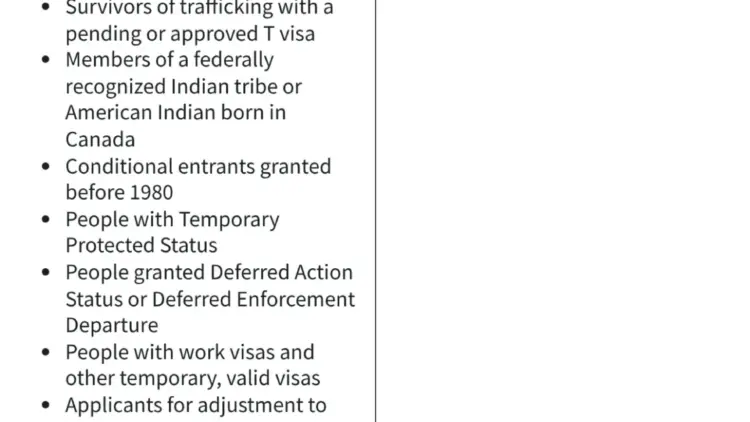
Beginning January 1, 2027, the 2025 reconciliation law severely curtails eligibility for Marketplace subsidies—including all premium tax credits and cost-sharing reductions—limiting them strictly to individuals classified as "eligible noncitizens." This newly streamlined definition encompasses lawful permanent residents, commonly known as "green card" holders, Cuban and Haitian entrants, and individuals residing in the United States under Compacts of Free Association. Consequently, these stringent restrictions eliminate access to financial assistance for several groups of lawfully present immigrants who previously qualified for support, including refugees and asylees who have not yet secured their green cards, as well as individuals residing in the country on various work visas.
The financial and human impacts of these policy shifts are projected to be substantial. The Congressional Budget Office estimates that this specific provision will reduce federal spending by $91.4 billion while driving approximately one million individuals into the ranks of the uninsured by the year 2035. The vast majority of these coverage losses are anticipated to materialize immediately in 2027, coinciding with the exact date the provision officially takes effect. Furthermore, an earlier provision of the law eliminated access to subsidized Marketplace coverage for all lawfully present immigrants earning less than 100 percent of the federal poverty level who were ineligible for Medicaid due to their immigration status—including those trapped in the mandatory five-year waiting period for Medicaid coverage—starting January 1, 2026. The Congressional Budget Office projects that this measure alone will add another 200,000 individuals to the uninsured population and reduce federal spending by $27.3 billion over the decade spanning from 2026 to 2035.
In response to the legislative mandates, the Centers for Medicare and Medicaid Services has released detailed guidance outlining how the federally facilitated exchange will verify immigrant eligibility for subsidies during the 2027 plan year Open Enrollment Period, which officially commences on November 1, 2026. State-based exchanges are likewise required to implement these immigrant eligibility restrictions for subsidies, though their specific outreach campaigns and immigration status verification procedures may vary significantly from federal protocols.
While lawfully present immigrants who lose subsidy eligibility under the new rules retain the legal right to purchase Marketplace coverage at full cost, unsubsidized plans will likely remain financially out of reach for many. This affordability crisis is exacerbated by rising ACA Marketplace premiums driven in part by the expiration of enhanced premium tax credits and other compounding federal policy shifts. Beyond those directly stripped of coverage due to strict statutory ineligibility and escalating costs, administrators anticipate additional coverage losses among individuals who technically remain eligible for subsidies but stumble over the administrative complexities of understanding or responding to bureaucratic notices requesting verification documentation.
Marketplace Subsidy Immigrant Eligibility Changes and Verification Protocols
Under the framework established by the 2025 reconciliation law, federal exchanges are fundamentally altering how they process applications and manage existing accounts for noncitizen enrollees. Starting with the 2027 plan year, the federally facilitated exchange will conduct eligibility determinations for current noncitizen enrollees and new applicants in strict alignment with the revised subsidy rules. In the 29 states that utilize the federal exchange or a state-based marketplace operating on the federal platform, the open enrollment window for 2027 coverage kicks off on November 1, 2026.
Federal health officials are actively encouraging current noncitizen enrollees to review and update their applications with their most recent immigration documentation well before the final deadline to enroll or switch plans. New noncitizen applicants utilizing the federal platform will be required to formally attest to whether they hold an approved "eligible noncitizen status" qualifying them for financial assistance, or whether they maintain an alternative lawfully present status that bars them from subsidies. To substantiate these claims, enrollees and applicants must frequently supply up-to-date document information, such as passport numbers, Permanent Resident Cards, or Employment Authorization Documents.
To verify these statuses, the federal exchange relies heavily on automated data matching through the Department of Homeland Security’s Systematic Alien Verification for Entitlements system, utilizing existing profile information. Current noncitizen enrollees who maintain otherwise qualifying criteria will continue to receive subsidies if the system successfully verifies their eligible status through available records or a fresh database query. Similarly, new applicants verified as eligible noncitizens can secure subsidized plans, provided they meet all other standard requirements.
However, systemic limitations within the verification infrastructure pose notable challenges. Federal guidance has previously acknowledged that the verification system provides a rigid "point-in-time" verification and does not automatically update past records when an individual undergoes a change in their immigration status or category. Consequently, many affected enrollees who applied for and successfully received an adjustment to lawful permanent resident status, or another qualifying status, may find that their updated standing is not immediately reflected in the automated database checks.
When the federal exchange cannot automatically verify the attested status of an applicant or enrollee, the individual is granted a structured 95-day window from the date of the notification letter to submit physical documentation. Acceptable records during this period include Permanent Resident Cards, Employment Authorization Documents, or arrival and departure records such as Form I-94. If the exchange cannot verify that an individual is lawfully present at all, supplementary documentation may be demanded. Crucially, enrollees who receive premium tax credits during this 95-day verification window will be legally required to repay those funds during future tax filings if it is ultimately determined that they were ineligible for subsidies. Proposed administrative changes from the Internal Revenue Service aimed at enforcing the 2025 reconciliation law would completely eliminate existing income-based caps on these repayment amounts, raising the financial stakes for taxpayers navigating these verification hurdles.
Current noncitizen enrollees who fail to take corrective action to update their applications by the plan selection deadline, and whose eligible status cannot be verified, will see their subsidies terminated effective January 1, 2027. Furthermore, re-enrolling consumers whom the federal exchange determines are no longer lawfully present at all will lose their eligibility for Marketplace coverage entirely.
For enrollees who are determined to be lawfully present but legally ineligible for financial assistance, the federal exchange will automatically transition them into a Marketplace plan without subsidies. Unless these individuals actively cancel their coverage through their online account or by contacting the Marketplace call center, they will remain legally and financially responsible for paying the full, unsubsidized monthly premiums. Failing to meet these premium payments subjects the consumer to the standard grace period policies set by the plan issuer or applicable state laws, a stark departure from the extended three-month grace period historically afforded to individuals receiving subsidized coverage. Individuals who ultimately lose their coverage due to unpaid premiums are generally barred from re-enrolling until the subsequent Open Enrollment Period unless they experience a qualifying life event that triggers a Special Enrollment Period.
State-based exchanges operating in 22 states and the District of Columbia retain the authority to deploy distinct outreach campaigns and verification procedures that may diverge from the federal approach. While these state-run entities are legally bound to enforce the same underlying immigrant eligibility restrictions for subsidies during the open enrollment cycle, they operate under varying timelines and maintain independent administrative structures, though they share access to federal data hubs and immigration verification pipelines.
Broader Policy Implications and Administrative Challenges
The ripple effects of the 2025 reconciliation law extend far beyond immediate subsidy terminations, creating complex logistical hurdles for state governments, healthcare providers, and immigrant families alike.
For lawfully present immigrants who find themselves stripped of financial assistance, purchasing full-cost Marketplace coverage remains legally permissible but financially unrealistic. With premium costs climbing due to the expiration of enhanced tax credits and ongoing market adjustments, enrollment figures across the individual market have faced sustained downward pressure. When consumers lose coverage due to unpaid premiums, they risk facing significant personal liability for medical bills incurred during periods of lapsed coverage, while healthcare providers may demand upfront out-of-pocket payments or defer non-emergency care altogether.
Even among immigrants who retain formal eligibility for subsidized coverage, administrative barriers, widespread confusion, and heightened anxiety threaten to depress enrollment. Because the federal verification databases often fail to capture recent adjustments in immigration status, eligible individuals must navigate burdensome documentation requests to prove their standing. This administrative friction occurs against a backdrop of intensified federal immigration enforcement and evolving public charge policies, which historically amplify fear and deter immigrant families from utilizing public health programs for which they legally qualify.
For individuals who lose coverage entirely and fall out of the insurance system, options for comprehensive medical care are severely limited. While many rely on community health centers that operate on sliding fee scales, these facilities frequently offer a constrained scope of specialized services. A patchwork of state-funded coverage programs historically stepped in to fill gaps for immigrants regardless of status, but budgetary pressures and higher-than-expected demand have recently forced several states to scale back these safety-net programs or institute strict enrollment caps. Conversely, a few jurisdictions are attempting to buffer the impact; New Mexico, for instance, is utilizing state funds to provide coverage and premium subsidies through its state-based exchange for lawfully present noncitizens who lose federal ACA Marketplace subsidies, as well as for recipients of Deferred Action for Childhood Arrivals.
Additional structural modifications to the Marketplace loom on the horizon. Beginning with the 2028 tax year, the federal government will mandate that exchanges verify all eligibility criteria—including household income, family size, place of residence, and immigration status—prior to disbursing any premium tax credits. This operational shift means consumers will no longer receive upfront tax credits while their information is actively being verified, forcing families to choose between paying full out-of-pocket premiums while pending verification or going without coverage. This requirement is expected to disproportionately affect mixed-status immigrant families, compounding difficult household decisions.
Finally, state health officials operating state-based exchanges face unprecedented administrative burdens. Implementing these complex immigrant eligibility restrictions requires extensive system overhauls, staff retraining, and targeted public outreach campaigns. These immense pressures are further compounded by the reality that state agencies are simultaneously tasked with enforcing parallel Medicaid immigrant eligibility restrictions, new work requirements, and more frequent eligibility redeterminations for adults covered under ACA expansion programs.