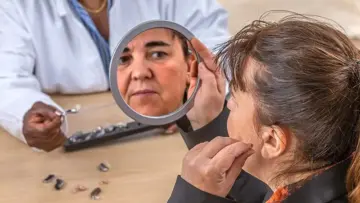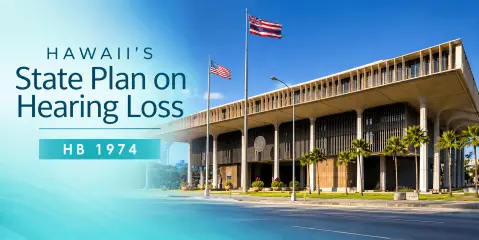
Hearing loss is frequently misunderstood as a simple communication barrier, but its impacts extend far beyond the ability to hear a conversation. In reality, untreated hearing loss affects education, employment, healthy aging, social connection, cognitive health, and overall quality of life. Recognizing the profound impact that hearing health has on residents of all ages, the state of Hawaii has taken a meaningful and practical step forward. On July 10, 2026, House Bill 1974 (C.D. 1) was officially signed into law, marking a major milestone for public health and advocacy across the islands.
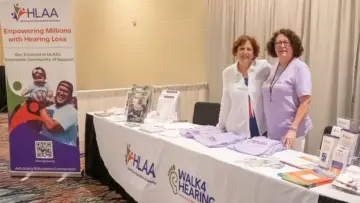
The enactment of this new legislation is the result of tireless advocacy by members of the Hearing Loss Association of America (HLAA) and numerous other advocates, professionals, and community stakeholders dedicated to improving the lives of individuals with hearing loss. The law directs the Hawaii State Health Planning and Development Agency (SHPDA) to create a comprehensive State Plan on Hearing Loss. This initiative will serve as a foundational blueprint, empowering lawmakers, healthcare providers, and community stakeholders to better understand and assess local needs, close persistent service gaps, and strengthen access to essential hearing care statewide.
Under the requirements of HB 1974, SHPDA must develop and publish a statewide plan centered on several critical priorities. These include improving access to hearing healthcare, enhancing affordability, increasing public awareness, expanding the specialized workforce capacity, and prioritizing early detection and intervention. The plan will also focus on treatment options and improving long-term outcomes for individuals with hearing loss, ranging from infants to older adults. While the legislation does not instantly eliminate every barrier to comprehensive hearing care, the creation of the Hawaii State Plan establishes a shared, strategic roadmap for future initiatives, fundamentally improving how the state approaches hearing health services.
To ensure the success of this monumental undertaking, the bill appropriates $100,000 in general funds for the 2026–2027 fiscal year. These funds will directly support SHPDA as it develops and publishes the comprehensive plan. Specifically, the financial resources may be utilized for project management, interagency collaboration, statewide stakeholder engagement, consulting with subject matter experts, and drafting, reviewing, and publishing the final plan.
What makes this legislative achievement especially significant is that it creates a permanent framework for ongoing planning, implementation, and accountability. Under the new law, the state is required to provide progress updates and policy recommendations during every odd-numbered legislative session. This built-in reporting mechanism ensures that hearing health remains an active and prominent part of Hawaii’s long-term policy discussions, elevating hearing health to a recognized public health priority.
For many years, children and adults living with hearing loss in Hawaii have navigated a complex array of challenges. These include delayed diagnoses, a lack of consistent follow-up care, difficulty locating specialized services, high costs for hearing aids and assistive technology, limited public awareness, severe workforce shortages, and an overall healthcare system that can be difficult to navigate. Although numerous organizations and dedicated healthcare providers have long worked tirelessly to support the community, Hawaii has historically lacked a coordinated, statewide effort to identify systemic gaps and develop a unified, long-term strategy for improving hearing health outcomes.
HB 1974 fundamentally changes this landscape. Spearheaded by SHPDA, the newly established planning process will bring together a diverse coalition of healthcare providers, educators, government agencies, community organizations, and individuals with lived experience. By combining these varied perspectives, the state can accurately identify pressing priorities and recommend practical, sustainable solutions. The resulting draft plan will serve as a guide to translate these recommendations into meaningful, real-world action across the islands.
The journey to passing this landmark legislation was built on grassroots collaboration and strong legislative partnerships. Conversations began when members of the Hawaii hearing loss community reached out to key lawmakers to emphasize the urgent need for a statewide hearing health strategy. Momentum grew when the Hawaii Kupuna Caucus, a bipartisan group of legislators dedicated to addressing issues that affect older adults, selected HB 1974 as one of its priority bills for the legislative session. This crucial endorsement significantly elevated awareness and generated vital support for the issue among lawmakers.
Riding on this wave of momentum, the broader community united around a shared vision to move the bill forward. Members of the HLAA HOPE support group joined forces with audiologists, ear, nose, and throat (ENT) physicians, speech and hearing professionals, caregivers, and numerous community organizations. Together, they submitted compelling testimony and actively advocated for the legislation throughout the House and Senate hearing processes. This collective effort culminated in a historic victory for the state, drawing profound gratitude from community organizers to everyone who testified, shared their personal stories, and helped make the legislation a reality.
With the passage of HB 1974, Hawaii joins a select group of five other states that have already established similar statewide planning efforts. Nevada, Minnesota, Massachusetts, Vermont, and New York served as successful models and sources of inspiration for Hawaii’s legislative framework.
Central to the success of this initiative is its commitment to placing people with lived experience at the center of the conversation. Individuals and families who navigate the daily realities of hearing loss are working alongside community stakeholders, healthcare providers, educators, and government agencies to ensure that the resulting recommendations reflect true community needs.
The comprehensive planning process is now officially underway, with the release of the initial draft plan anticipated by the end of 2026. Once the plan is published, the focus will shift toward executing concrete actions designed to address identified needs and achieve long-term goals. For advocates and community members alike, this legislation represents a historic starting point for a more inclusive and accessible future in Hawaii.