On November 4, 2026, the Centers for Medicare & Medicaid Services (CMS) finalized critical rulemaking changes governing Medicare payments for physician services and other Part B services for the 2027 calendar year. The finalized schedule introduces an average payment rate decrease of 2.31% for most physicians relative to the rates experienced in 2026.
The primary driver behind this upcoming reduction is the scheduled expiration of short-term congressional funding. This funding had been established under the 2025 federal budget reconciliation bill, which temporarily injected a 2.5% increase into Medicare physician payment rates from January 1, 2026, through December 31, 2026. Meanwhile, qualifying participants enrolled in advanced alternative payment models (A-APMs)—who regularly receive distinct annual payment incentives—will experience a somewhat cushioned average decrease of 1.83% compared to the previous year.
The architecture governing current Medicare physician payments traces back to the Medicare Access and CHIP Reauthorization Act of 2015 (MACRA). This landmark legislation established a schedule of fixed, annual statutory increases applied directly to the fee schedule conversion factor. The primary goal of MACRA was to eliminate the volatile, unpredictable payment fluctuations characteristic of the prior system. Under that older framework, physician payment rates were adjusted dynamically based on shifts in the gross domestic product (GDP). MACRA sought to replace those erratic swings with modest, predictable updates insulated from underlying economic conditions.
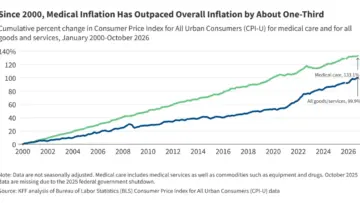
Beginning in 2026, the framework dictates that most physicians receive a 0.25% statutory increase to their Medicare payment rates annually, while qualifying A-APM participants are eligible for a higher 0.75% increase. However, these scheduled payment escalations frequently get offset or entirely eclipsed by negative budget neutrality adjustments. Because the statutory rules mandate that the projected cost of all modifications to the physician fee schedule must remain budget neutral, a persistent layer of year-to-year uncertainty is woven into the system. Furthermore, because these scheduled payment updates are rigidly fixed in statute, they have proven incapable of keeping pace with the escalating inflation of medical practice costs—a trend that has continued unabated in the years following MACRA’s inception.
According to CMS projections, the budget neutrality adjustments for 2027 have been finalized at a modest -0.12%. Yet, when combined with the expiration of the 2.5% congressional bump from 2026, the net result is the substantial 2.31% reduction awaiting the majority of physicians. Congress has authorized temporary funding packages to boost Medicare physician payments nearly every single year since 2021. Lawmakers have utilized these stopgap measures both to replace expiring financial appropriations from previous years and to counteract deeper budget neutrality cuts mandated during specific cycles. While Congress has not yet appropriated additional stopgap funds for 2027, the issue is widely anticipated to feature prominently in ongoing legislative debates concerning government funding during the lame duck session.
At the same time, federal policymakers have demonstrated a rising tide of interest in sweeping structural reforms. Proposed alternatives include tying payment updates directly to actual medical practice inflation metrics and relaxing strict budget neutrality constraints. These discussions raise the distinct possibility that Congress may revisit broader payment overhaul initiatives during the upcoming legislative session. Although ongoing anxieties persist regarding whether declining reimbursement rates could eventually jeopardize patient access to care, physician participation rates across the traditional Medicare program have historically remained high and largely stable.
Context for CMS’s 2027 Physician Payment Rate Reduction
Medicare reimburses physicians and diverse clinicians utilizing the physician fee schedule, an intricate, structured formula that dictates payment rates for more than 10,000 distinct health care services. These range from routine office visits and specialized diagnostic procedures to complex surgical interventions, with valuations determined by the relative time, effort, and overhead practice costs required to furnish them. CMS routinely adjusts these payment rates and other foundational mechanics of the reimbursement ecosystem through its established annual rulemaking cycle.
Under current statutory mandates, the projected cost consequences of all cumulative changes to the physician fee schedule must adhere to strict budget neutrality guidelines. This means that regulatory modifications cannot drive total Medicare spending upward by more than a nominal threshold of $20 million within any given calendar year. To satisfy this legal requirement, CMS must meticulously balance annual adjustments for new or emerging services by finding offsetting savings elsewhere across the broader fee schedule. Typically, the agency achieves this by applying a uniform, schedule-wide scaling factor—known as the conversion factor—downward across all baseline payment rates.
This structural mechanism has triggered recurring reductions in Medicare compensation for physicians and other clinicians across multiple recent years. Such cuts have consistently ignited alarms among major physician advocacy organizations and influential lawmakers alike, who argue that statutory reimbursement rates have severely lagged behind true medical practice cost inflation. Central to these concerns for patients is the underlying fear that diminished remuneration could eventually incentivize physicians to opt out of the Medicare program altogether, thereby threatening beneficiary access to essential care.
While recent empirical data indicates that virtually all non-pediatric physicians continue to accept Medicare patients and that overall beneficiary access to providers remains remarkably robust, the political pressure has been palpable. To mitigate the severity of the most aggressive budget neutrality cuts—which have exceeded 2.00% in several recent years—Congress has frequently intervened by passing short-term legislation to temporarily prop up the fee schedule conversion factor.
Unlike structural budget neutrality adjustments or permanent statutory modifications, these temporary congressional infusions do not automatically carry forward into future fiscal cycles. Consequently, whenever short-term funding lapses, payment rates inevitably plummet back to their baseline levels. This cyclical cliff effect precipitates an immediate relative payment cut compared to the prior year, promptly reigniting urgent lobbying efforts for another round of congressional life support. Since early 2021, Congress has enacted a series of five distinct temporary increases—ranging between 1.25% and 3.75%—to stave off steep payment reductions driven largely by the expiration of prior stopgap allocations, even during years when no new budget neutrality cuts were explicitly scheduled.
Broader Physician Payment Reform Efforts Under Consideration
In response to these recurring fiscal cliffs, policymakers across both chambers of Congress have shown heightened interest in permanent structural reforms. Prominent proposals include raising or restructuring the rigid $20 million budget neutrality threshold and recalibrating physician payment updates to mirror growth in the Medicare Economic Index (MEI), which serves as the official gauge of medical practice cost inflation maintained by CMS.
The momentum for reform was underscored in 2025 when the Medicare Payment Advisory Commission formally recommended that CMS discard MACRA’s rigid update schedule in favor of annual adjustments tied directly to the MEI. However, in its subsequent March 2026 report, MedPAC issued a more targeted, narrower recommendation calling for a single, permanent 0.5% increase above current law without upending the underlying statutory framework.
Legislative activity reached a notable milestone on September 15, 2026, when the House Energy and Commerce Subcommittee on Health convened a comprehensive legislative hearing to evaluate more than a dozen bills targeting Medicare provider payments and healthcare cybersecurity. Among the measures scrutinized were four distinct bills addressing physician payment reform, budget neutrality adjustments, and inflation-linked updates.
A central focus of these deliberations was the bipartisan Patients First Act of 2026. This comprehensive proposal seeks to elevate the budget neutrality threshold from its current $20 million ceiling to $57.64 million by 2028, with provisions for subsequent adjustments every five years tied to cumulative MEI growth. Furthermore, the legislation would cap annual budget neutrality reductions at a maximum of -2.5%. It would also replace MACRA’s current update schedule with annual adjustments reflecting the projected increase in the MEI minus one percentage point for most physicians starting in 2027, alongside an additional 0.5% annual bump for qualifying A-APM participants.
The Patients First Act has successfully garnered endorsements from numerous physician organizations and state medical associations. It shares several philosophical and structural alignments with another prominent legislative vehicle, the Provider Reimbursement Stability Act, which successfully advanced out of the House Ways and Means Committee in May 2026. Both bills currently boast over 60 bipartisan cosponsors.
While the Congressional Budget Office has not yet published an official cost estimate for the Patients First Act, the CBO previously projected that remarkably similar budget neutrality provisions within the Provider Reimbursement Stability Act would expand federal outlays by just under $5 billion across the 2026-2036 decade. Other components of the Patients First Act, such as the mechanism for annual inflation-based payment adjustments, have not yet been formally scored by the CBO but would undeniably carry a significantly higher federal price tag. By way of comparison, the CBO previously estimated that a draft proposal to tie annual updates to a smaller share of projected MEI growth would have added roughly $8.9 billion to federal spending from 2025 to 2034, whereas the final 2.5% temporary increase enacted for the 2026 calendar year was pegged at roughly $1.9 billion over that same timeframe.
Whether lawmakers will mobilize during the ongoing lame duck session to forestall the 2027 payment reductions or defer decisive action until the swearing-in of the next Congress remains entirely uncertain. Although the incoming legislative session will introduce numerous new faces—including several practicing clinicians—the broader policy debate surrounding the long-term viability of Medicare physician payment reform is poised to persist as a central fixture of healthcare policy discussions.