Picture a man sitting quietly on the edge of his bed in the dim light, his thumbs hovering nervously over his smartphone screen. He types out a sentence that represents the weight he has been carrying for weeks: I’m really struggling. He stares at the glowing letters for a few agonizing seconds, weighing the vulnerability of admitting defeat against the societal expectation to keep pushing forward. Then, his thumb hits the backspace key repeatedly until the text box is empty.
What he sends instead is familiar, safe, and entirely masking: All good, you?
If that silent internal struggle feels familiar, you likely know someone who has experienced it, or perhaps you have lived through that exact moment yourself. Every November, the global campaign known as Movember successfully encourages millions of men to grow mustaches and, more importantly, engage in vital conversations about their physical and mental well-being. The annual campaign is widely recognized for meeting men where they are, providing them with the encouragement to open up, and prompting friends and family members to move past casual greetings like "How’s it going?" to genuinely check in on one another.
Yet, mental health advocates note that the hardest part of seeking support is rarely the conversation itself once it gets underway. The true hurdle is the very first message.
A New Partnership to Make That First Message Easier
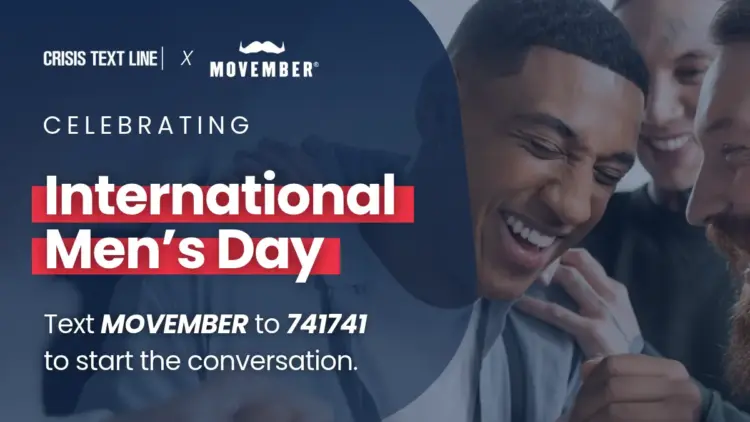
To bridge the gap between initial hesitation and receiving professional care, Crisis Text Line and Movember have announced a formal partnership aimed at reducing the stigma surrounding men’s mental health and connecting more individuals to vital support systems. From now through November 2027, anyone in need can text the keyword MOVEMBER to 741741 to instantly connect with a live, highly trained volunteer crisis counselor. The service operates in both English and Spanish, is entirely free, remains strictly confidential, and is accessible around the clock, 24 hours a day, seven days a week.
While Movember has historically excelled at encouraging men to open up about difficult topics, Crisis Text Line is engineered specifically for the acute moments when someone finds themselves overwhelmed and reaching out for immediate help. By joining forces, the two organizations hope to provide men with a dependable resource they can utilize all year long, rather than limiting mental health awareness to a single month on the calendar.
Brian T. Jones, Vice President of Philanthropy at Crisis Text Line, highlighted the strategic importance of the collaboration. The primary challenge facing mental health organizations has never been a lack of capability to help, Jones explained, but rather finding a way to reach individuals before a difficult moment spirals into a full-scale crisis. By meeting men in the digital spaces and communities where they already spend their time—primarily on their mobile devices—the initiative seeks to reinforce the message that reaching out for help is an act of profound strength rather than a sign of weakness.
Addressing the Demographic Gap in Mental Health Outreach
The silence surrounding men’s mental health carries profound and often tragic consequences, and public health data paints a stark picture of the ongoing crisis. Within the broader landscape of mental health support, organizations continually analyze who is utilizing available resources and, more importantly, who is not.
At Crisis Text Line, a particularly troubling statistic underpins the urgency of the new campaign: fewer than 20% of the individuals who text the service identify as boys or men. This disparity presents a major paradox in public health, as the demographic group statistically most likely to die by suicide is simultaneously the group least likely to text crisis lines or proactively seek digital support. Closing this persistent engagement gap serves as the primary recommendation in Crisis Text Line’s annual trends report, and it stands as a core motivation behind the alliance with Movember.
Understanding the Barriers to the Send Button
The lower volume of outreach from men does not mean that boys and men are experiencing fewer emotional hardships or lower levels of psychological distress. Instead, a complex web of cultural, emotional, and social barriers frequently stands directly between an individual in pain and the send button on their phone.
Societal conditioning often teaches boys from a young age to suppress vulnerability, view emotional distress as a personal failure, and handle hardships in absolute isolation. When combined with the fear of being perceived as a burden to friends, partners, or coworkers, the simple act of typing out a short confession like "I’m struggling" begins to feel like an insurmountable task. Consequently, many men choose to remain silent, bearing the weight of financial stress, relationship breakdowns, professional burnout, and grief without an outlet.
This persistent quietness frequently means that individuals are waiting until their circumstances reach a severe crisis point before they express any distress at all. Data gathered from Crisis Text Line’s ongoing conversations reveals that when boys and men finally do initiate contact, they are often navigating an intense accumulation of overlapping pressures.
Why Text Messaging Offers an Accessible First Step
For many individuals who find traditional therapy or verbal communication intimidating, text messaging serves as a vital, low-friction entry point into the mental health support system. Texting removes many of the psychological hurdles that make asking for help feel intensely overwhelming.
The medium offers complete privacy and significantly reduces interpersonal pressure. Users are not required to speak aloud, and they do not have to worry about anyone seeing their facial expressions or reading their physical body language. For countless men who might otherwise suffer in silence, texting provides a safe, anonymous environment that feels like the easiest and most manageable first step toward healing.
Recognizing Distress Beyond Sadness
Mental health advocates emphasize that when boys and men are struggling, emotional pain rarely manifests as traditional sadness or tearfulness. Because emotional expression is frequently filtered through cultural expectations of stoicism, distress often looks entirely different on the surface.
In daily life, a man in crisis might exhibit uncharacteristic irritability, a short fuse over minor inconveniences, or a sudden withdrawal from social activities and canceled plans with friends. He may frequently complain about being "just tired" or throw himself into work as a distraction from internal turmoil. If friends and family members listen exclusively for expressions of sadness, they risk missing these subtle behavioral shifts entirely. An unexpected outburst, a recurring pattern of exhaustion, or a sudden retreat from the community may be the closest approximation to a cry for help that an individual knows how to transmit.
Shifting Community Engagement and Saving Lives
Supporting the men in one’s life does not require a psychology degree or a complicated script; rather, it requires consistent presence and genuine attentiveness. Friends, family members, and colleagues can play a pivotal role by reaching out first, maintaining regular contact, and creating safe spaces where vulnerability is met with acceptance rather than judgment.
Mental health professionals suggest simple, low-pressure conversation starters for those looking to check in on a friend or family member. Rather than demanding deep emotional disclosures, advocates recommend sending brief, caring messages that let a loved one know they are valued and that support is available without obligation.
For individuals experiencing distress, or for anyone hoping to support a friend, brother, father, coworker, or son, the most direct action available is remembering and sharing the designated resource. By texting the keyword MOVEMBER to 741741, users instantly connect with a live, trained volunteer crisis counselor through a free, confidential platform operating 24 hours a day, every day of the year.
As the current Movember campaign continues to raise awareness and encourage communities to look closer at the men in their lives, the ultimate goal remains clear: to normalize reaching out for help and foster deeper, life-saving conversations all year round, long after the month of November has passed.