Long-standing workforce challenges within Medicaid home care—formally known as home- and community-based services (HCBS)—continue to threaten the stability of care for the more than 5 million Americans who rely on these vital programs. Ongoing shortages, exceptionally high turnover rates, and systemic low wages among direct care workers reflect a demanding industry under immense pressure. A comprehensive new issue brief and data from the 24th KFF survey of state Medicaid officials, completed between April and August 2026, shed light on how states are responding to these deepening labor crises, how they compensate providers, and how new federal regulations are intersecting with tightening state budgets.
The findings reveal that workforce vulnerabilities are projected to worsen due to a shrinking labor pool driven by shifting immigration enforcement policies, federal budget adjustments stemming from the 2025 reconciliation law, and mounting pressure on state governments to curb Medicaid spending. With nearly one in three home care workers being immigrants, intensified federal enforcement and restrictive policy updates have stoked widespread anxiety. Survey data indicate that these fears are leading some immigrant workers to pull back from or avoid employment altogether. Simultaneously, state fiscal conditions are tightening amid slower revenue growth and significant reductions in federal Medicaid funding, creating difficult choices for policymakers.
However, state ambitions to cut Medicaid spending may directly conflict with federal administrative requirements designed to protect service access. During a public briefing hosted by the Centers for Medicare and Medicaid Services (CMS) regarding the 2024 Access Rule, federal officials emphasized that proposed rate reductions for home care providers might be blocked if they trigger more than a four percent decrease in overall Medicaid expenditures for any given service category. While CMS did not explicitly outline the rationale for this threshold, healthcare analysts note it serves as a safeguard to preserve care access. Additional federal program integrity mandates, including stringent provider revalidation actions, threaten to introduce further administrative strain on an already fragile network of home care providers.
How Are States Addressing the Workforce Challenges in Home Care?
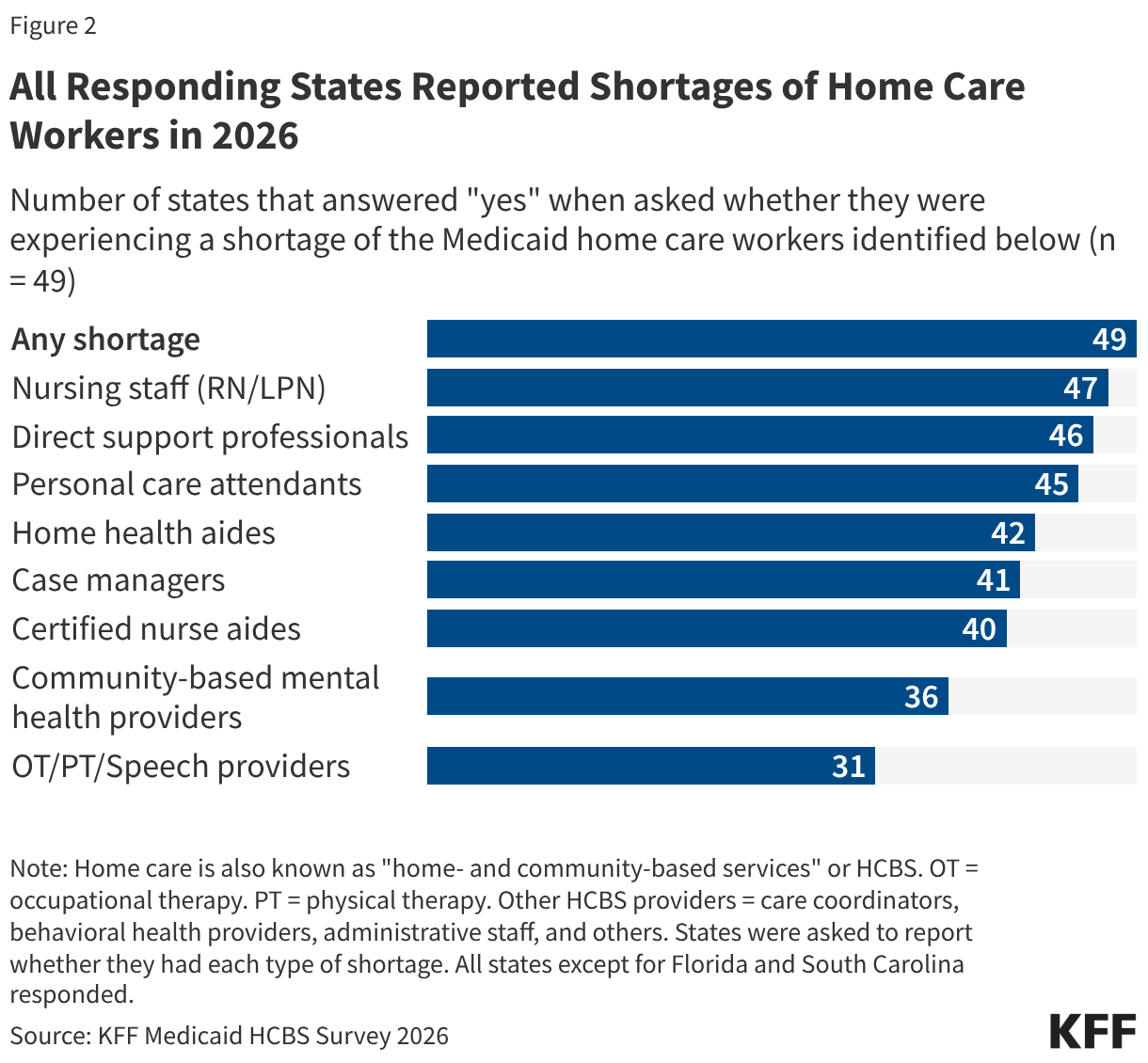
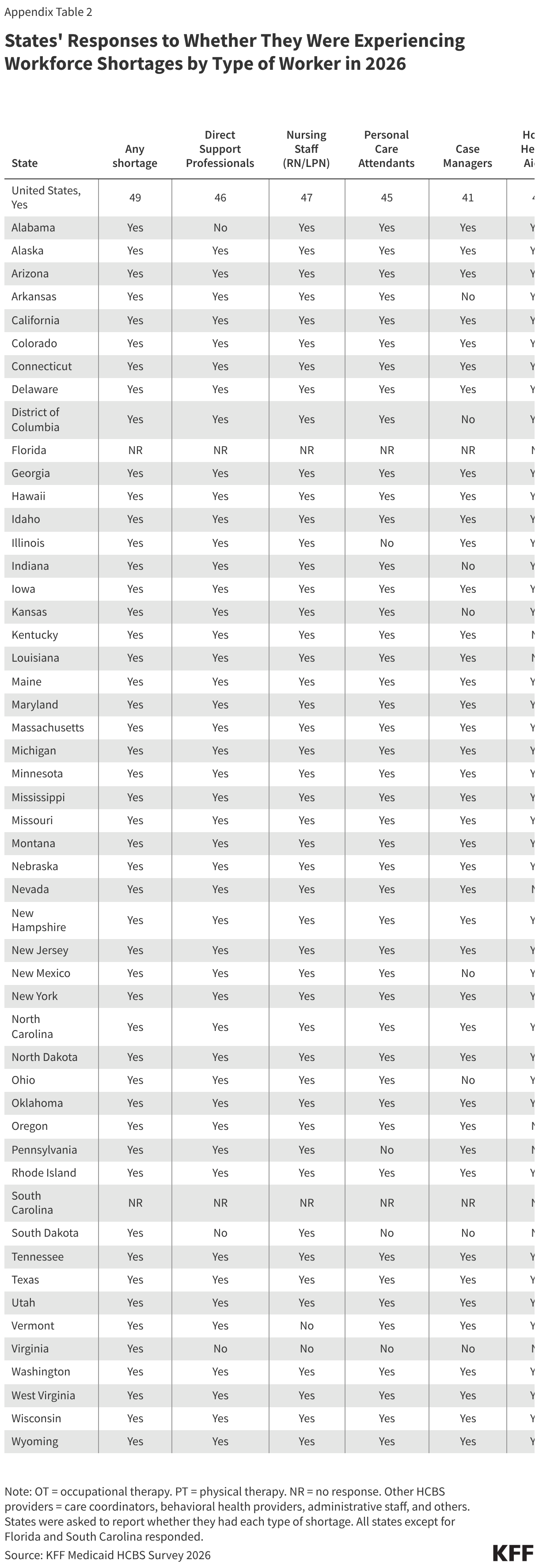
The 2026 KFF survey—which gathered responses from all 50 states and the District of Columbia, with Florida and South Carolina data incorporated through previous filings and permissions—painted a stark picture of widespread labor shortages. Every single responding state reported workforce shortages across various home care categories. The most prevalent deficits were documented among nursing staff, cited by 47 states, followed closely by direct support professionals in 46 states, and personal care attendants in 45 states.
While the survey did not impose a strict definition of a "shortage," the breadth of the crisis was unmistakable. A vast majority of states also reported severe shortages of home health aides in 42 states, case managers in 41 states, certified nurse aides in 40 states, community-based mental health providers in 36 states, and occupational, physical, and speech therapy providers in 31 states. Out of all responding participants, 48 states flagged shortages across multiple provider types, and 45 states documented deficits spanning five or more distinct provider categories.
Worsening conditions were noted by 43 states, which reported that home care shortages intensified relative to the previous year. High employee turnover, cited by 38 states; uncompetitive wages, noted by 36 states; and surging consumer demand for home care services, reported by 30 states, emerged as the primary drivers of the crisis. When ranked by state priorities, low wages relative to other employment sectors stood out as the leading barrier to recruitment and retention. Other compounding hurdles included shifting immigration enforcement, a lack of comprehensive employee benefits, expanding job responsibilities, an aging labor pool exiting the workforce, and chronic provider shortages in rural regions.
State officials underscored these systemic struggles through open-ended survey commentary. One official noted that with inflation climbing and reimbursement rates remaining low, agencies find it nearly impossible to offer competitive salaries to attract and retain qualified professionals. Another administrator highlighted employee turnover rates ranging between 29% and 48% for direct support workers alone, noting that roughly only a quarter of provider agencies offer employee benefits while salaries continue to lag behind inflation. Others pointed out that a deficit of workers willing to enter self-directed care models leaves family needs unmet.
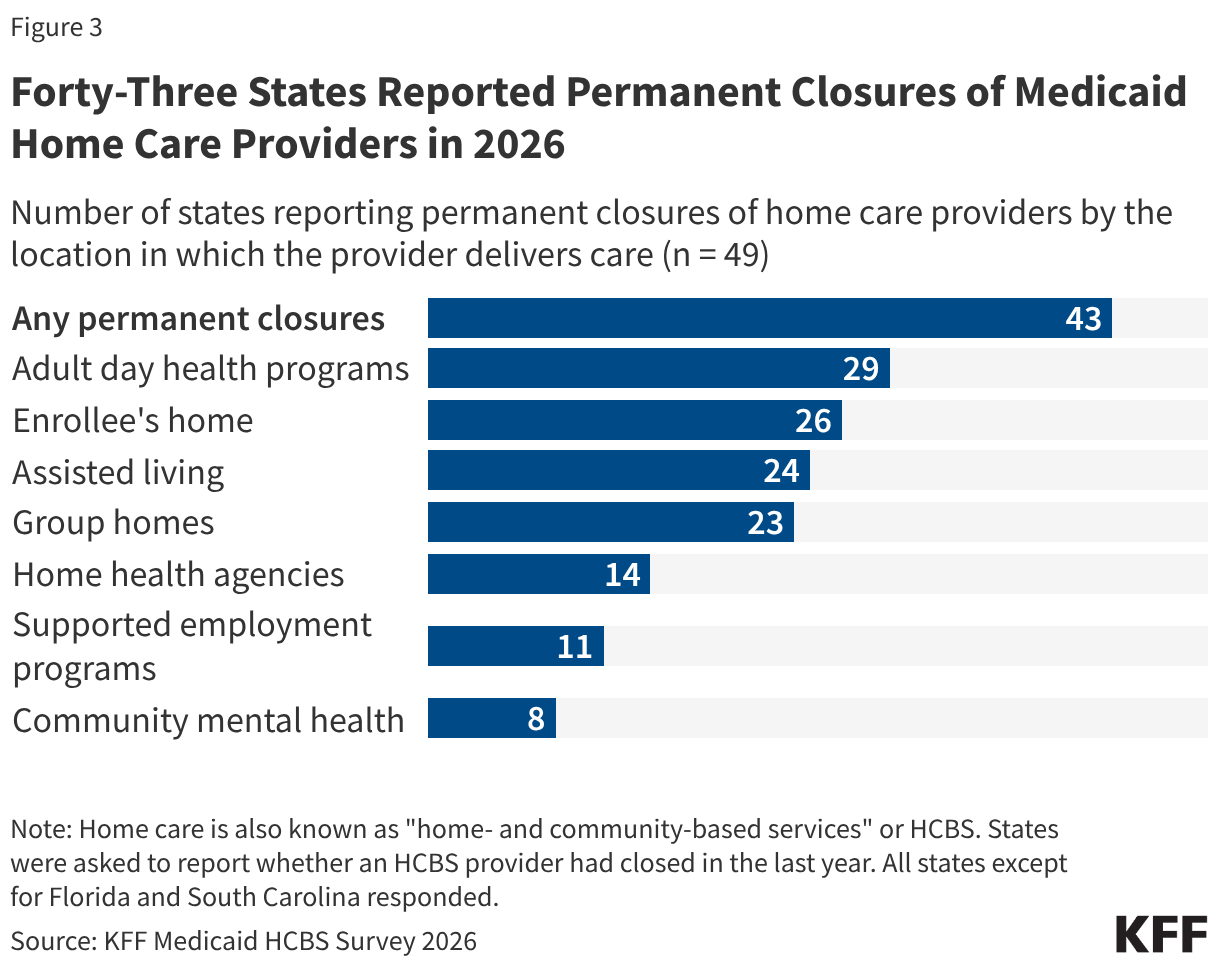
The cascading effects of these financial and labor pressures resulted in widespread permanent closures of home care providers over the past year. Forty-three states reported permanent closures of provider organizations, most frequently impacting adult day health programs in 29 states, care delivered in enrollees’ private homes in 26 states, assisted living facilities in 24 states, and group homes in 23 states. In settings like assisted living facilities or group homes, these closures could reflect either the shutdown of the physical facility or the closure of external home care agencies that supplied visiting workers. Furthermore, 14 states reported home health agency closures, 11 states noted supported employment closures, and 8 states experienced closures of community mental health providers.
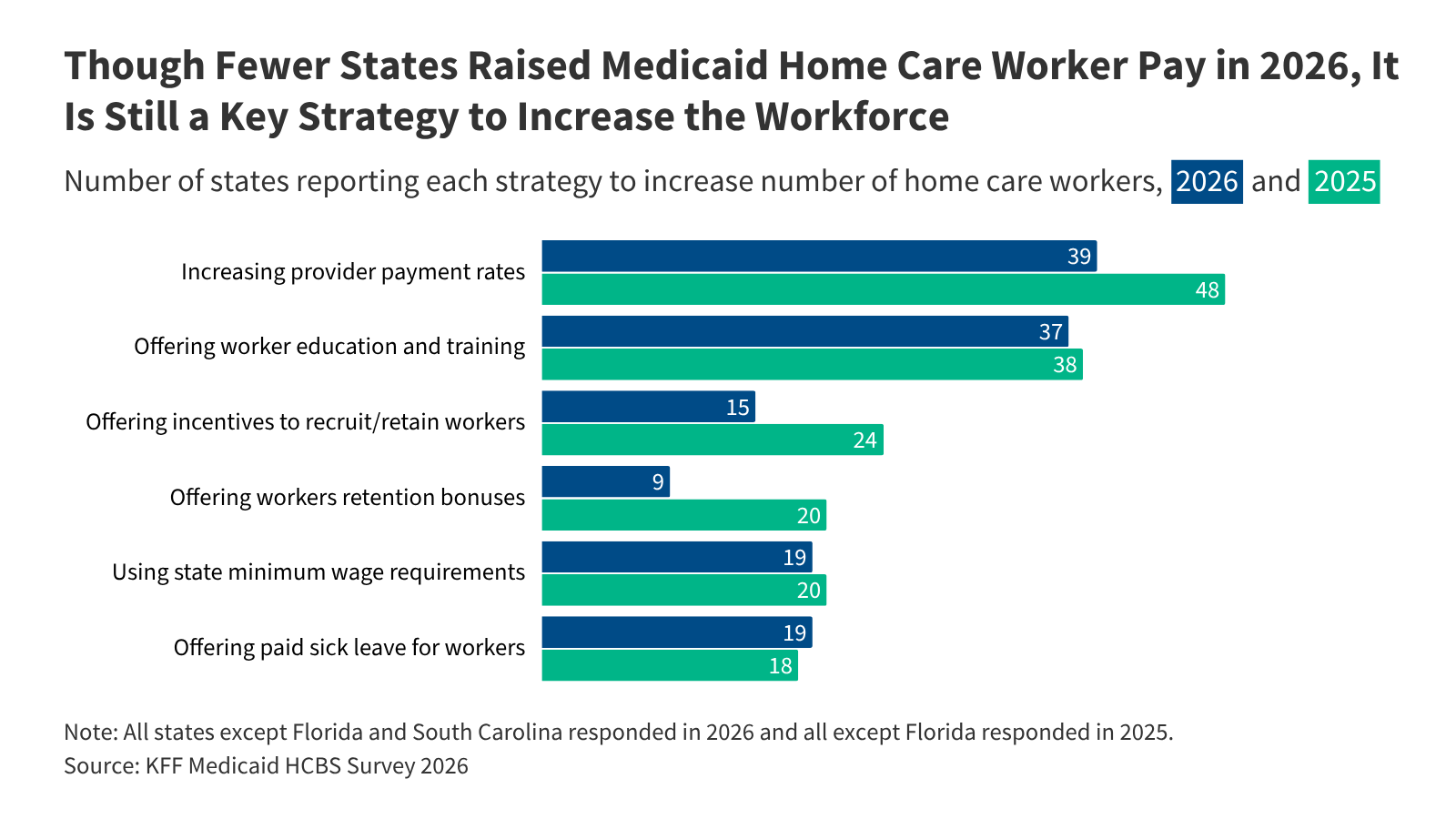
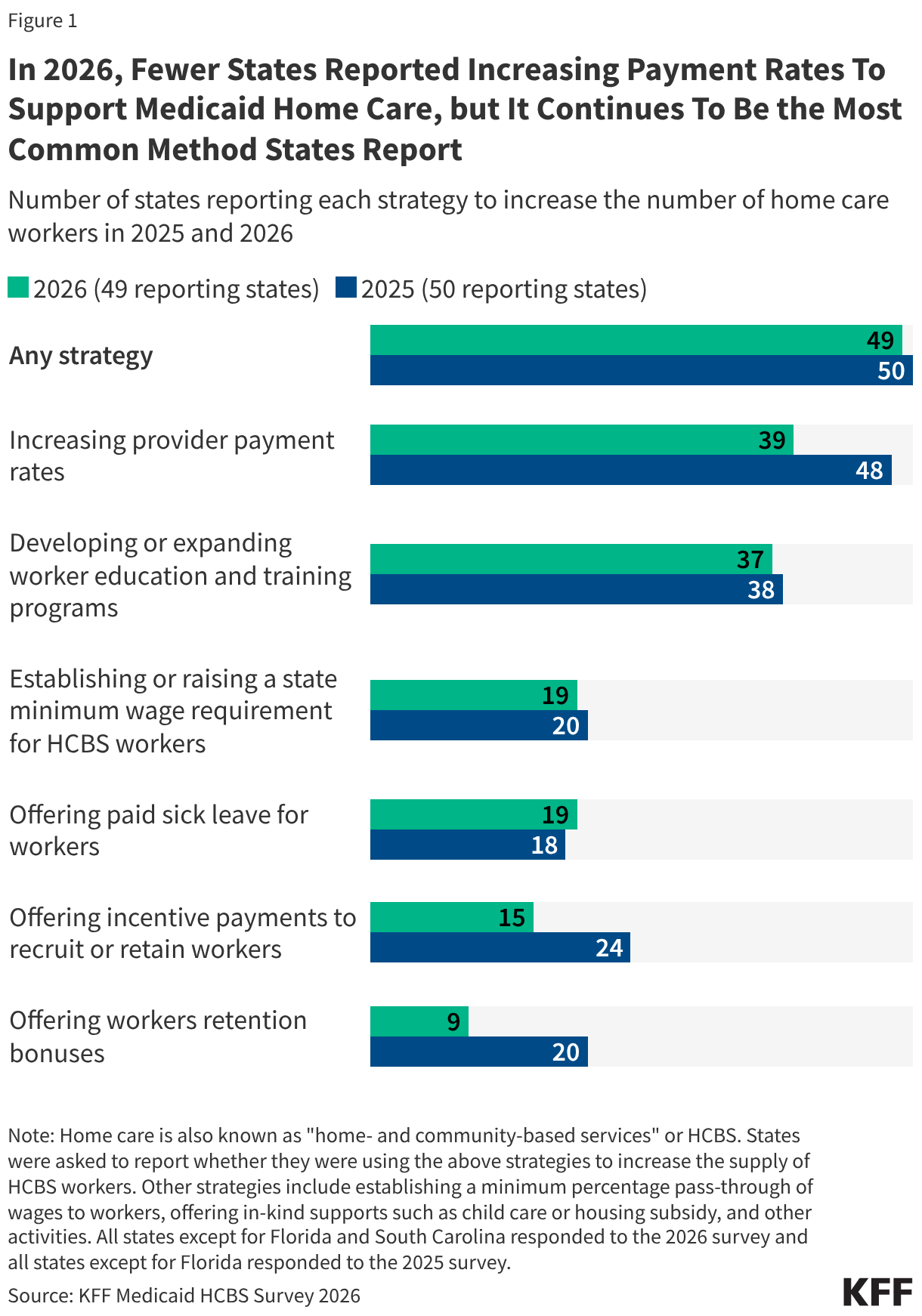
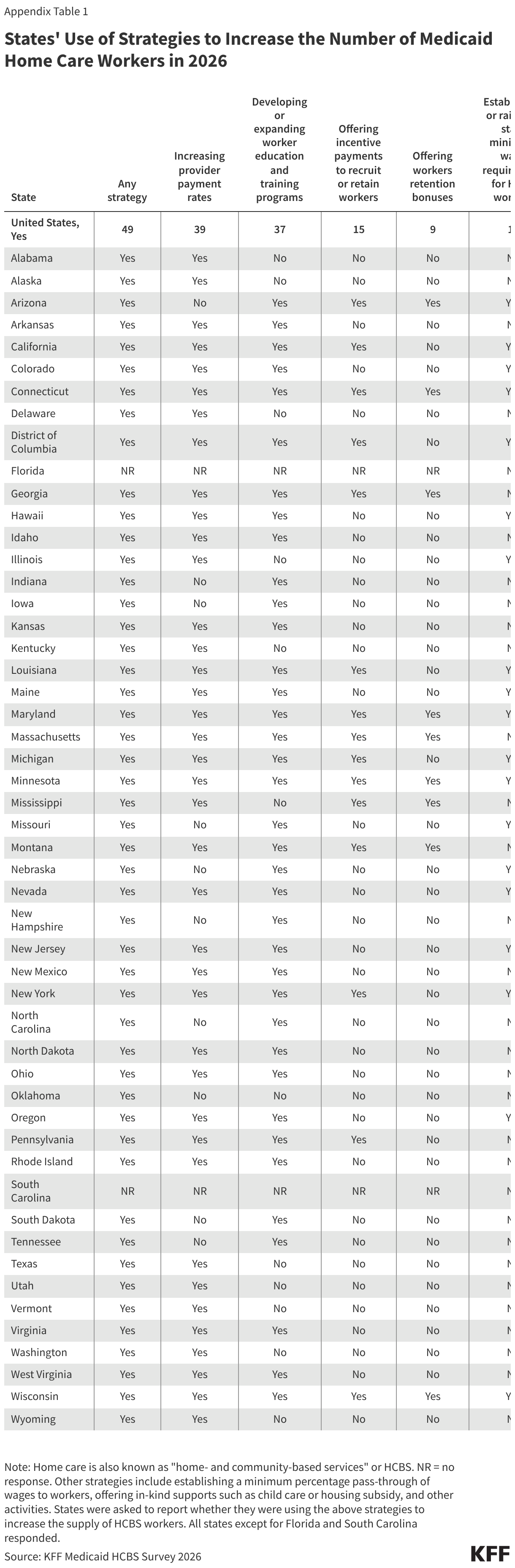
To counter these alarming trends, states have deployed various mitigation strategies. All responding states reported taking some form of corrective action, led by 39 states that increased provider payment rates and 37 states that developed or expanded worker education and training initiatives. Fewer states turned to regulatory mandates or direct financial incentives, with 19 states establishing or raising state minimum wage requirements for HCBS workers, 19 offering paid sick leave, 15 providing recruitment and retention incentive payments, and only 9 offering direct retention bonuses.
Compared to data collected in 2025, fewer states implemented direct compensation increases in 2026. The count of states raising provider payment rates fell from 48 to 39, while those offering recruitment incentives dropped from 24 to 15, and states providing retention bonuses declined from 20 to 9. Because these compensation strategies represent direct cost increases for state governments, analysts attribute the pullback to tightening state budgets and a more challenging fiscal environment.
Managed care continues to play a major role in the delivery of home care, with 40 states utilizing managed care plans for at least a portion of their HCBS beneficiaries. Among these states, fee-for-service payment structures frequently establish a baseline for what managed care plans must pay providers. Specifically, 14 states reported that fee-for-service rates act as the minimum allowable payment rate for managed care plans, while Wisconsin reported that its rate functions as a maximum limit. Another nine states indicated that fee-for-service rates exert no influence on private plan payments, with remaining states either unsure or unresponsive.
How Much Do States Pay for Medicaid Home Care?
Evaluating and comparing Medicaid home care payment rates across the nation remains a complex undertaking. Under the 2024 Medicaid Access Rule, states are now required to publish detailed home care payment rates directly on state websites, offering a granular look at procedure codes, sub-state geography, and specific population types. However, because these public reporting frameworks vary widely, drawing direct comparisons across different services and states remains difficult.
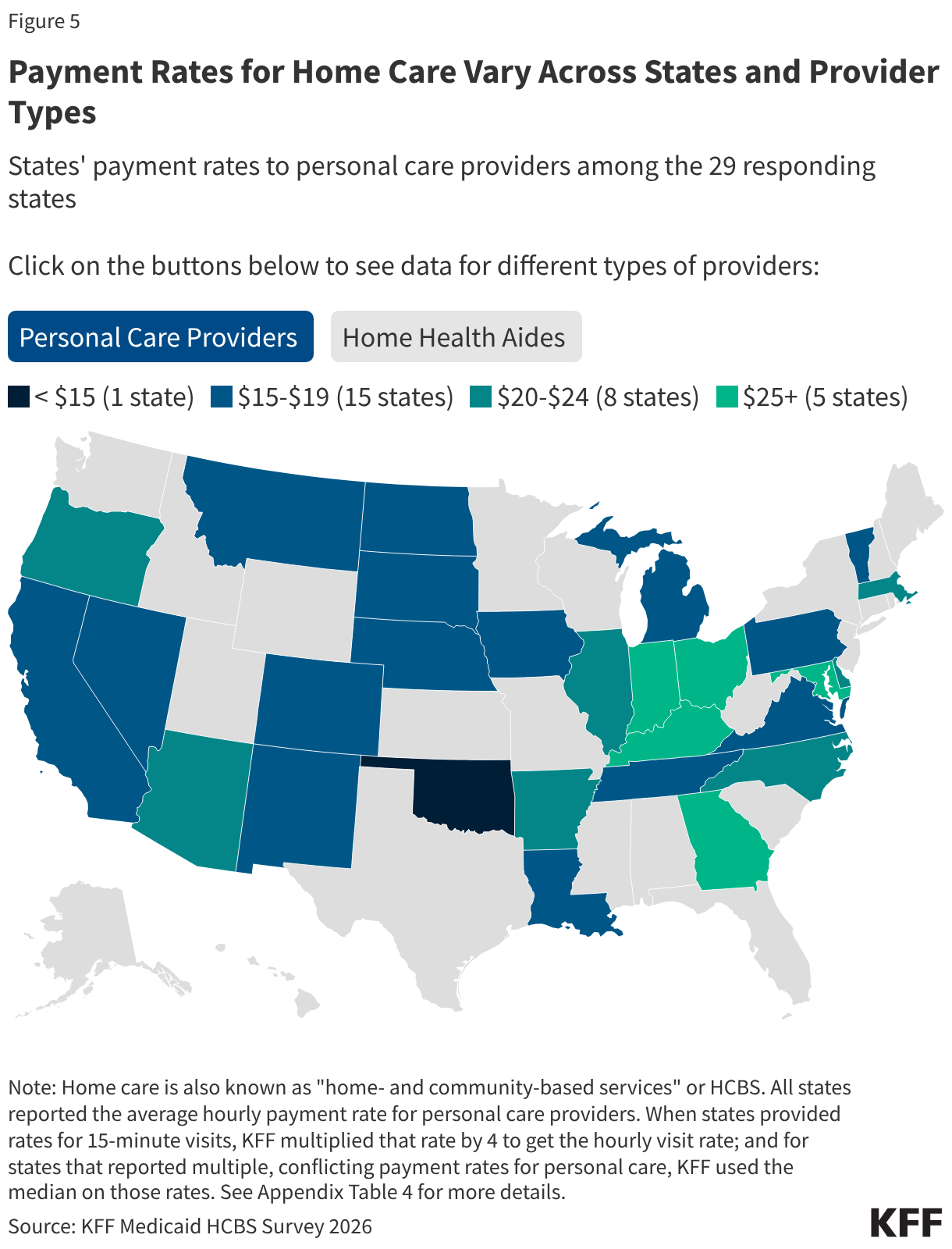
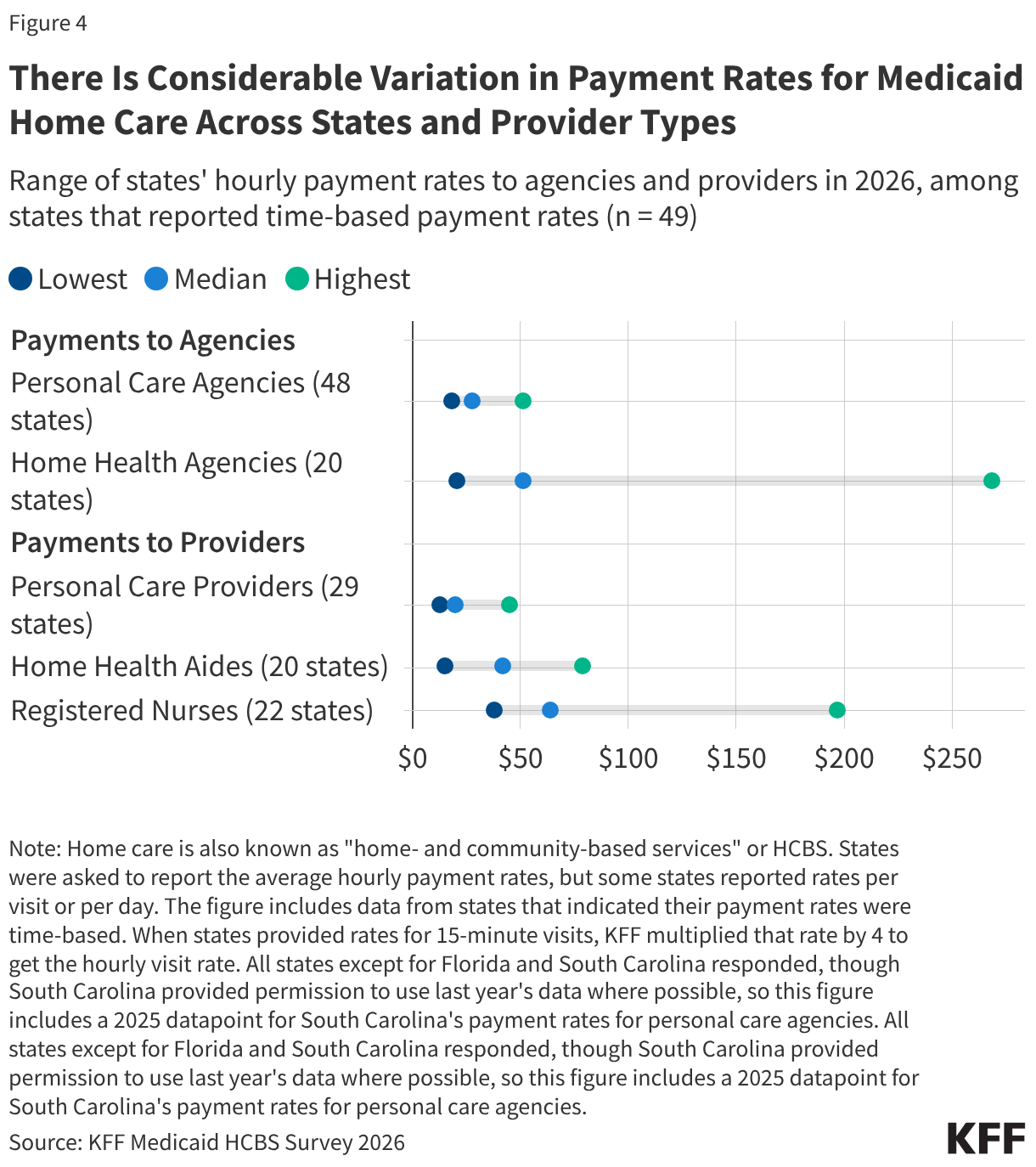
To capture a national overview, the KFF survey asked states to report average hourly payment rates for two types of home care agencies—personal care agencies and home health agencies—alongside three specific direct provider roles: personal care workers, home health aides, and registered nurses. Many states, however, struggled to supply comprehensive data. Two responding states were unable to provide figures for personal care agencies, while 29 could not report data for home health agencies. For registered nurses and home health aides, more than half of responding states could not provide hourly payment figures or marked them as unknown. Only 15 states successfully reported complete payment rate metrics across all four primary categories, frequently reflecting a mix of hourly and non-hourly rate structures.
States cited numerous reporting hurdles, including fragmented payment schedules across different waiver programs that frequently diverge from standard state plan rates. Where states reported multiple payment rates for personal care, KFF utilized median figures for analytical purposes.
The survey estimates indicate substantial national variation in median hourly payment rates, landing at $19 per hour for personal care providers, $42 for home health aides, and $64 for registered nurses. Comparisons to external data sources remain challenging due to differing categorization methods and administrative definitions.
Overall, home health agencies command higher payment rates than personal care agencies, though significant internal variation persists. Among states reporting hourly metrics, payment rates for home health agencies ranged widely from $20 to $268 per hour, while personal care agencies ranged from $18 to $51 per hour. The median hourly payment among these states sat at $51 for home health agencies and $27 for personal care agencies. Year-over-year comparisons show that median payment rates for personal care agencies and home health aides experienced marginal increases, rising from $26 to $27 and $41 to $42 respectively, while median rates for personal care providers and home health agencies held steady at $19 and $51. Conversely, median payment rates for registered nurses saw a decline from $70 down to $64.
For individual personal care workers in states capable of reporting rate data, hourly compensation spanned from below $15 to over $25 per hour. Home health aides consistently received higher rates than personal care workers, a reflection of the additional clinical training required for their roles. Among states reporting the highest tier of home health aide rates, some figures reflected per-visit or per-day reimbursements rather than standard hourly wages, underscoring the diverse payment mechanisms utilized by state Medicaid programs as they navigate an increasingly complex operational landscape.