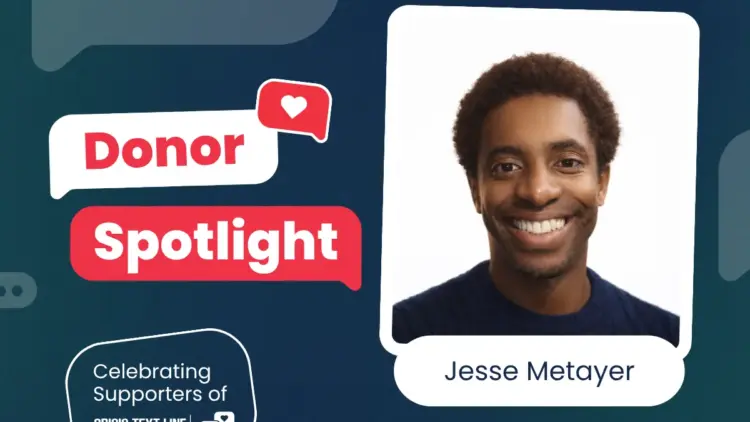
Every text message received by crisis intervention services is answered because someone believed the work mattered enough to make it possible. For Crisis Text Line, that vital backing often comes from dedicated individuals whose financial contributions and personal involvement sustain round-the-clock operations. This month, the organization is shining a spotlight on Jesse Meyer, a donor, volunteer, and mental health advocate whose generosity helps train the Crisis Counselors who show up for texters during their most difficult moments.
Meyer’s journey to becoming a pillar of support for others is rooted in his own experiences with vulnerability, overcoming personal hurdles, and learning the true value of empathy. Through his engagement with therapy and crisis intervention, he has worked to break down long-standing stigmas surrounding mental health care while refining the listening skills that he applies both to strangers in crisis and to his own personal relationships.
Below is an in-depth look at Jesse Meyer’s story, his motivations for supporting mental health initiatives, and the profound impact of showing up for people when they feel that all hope is lost.
Overcoming Stigma and Finding the Path to Healing
Reflecting on what initially inspired him to support Crisis Text Line, Meyer opens up about the hardships of his early years and the turning point that completely changed his perspective on mental health.
"I spent most of my childhood feeling different," Meyer explains. "I was in learning disability classes throughout school and tried to hide how hard things were for me. I dropped out of college after 18 and started to isolate myself. In my darkest moment, I felt like there was no hope. I decided to reach out for help, and that’s when things started to change."
When he finally sought professional guidance, he found a therapist who listened with genuine empathy and provided the emotional support and resources he needed to improve his well-being. That pivotal experience demonstrated the undeniable importance of reaching out for professional help during moments of profound despair.
Furthermore, the experience dismantled a harmful misconception that Meyer had previously internalized. "I used to believe that therapy was for people with severe mental illnesses, which was a stigma that is untrue," he notes. "Anyone, at any given moment, can experience difficulties in life."
Transforming Crisis Moments Through Trained Empathy
Meyer’s commitment to mental health advocacy extends far beyond financial contributions; he has also dedicated his time to serving directly as a Crisis Counselor. Through a rigorous free six-week training program provided by Crisis Text Line, he acquired emotional techniques that he has successfully applied in real-time interactions with texters facing severe distress.
"By using those techniques, I’ve been able to effectively turn hot moments in initial conversations into cool moments and guide the texters to a place of empowerment by the end of our chats," Meyer shares. "I feel satisfied knowing that I can make a difference in someone else’s life."
For Meyer, supporting mental health initiatives is a matter of community priority, particularly because individuals experiencing emotional distress are frequently the people we encounter in daily life. His training has equipped him to support brave individuals by helping them de-escalate emotional crises and encouraging them to seek ongoing professional help immediately following their text conversations.
Through this work, Meyer has come to view listening not merely as a passive act, but as an active, learned skill that fosters patience and deepens critical thinking. "It makes us understand a person’s words, emotions, and needs," he says.
The Mutual Rewards of Compassionate Presence
The impact of crisis intervention is deeply felt by both the individuals seeking assistance and the volunteers providing it. Meyer emphasizes that being consistently available reassures texters that they can reach out at any hour of the day or night for immediate, completely free support.
The validation he receives from these interactions reinforces his dedication. "There have been times when a texter expressed gratitude at the end of our conversation," Meyer notes. "This makes me feel a sense of validation, gratitude, and self-worth. By simply being present, and listening to someone with compassion, I can help them through a difficult time. That’s why I continue to volunteer."
Driven by a strong philanthropic vision, Meyer chooses to prioritize Crisis Text Line in his charitable efforts because of the tangible impact the organization makes. The platform provides free, round-the-clock mental health support to anyone in need. Through his participation, Meyer has continuously strengthened his own listening skills and empathy while offering nonjudgmental support. He also credits the guidance of coaches and supervisors who remain readily available to answer questions and provide ongoing assistance to volunteers.
Personal Growth and Applying Lessons to Everyday Life
Giving back to a cause of this magnitude has also yielded profound personal and professional growth for Meyer. The emotional regulation and patience he practices while managing high-stakes conversations have naturally transitioned into his personal life.
"I feel good when I’m able to help someone who is suffering from psychological distress," Meyer says. "I have learned never to make decisions when my emotions are high. Slowing down helps clear my mind and strengthens my critical thinking skills. I bring that same patience and empathy to help me deal with any stressful situation in my own life."
He adds that volunteering has fundamentally changed how he navigates interpersonal relationships. "Volunteering at Crisis Text Line teaches me how important it is to listen before judging because doing so helps me understand the full picture and prevents unfair misunderstandings when helping friends and family."
When considering what to say to prospective donors who may be weighing whether to support the platform, Meyer highlights the vast and diverse populations that depend on these services.
"I would tell them that they will be helping people who are dealing with disasters, systematic poverty, war, or other hardships," he states. "Giving our help freely ensures that those who need emotional help the most will be receiving assistance that they would otherwise be lacking if they were forced to pay for help. You are the backbone that keeps this platform free and active 24/7 for people in need of emotional support. If you’re ever struggling, please know you’re not alone and that reaching out is the first step towards hope."
Maintaining Personal Well-Being
To sustain his advocacy work and maintain his own mental health, Meyer relies on a balanced routine of community engagement, creative outlets, and physical activity. He finds grounding and tranquility through regular attendance at church, ongoing volunteer commitments with Crisis Text Line, and working on personal software projects like the StarTalk app. Additionally, he prioritizes physical well-being through visits to the gym and long, restorative walks in local parks.