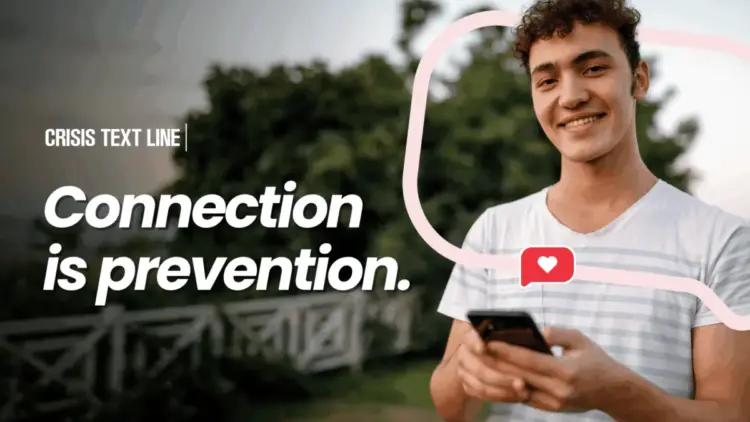
As September marks National Suicide Prevention Month, organizations across the United States are ramping up efforts to address what public health advocates increasingly view as a pervasive crisis of isolation. This year, Crisis Text Line is anchoring its annual awareness campaign, which extends through World Mental Health Day on October 10th, around a foundational and deceptively simple premise: connection is prevention.
The organization’s overarching message for the campaign highlights that feeling connected to another person, even briefly, can serve as the critical differentiator between a difficult night and a tragedy. Rather than framing suicide prevention exclusively as a clinical intervention that takes place in a hospital or a therapist’s office, the campaign emphasizes the profound impact of everyday interactions. By encouraging individuals to proactively reach out and check in on the people within their personal networks, the initiative underscores that a simple conversation can be a meaningful and life-saving act of prevention.
For individuals experiencing immediate distress or emotional turmoil, accessible support remains available around the clock. Anyone in need of mental health support can text the word CONNECT to 741741 to reach a live, volunteer Crisis Counselor. The service operates free of charge, entirely confidentially, on a 24/7 basis, and without judgment.
The timing of this campaign highlights a broader global and domestic reality where mental health resources and suicide prevention strategies are more essential than ever. Insights gathered from annual trend reports compiled by Crisis Text Line illustrate the persistent urgency of recognizing warning signs and ensuring that a reliable lifeline remains accessible to the public. Every single day, support services are tasked with showing up for individuals navigating their darkest moments, ensuring that no one is forced to carry heavy emotional weights entirely alone. Data from ongoing conversations on text-based support platforms demonstrates that even a single conversational exchange can restore a sense of hope, cultivate human connection, and ultimately preserve a life.
Public health research examining suicide risk consistently points to strong, dependable relationships as a primary protective factor. While formal medical and therapeutic interventions save countless lives, the vast majority of preventative moments occur much earlier in ordinary settings, where an individual feels safe, valued, and seen rather than invisible.
Social connection acts as a powerful psychological buffer. People who maintain robust ties to family, friends, or broader communities statistically demonstrate a lower likelihood of reaching a critical crisis point, and they are significantly more inclined to reach out for help if distress does arise. This sense of belonging fundamentally alters how a person holds on during turbulent periods.
However, advocates emphasize the importance of understanding what loneliness truly feels like in contemporary society. Loneliness is not strictly defined by physical solitude; an individual can experience profound isolation in a crowded room or within a household surrounded by people who do not truly know them. It can manifest as having a smartphone filled with contacts yet lacking anyone to genuinely call. For those who recognize these feelings, experts note that such experiences are among the most common and treatable human conditions.
A major barrier preventing people from checking in on friends, family members, or colleagues is the fear of saying the wrong thing. Campaign organizers stress that effective communication does not require a perfect script or specialized psychological training. A straightforward message expressing care, such as checking in to see how someone is doing after a period of absence, can travel a long way in bridging an emotional gap.
Furthermore, supporting someone who is struggling does not require waiting for them to explicitly utter the word suicide or ask for assistance. Many individuals experiencing severe emotional pain tend to mask their suffering, quietly withdrawing from group chats, canceling social plans, or pulling away from regular routines. Providing meaningful support often involves noticing these subtle behavioral shifts and reaching out regardless of uncertainty. Public health guidance generally suggests that it is far better to ask and be mistaken than to remain silent and face lingering regret later.
Throughout September, communities utilize specific visual symbols to raise awareness and foster open dialogue. The official colors designated for Suicide Prevention Month are purple and teal. These colors frequently appear on awareness ribbons, digital graphics, and at various community events, serving as a visible signal that suicide is a preventable public health issue and that help is readily available. Wearing or sharing these colors helps dismantle stigma and opens the door to crucial conversations that might otherwise never occur.
As National Suicide Prevention Awareness Month continues, organizations are urging the public to take active roles in raising awareness and supporting preventative initiatives. Ensuring that individuals experiencing mental health crises or suicidal ideation do not have to face their struggles in isolation requires community-wide engagement and sustained support for free, 24/7 crisis intervention services.
Those seeking to learn more about the ongoing campaign or to access support resources can utilize the text-based helpline by texting CONNECT to 741741 at any time of day or night.