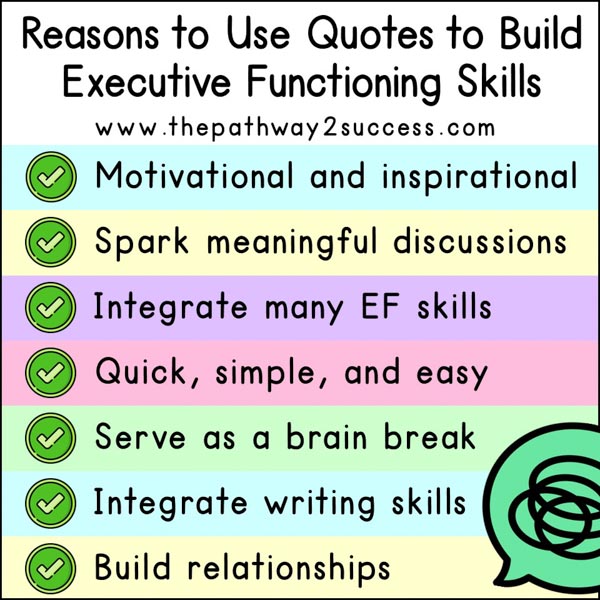
As educators and school administrators continuously seek innovative ways to support the holistic development of children and adolescents, a growing movement is emerging around the integration of reflective discourse into daily classroom routines. Far beyond simple classroom decorations or standard motivational posters, carefully curated quotations are increasingly being deployed as strategic catalysts to build essential executive functioning skills in students.
Executive functioning encompasses a complex set of cognitive processes that govern how individuals plan, maintain attention, exercise self-control, organize tasks, and demonstrate mental flexibility. These underlying mental mechanisms are crucial not only for academic achievement within the structured environment of a school but also for navigating the multifaceted challenges of life beyond the classroom. While traditional instructional methods often treat these competencies as secondary outcomes, educators are finding that intentional discussions centered around meaningful quotes provide a natural, engaging bridge to explicitly target and strengthen these vital cognitive foundations.
The Role of Quotations in Modern Educational Strategy
The rationale for incorporating targeted quotes into daily educational routines stems from the unique developmental stage of growing minds. Children and teenagers are actively shaping the neural pathways that govern self-regulation, goal setting, and problem-solving. By introducing statements that encourage deep reflection, teachers can help students connect abstract cognitive concepts to their everyday experiences.
Rather than viewing executive functioning as an innate trait that children either possess or lack, educational specialists emphasize that these skills can be explicitly taught, practiced, and refined. Quotes serve as accessible entry points for this learning process. When selected strategically, a well-chosen statement prompts learners to look beyond the literal words and examine the underlying behavioral and psychological principles at play. This approach transforms routine bell-ringer activities or morning meetings into opportunities for metacognition, where students learn to think about their own thinking and behavioral patterns.
Choosing the Right Quotes for Cognitive Growth
The effectiveness of this approach relies heavily on the deliberate selection of quotations. Educators point out that a quote suitable for building executive functioning must transcend a simple, pleasant sentiment. Instead, it needs to challenge teens and children to think critically and apply the underlying message to their personal lives and academic habits.
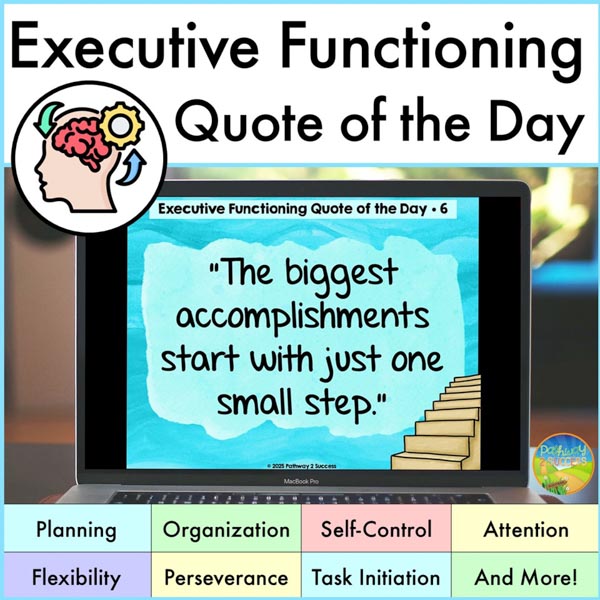
To streamline this process for educators, comprehensive resources such as yearlong quote-of-the-day collections have been developed to target specific domains including planning, organization, impulse control, and sustained attention. These curricula typically incorporate guided questions and targeted skill identifiers, allowing teachers to integrate reflective discussions seamlessly into their existing schedules. However, even without extensive curriculum sets, teachers can begin utilizing targeted quotations immediately by pairing concise statements with intentional inquiry.
Understanding Executive Functioning Through Metaphor
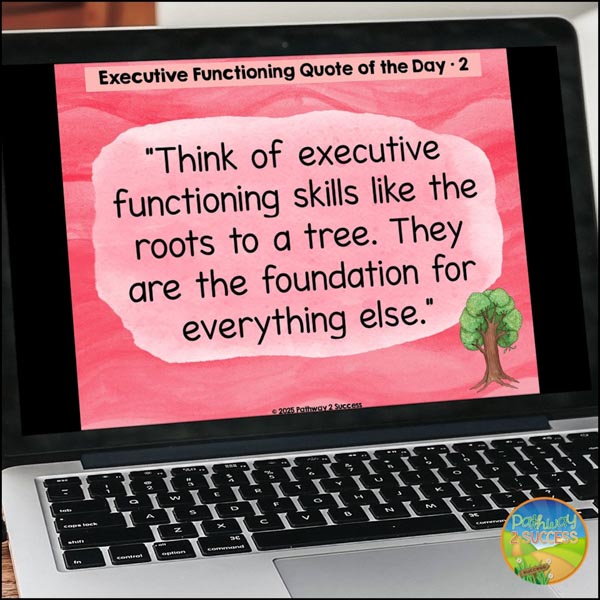
Introducing the broad concept of executive functioning often begins with foundational metaphors that make abstract cognitive processes tangible for learners. A frequently utilized quote in this category compares these mental faculties to the vital components of a living organism: "Think of executive functioning skills like the roots to a tree. They are the foundation for everything else."
In educational discussions, this metaphor helps students grasp that executive processes are the unseen mechanisms driving daily actions. These mental operations enable an individual to initiate a chore, sustain focus during a lengthy conversation, or work through a difficult academic problem. By understanding that these skills serve as the root system for all productivity and learning, students are often more receptive to exploring strategies for personal growth. Guided discussions around this concept typically prompt learners to reflect on their favorite daily activities and identify how mental planning and focus make those pursuits possible.
Cultivating Self-Control as Self-Care
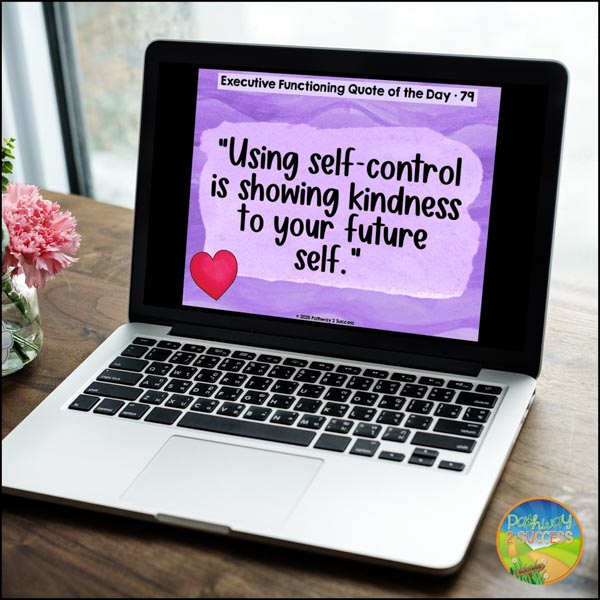
Self-control is another critical component of executive functioning that often carries a restrictive or punitive connotation for young people. To reframe this perception, educators have introduced reflective discussions centered around the perspective that "Using self-control is showing kindness to your future self."
This reframing shifts the narrative from external compliance to internal empowerment. Self-control is defined in these classroom dialogues as the conscious ability to pause and evaluate choices before acting. Over time, practicing self-control leads to optimized decision-making. When a student takes the time to organize a cumbersome binder or study ahead for an examination, they are engaging in a proactive act of self-kindness, even if the immediate task feels tedious. Classroom conversations regarding this principle encourage students to identify personal ways they can demonstrate kindness to their future selves through mindful daily choices.
Overcoming the Barrier of Task Initiation
For many students, the most formidable obstacle in academic and personal pursuits is simply beginning the assignment. Task initiation—the cognitive capacity to launch into an activity despite initial reluctance—is a frequent target for executive functioning interventions.
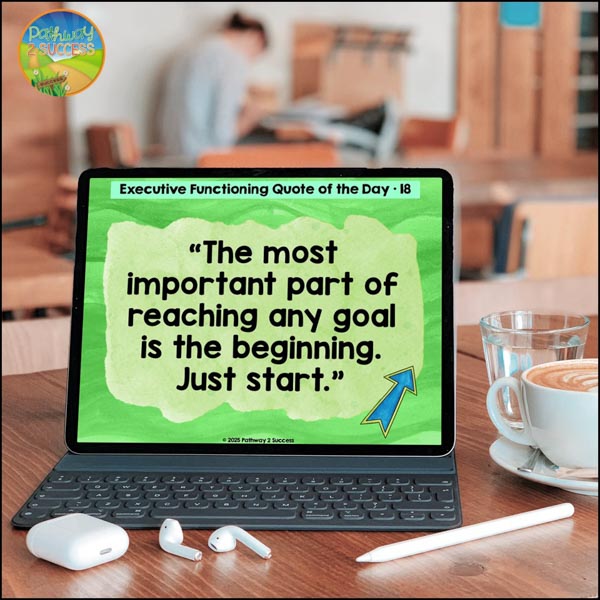
A central philosophy often discussed in classrooms facing this hurdle is encapsulated by the notion that "The most important part of reaching any goal is the beginning. Just start." Educators emphasize that the anticipation of a task often generates more anxiety and mental friction than the work itself. Once initial momentum is established, students find it significantly easier to sustain effort through completion. Discussions in this area focus on dissecting why starting feels difficult and sharing practical cognitive strategies to overcome inertia.
Bridging Calmness and Attention
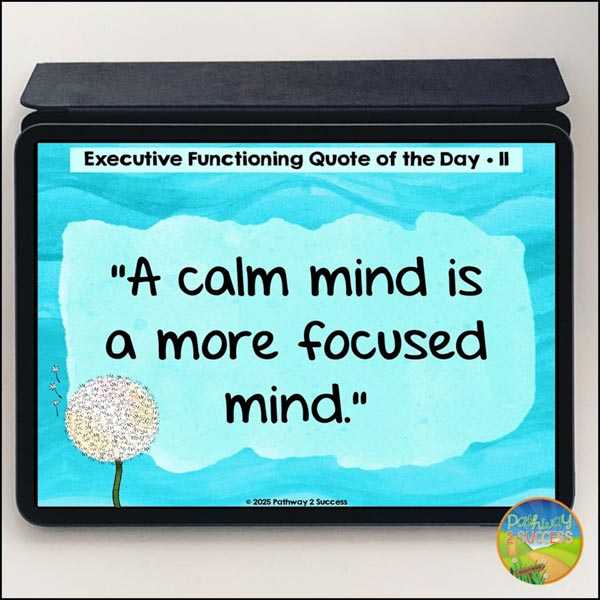
Attention and focus are intrinsically linked to emotional regulation, a connection highlighted by the principle that "A calm mind is a more focused mind." In educational environments where students frequently experience stress, anxiety, or sensory overload, cognitive capacity for sustained attention can diminish rapidly.
By integrating mindfulness and calming strategies into the school day, educators are finding that students can better clear mental clutter, leading to improved clarity and productivity. Discussions surrounding this relationship encourage learners to recognize the physical and mental signs of stress and to identify specific relaxation techniques that help prepare their minds for focused work.
Sustaining Perseverance Through Challenges
Perseverance represents the enduring commitment to a goal despite encountering obstacles along the way. While the concept is straightforward, maintaining endurance through adversity requires active cognitive and emotional resilience.
A guiding statement frequently utilized to address this skill is simple yet profound: "Perseverance isn’t always easy, but it’s simple. Just keep going." Classroom dialogues centered on perseverance invite students to examine past challenges they have successfully navigated and to articulate the specific internal strategies they relied upon when the temptation to surrender was strongest.
Fostering Cognitive Flexibility
Cognitive flexibility allows individuals to adapt to changing circumstances, perspective-take, and approach problems from multiple angles. This skill is vital for navigating unexpected disruptions and resolving interpersonal or academic conflicts.
To reinforce this adaptability, educators often turn to the principle that "Every problem has a solution. Most have many." By reminding students that rigid thinking limits potential outcomes, teachers use these quotes to encourage collaborative brainstorming and creative problem-solving. Discussions focus on analyzing recent personal challenges and exploring the various pathways that could have led to successful resolutions, reinforcing the value of adaptable thinking in daily life.