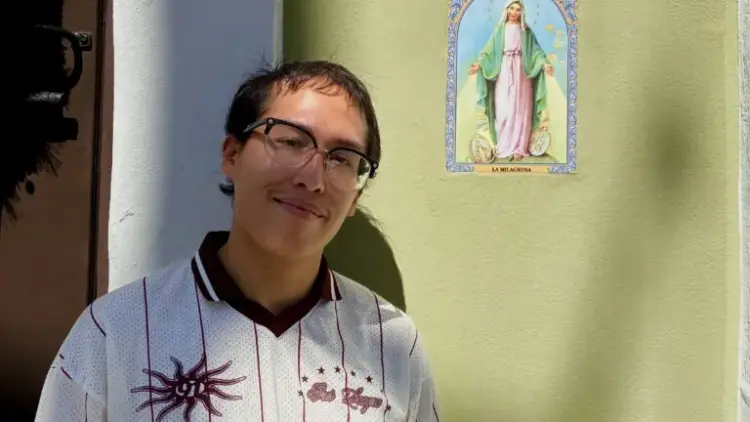
For the past two years, Rosbel Garza has dedicated his work as a community organizer with the Alliance for Community Services to a singular, transformative vision: guaranteeing healthcare and human services as a right for all. Operating primarily through the statewide "Humanize Long Term Care" campaign in Illinois, Garza and his fellow organizers have been at the forefront of a movement aiming to reshape how society views and manages long-term care. The campaign’s mission is anchored by three foundational policy pillars—supporting individuals in transitioning out of institutional nursing homes and into community-based housing, dismantling the systemic "hospital-to-nursing home" pipeline, and drastically increasing dignity, autonomy, and respect for people living inside nursing facilities.
Central to this systemic transformation is the recognition that true systemic change cannot happen without the active political participation of those most directly impacted. Over the past year, the campaign has forged a powerful partnership with union teachers at City Colleges to launch what organizers call "Resident Empowerment" workshops. These educational sessions are designed to provide nursing home residents with essential digital literacy tools, helping them learn how to navigate technology to advocate for themselves, communicate effectively with peers, and access vital resources. Furthermore, these workshops serve as an educational platform to demystify the voting process, explain how communities can mobilize to create tangible change, and shed light on accountability—specifically, who holds responsibility for the current socioeconomic conditions that isolate vulnerable populations within institutional walls.
The scope of this empowerment project saw a significant expansion in 2026 thanks to a grant received from the American Association of People with Disabilities (AAPD) REV UP Initiative, which stands for Register, Educate, Vote, Use Your Power. This financial and programmatic support enabled Garza and the Alliance for Community Services to deepen their leadership-building efforts among nursing facility residents, fostering an environment where residents could learn from one another’s lived experiences and collectively address the systemic issues affecting their daily lives.
Utilizing the relationships forged during the digital literacy and political engagement workshops, the campaign introduced a peer-led initiative by assigning "Voting Registration Captains" within participating nursing facilities. These captains took on the vital responsibility of circulating through their living quarters to register fellow residents, update existing voter registrations, and educate their peers on their fundamental right to cast a ballot, alongside the various voting options available to them.
Despite the clear constitutional and legal rights of residents to discuss politics and register to vote, and despite the public availability of election information, the campaign encountered significant, systemic resistance. The most prominent and persistent obstacles did not stem from logistical challenges or a lack of interest among residents, but rather from the administrative staff of the facilities themselves. At numerous locations, facility staff actively intervened to block the grassroots effort, telling residents that they were prohibited from asking their peers if they were registered or offering assistance with the voter registration process.
When questioned, the reasoning offered by nursing facilities was uniform: administrators claimed that the facilities already handled voter registration on behalf of their residents. However, this assertion clashes sharply with the lived realities of individuals residing inside these institutions. As nursing home residents know better than anyone, leaving critical personal tasks "up to the nursing home" routinely translates to a profound loss of autonomy. Residents frequently experience missed doctor’s appointments, arbitrary restrictions on when and where they are permitted to go outside, and an overarching institutional culture where adults are treated with paternalism and stripped of their independence.

The daily barriers faced by nursing home residents extend far beyond political participation, deeply affecting their ability to build community and maintain connections to the outside world. Many of the individuals Garza interacts with inside these facilities lack basic access to modern technology, including personal phones, laptops, and reliable internet service. For those who do manage to possess a device, cellular or network service is often absent or prohibitively expensive.
To bypass these technological and physical barriers, organizers rely on deeply human solutions. Building genuine, long-lasting relationships, organizing community potlucks, running information tables together, and assisting individuals in navigating available resources have formed the bedrock of a resilient community network. This solidarity serves as a crucial counterweight to the paternalistic attitudes pervasive in nursing facilities, actively encouraging residents to attend community-based events rather than remaining confined to institutional spaces, and helping them view one another as allies and natural leaders. For many participants, the potlucks hosted by the Alliance for Community Services represent the first and only time they leave the physical confines of the nursing home in a year or more.
Encouraging civic participation, fostering solidarity, and cultivating resident leadership are essential steps because the current long-term care industry operates with profound financial incentives to keep residents uninformed, isolated, and occupying a bed. Garza notes that he has heard numerous accounts of nursing facilities actively attempting to discourage or prevent residents from communicating with one another, fearing the collective power that emerges when isolated individuals begin to organize and share their grievances.
Conversely, the campaign has also highlighted instances of facilities opening their doors to invite local candidates to speak directly with residents. While Garza emphasizes that candidates running for office at every level of government should absolutely visit nursing facilities, group homes, and any other space where eligible voters reside, he stresses the critical importance of equitable and fair engagement. Pacing an ethical boundary is paramount; residents have shared concerning stories of local candidates attempting to campaign inside facilities by making predatory and illegal promises, such as offering jobs in exchange for political support if the candidate successfully takes office.
Voters living in nursing homes possess immense political power, yet they routinely confront formidable barriers at every single stage of the democratic process—from the initial act of registering to vote, to researching their choices on the ballot, to ultimately casting their vote securely. True empowerment for voters in nursing homes requires recognizing their fundamental agency to converse, debate, and organize around their own political views, ideas, and civil rights.
These facilities house hundreds of individuals under a single roof, many of whom share a singular aspiration: finding stable housing, meaningful employment, and care options that allow them to live with dignity within the broader community rather than remaining locked inside an institution. People trapped inside nursing homes are already deeply engaged in politics, often in ways that go unrecognized; their signatures help place candidates on the ballot and put officials into public office. However, until systemic efforts successfully empower residents to communicate openly with one another and forge unbreakable alliances, nursing facilities will continue to maintain the paternalistic stance that they can simply "take care of it" on behalf of the people they confine.
Rosbel Garza serves as a community organizer with the Alliance for Community Services and is completing his graduate studies in DePaul University’s International Studies program.