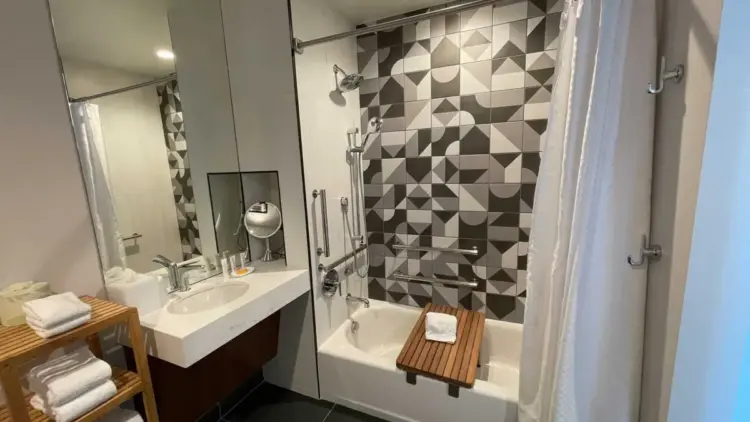
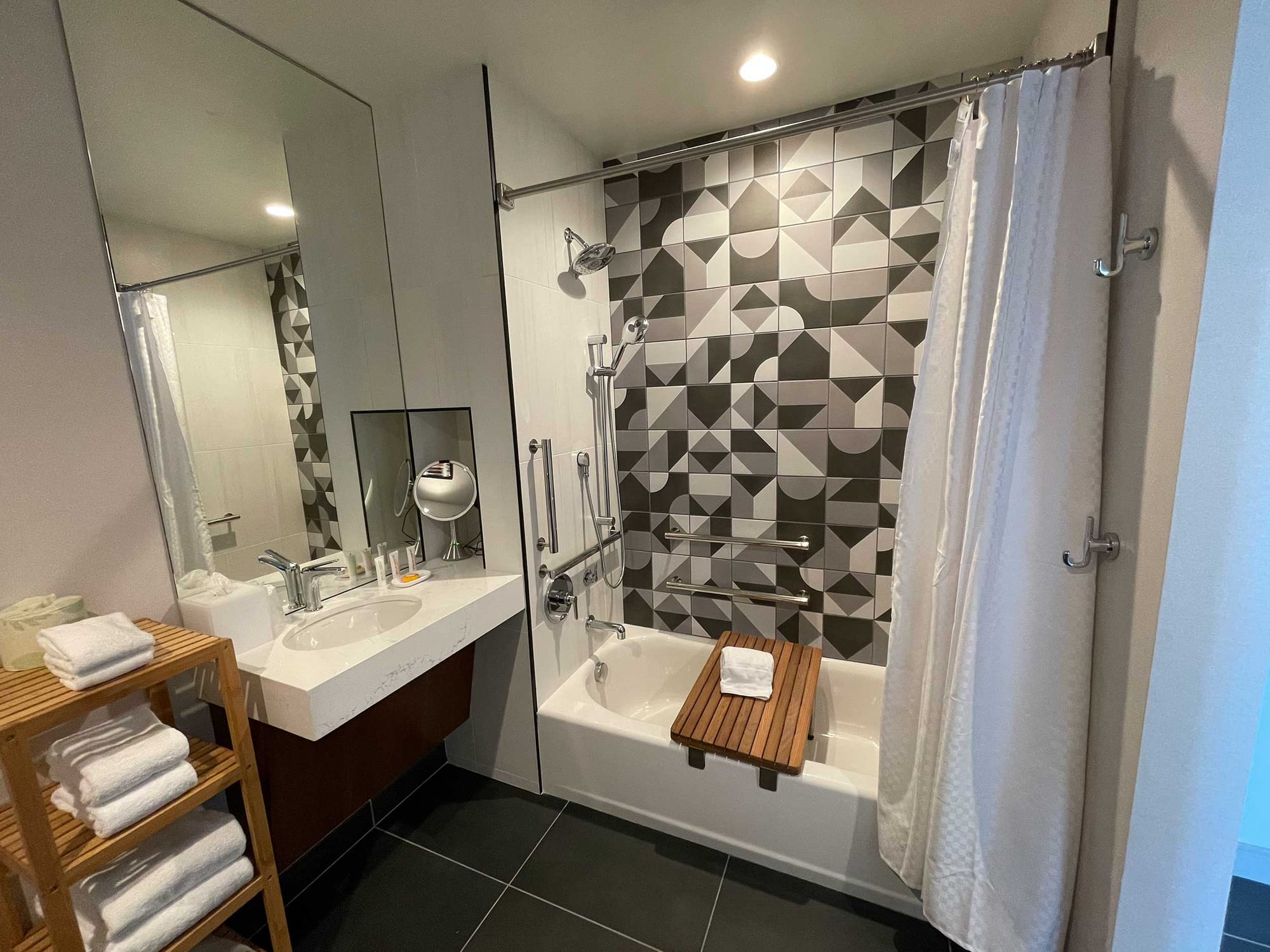
Over the past few years, travelers navigating new hotel builds and major property renovations have likely noticed a striking shift in hospitality design: bathtubs are rapidly vanishing. This architectural evolution is not limited to standard guest rooms designed for modern minimalism; it is also increasingly occurring in ADA-accessible guest rooms. For many disabled travelers, particularly older adults who rely on stability features, this is a deeply meaningful and often frustrating development. Bathtubs equipped with secure grab bars and transfer seats have long been the preferred bathing fixture for a significant segment of travelers with mobility considerations.
Initially, a common assumption among advocates was that any modern hotel failing to provide guest rooms with an ADA-accessible bathtub was operating outside the law. However, a closer examination of the legal framework reveals a surprising reality. Due to a specific provision written into the federal accessibility guidelines, properties can legally eliminate bathtubs from their accessible inventories entirely. Yet, exercising this legal option requires a very precise architectural substitution that most hospitality developments have failed to implement correctly, highlighting a persistent disconnect between federal design standards and on-the-ground execution.
ADA Requirements for Accessible Bathtubs and Showers in Hotels
Hotels newly constructed or significantly altered on or after March 15, 2012, are legally bound to follow the 2010 ADA Standards for Accessible Design, which were officially adopted by the Department of Justice. Within these federal regulations, the rules governing hotel guest rooms are primarily located in Section 224 of the standards, while the complex technical specifications are detailed in Section 806.
The fact that these critical design mandates are spread across multiple, disparate sections of the ADA code has long been a source of confusion for architects, interior designers, and project developers. This fragmentation is widely considered one of the primary reasons why so many hospitality properties struggle to achieve full compliance.
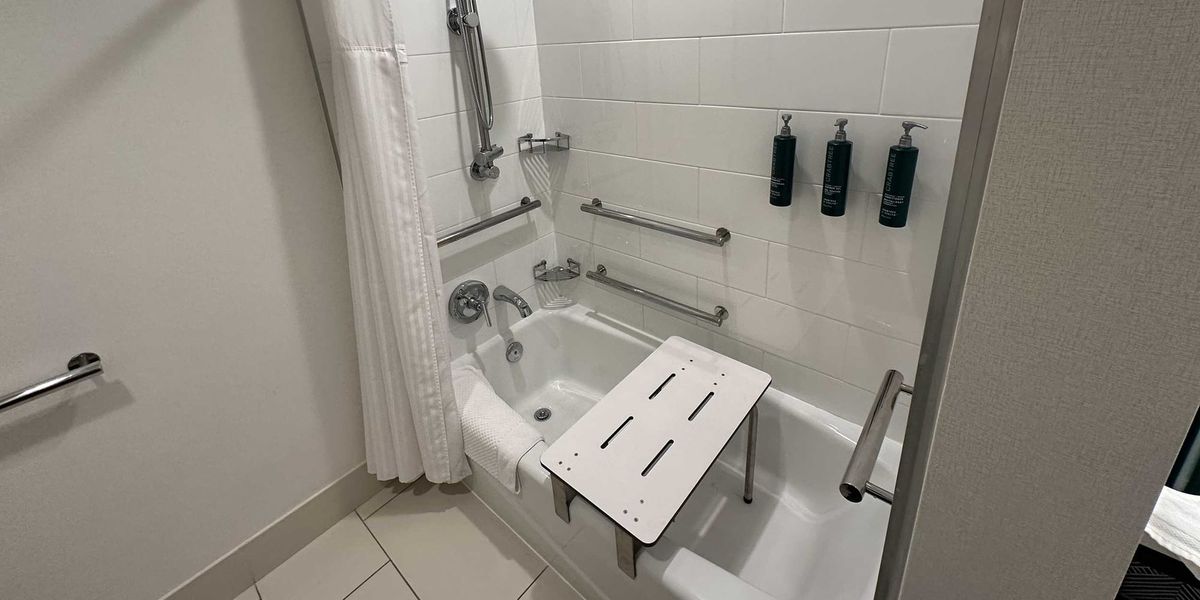
Section 224.2 of the standards dictates the exact number of mobility-accessible guest rooms a property must provide, scaling upward based on the hotel’s total room count. The regulatory framework splits these mandatory rooms into two distinct categories: those equipped with roll-in showers and those without them. Under these rules, the required number of accessible accommodations scales proportionally with the size of the property, ranging from a single accessible room in small boutique inns to complex percentages and formulas in massive resort complexes.
The regulations mandate that even the smallest hotels, including properties with as few as one total guest room, must feature at least one room categorized under accommodations without roll-in showers. Historically and functionally, bathtubs have satisfied this requirement easily. However, the federal standards also explicitly recognize transfer-type showers as an acceptable alternative bathing fixture to fulfill this category. Meanwhile, the legal obligation for hotels to introduce rooms featuring roll-in showers triggers once a property reaches a threshold of 50 or more total guest rooms.
The Loophole: Transfer Showers Can Legally Take the Place of ADA-Accessible Bathtubs
For accessible guest rooms that do not feature a roll-in shower, the ADA Standards essentially treat a bathtub and a transfer shower as interchangeable fixtures. State-level adaptations of the code, such as California’s Section 11B-224.2, articulate this rule in plain language, instructing properties to provide either a bathtub or a transfer-type shower. Consequently, a hotel can legally operate with zero bathtubs anywhere on its premises, provided that a true, fully compliant transfer shower stands in its place within the accessible room inventory.
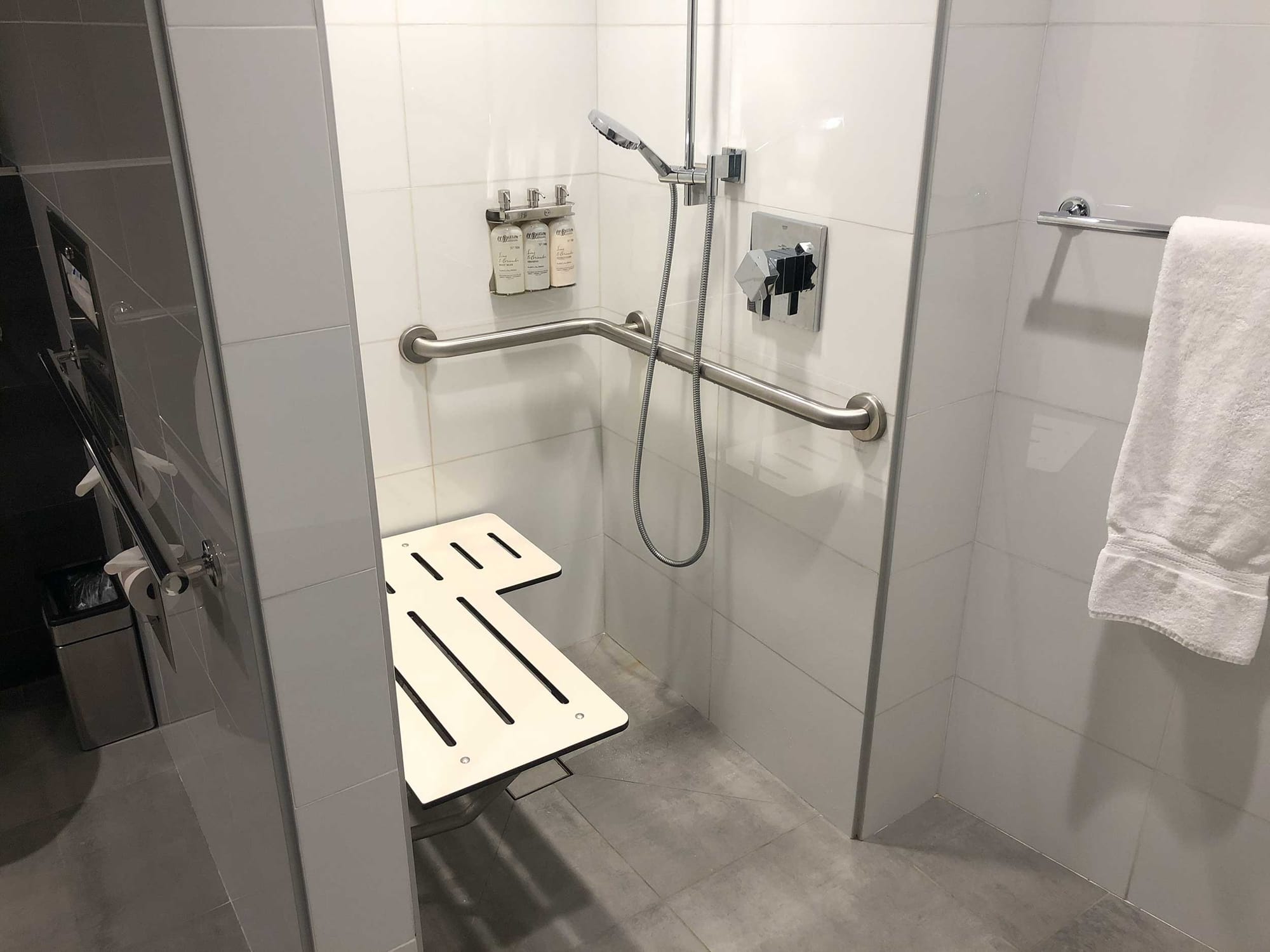
It is critical to note, however, that a transfer shower is legally and structurally distinct from a standard roll-in shower, nor is it equivalent to the trendy walk-in glass showers marketed by modern interior designers. A transfer-type shower is a highly specific, strictly regulated fixture defined by exact technical parameters. Under the federal standards, transfer shower compartments must measure precisely 36 inches by 36 inches square. These are absolute dimensions, not flexible minimums.
Furthermore, a qualifying transfer shower must feature a wall-mounted seat positioned precisely 17 to 19 inches above the finished floor. Rigid requirements also dictate the placement of grab bars on the wall opposite the seat and on the back wall, alongside water controls positioned within clear reach of the user. Additionally, the threshold or curb required to enter the shower compartment can be no higher than one-half of an inch.
These stringent design criteria mean that many showers promoted by hotels as accessible or walk-in fail to meet the legal definition. A curbless, glass-enclosed shower with decorative tile work is not automatically a transfer shower. Without the exact compartment dimensions, the secure wall-mounted seat, and the mandated grab bars and water controls in their proper locations, such a fixture is simply a standard shower and does not satisfy ADA compliance as a legal replacement for a bathtub.
Looking Ahead: Trends Favor the Elimination of Bathtubs in Hotel Rooms
The broader hospitality industry trend toward eliminating bathtubs entirely is accelerating rapidly. Several major hotel brands have already phased out bathtubs altogether in new construction projects, and industry analysts expect this momentum to continue. Bathtubs consume considerable square footage, and contemporary interior designers increasingly view sleek, open showers as the more modern, marketable aesthetic choice. As a result, tubs are steadily disappearing from standard guest rooms and, increasingly, from ADA-accessible inventories as well.
Compounding this trend is the reality that many architects and design firms lack deep familiarity with nuanced ADA requirements. Because bathtubs were standard fixtures in hospitality design for generations, few professionals have extensive experience engineering precise transfer-type shower compartments. Industry observers anticipate that accessibility compliance issues will persist long into the future. As evidence, experts point out that roll-in showers have been legally mandated for more than three decades, yet widespread non-compliance remains a persistent issue across the hospitality sector.
Final Thoughts
Within the disability community, perspectives remain varied regarding the ideal bathing fixture, as individual travelers possess diverse accessibility needs and personal preferences. The gold standard for hospitality accessibility involves properties maintaining a balanced inventory that incorporates ADA-compliant bathtubs, roll-in showers, and transfer showers, thereby giving guests a genuine range of choices that accommodate their specific requirements.
As bathtubs continue to disappear from hotel floor plans, consumer advocacy groups emphasize the importance of holding property operators strictly accountable to federal design standards. Only genuine, fully compliant transfer showers serve as a legitimate legal replacement for bathtubs under the law. Travelers who encounter properties lacking compliant tubs or verified transfer showers in their designated accessible rooms are encouraged to address the issue directly with hotel management and, when necessary, pursue formal complaints through the Department of Justice’s Civil Rights Division to ensure enforcement of accessibility rights.