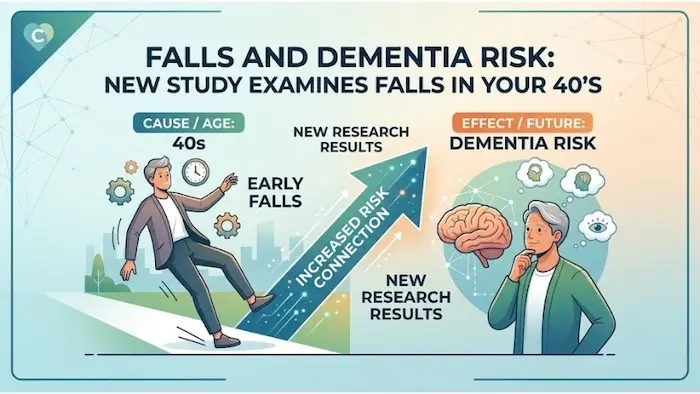
As individuals age, facing uncomfortable medical realities becomes an inevitable part of the lifecycle. However, recent scientific findings suggest that one of the most critical health indicators is an issue frequently dismissed as mere clumsiness: physical falls. A growing body of medical research establishes a profound and undeniable link between sudden falls in middle age and the long-term risk of developing dementia.
For many years, the medical establishment viewed physical injuries, such as a slip or a stumble, and cognitive decline as entirely separate issues. Recent data, however, proves this long-held assumption to be entirely wrong. When an individual experiences unexplained falls in their forties or fifties, it is rarely just a momentary loss of balance. Instead, these incidents serve as a blinking red warning light, signaling that the brain is already transmitting critical messages regarding its neurological health long before traditional memory loss becomes clinically obvious.
New Review Exposes the Hard Truth About Falls and Dementia Risk in Middle-Aged Adults
The scale of this issue was recently underscored by a comprehensive systematic review published in the Journal of Post-Acute and Long-Term Care Medicine. Conducted by researchers at Changchun University, the study analyzed health data from nearly 3 million participants to evaluate the relationship between physical instability and cognitive health.
The results of the analysis are stark. According to the data, a single fall occurring after the age of 40 increases an individual’s future dementia risk by 20 percent. Even more alarmingly, if a patient experiences multiple falls, that relative risk skyrockets by 74 percent.
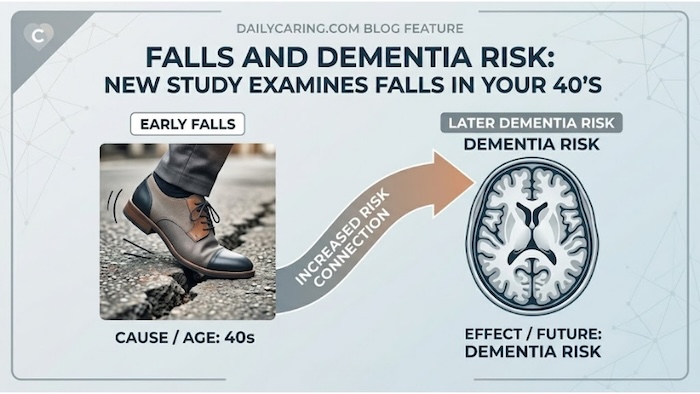
These numbers highlight a grim reality for middle-aged adults experiencing sudden physical instability. Researchers concluded that such falls act as a robust clinical marker of accelerating neurodegenerative decline, revealing underlying neurological decay years before more conventional symptoms of cognitive impairment manifest.
Early Signs of Dementia: What Recent Studies Confirm
The findings from the Changchun University review do not stand alone in the medical community. A wave of independent research from top-tier institutions fully supports this disturbing trend, painting a cohesive picture of how physical and neurological health intersect.
Researchers from the Washington University School of Public Health recently uncovered evidence demonstrating that falls are tightly linked to the progression of Alzheimer’s disease. Their data indicates that physical instability signals a much faster rate of cognitive decline. In fact, the occurrence of these incidents serves as a risk factor on par with the presence of established Alzheimer’s brain proteins.
Further reinforcing these conclusions, a massive study out of Brigham and Women’s Hospital analyzed health records from two million Medicare patients. The researchers found that 10.6 percent of older adults who suffered a traumatic fall were subsequently diagnosed with Alzheimer’s disease or a related form of dementia within just one year. The medical consensus is clear: the connection between unexpected physical trauma and long-term cognitive decline is an established reality that can no longer be ignored.

Recognizing Early Signs of Dementia Through Physical Trauma
The physical trauma resulting from a fall is deeply intertwined with the underlying progression of Alzheimer’s disease and other forms of cognitive impairment. Medical professionals confirm that neurodegeneration typically begins years before a formal clinical diagnosis is ever made. During this silent preclinical phase, the disease quietly erodes an individual’s balance, physical judgment, and spatial awareness.
When this underlying brain atrophy eventually results in a fall, the physical trauma inflicted upon both the brain and the body can aggressively accelerate the progression of the underlying disease. Adults who experience a severe fall frequently develop a profound, lingering fear of walking and movement. This psychological barrier often leads to immediate social isolation and a drastically reduced level of physical activity. Together, these behavioral changes create a vicious cycle that further speeds up cognitive decay and neurological deterioration.
Taking Action: Preventing Falls to Protect Cognitive Health
Given the strong correlation between physical instability and neurological decline, medical experts emphasize that hope alone is not a viable strategy; proactive measures are required. Preventing falls must become a primary focus for anyone looking to safeguard their cognitive health as they age.
Clinical assessments represent a crucial first step. Medical professionals recommend scheduling a comprehensive neurological examination if unexplained falls begin to occur after the age of 40, allowing clinicians to evaluate a patient’s baseline cognitive function and screen for early vulnerabilities.

Additionally, environmental factors within the home warrant immediate evaluation. Statistics show that the vast majority of falls happen within a person’s own living room, hallway, or bathroom. Taking steps to remove tripping hazards, install secure grab bars, and dramatically improve household lighting can significantly reduce physical risks.
Medication management is another critical area of concern. Many common prescriptions list severe dizziness and orthostatic hypotension among their side effects, contributing directly to loss of balance. Experts advise patients to carefully review all drug interactions and side effects with their primary healthcare providers to minimize unnecessary physical vulnerability.
The Bottom Line: Do Not Ignore the Warning Signs
The collective data from leading research institutions leaves little room for ambiguity. A fall in middle age is neither a normal, benign part of the aging process nor a simple moment of clumsiness. Instead, it functions as a vital early warning system for the brain, acting as a robust clinical marker for cognitive decline that shares the same risk profile as established Alzheimer’s biomarkers.
Individuals or families noticing unexplained falls should address the possibility of underlying physical and neurological risks immediately. Whether through scheduling a clinical assessment, auditing living spaces for potential safety hazards, or prioritizing physical stability, taking decisive action can help break the cycle of neurodegenerative decay. Ultimately, dismissing these physical warning signs means gambling with long-term cognitive health.