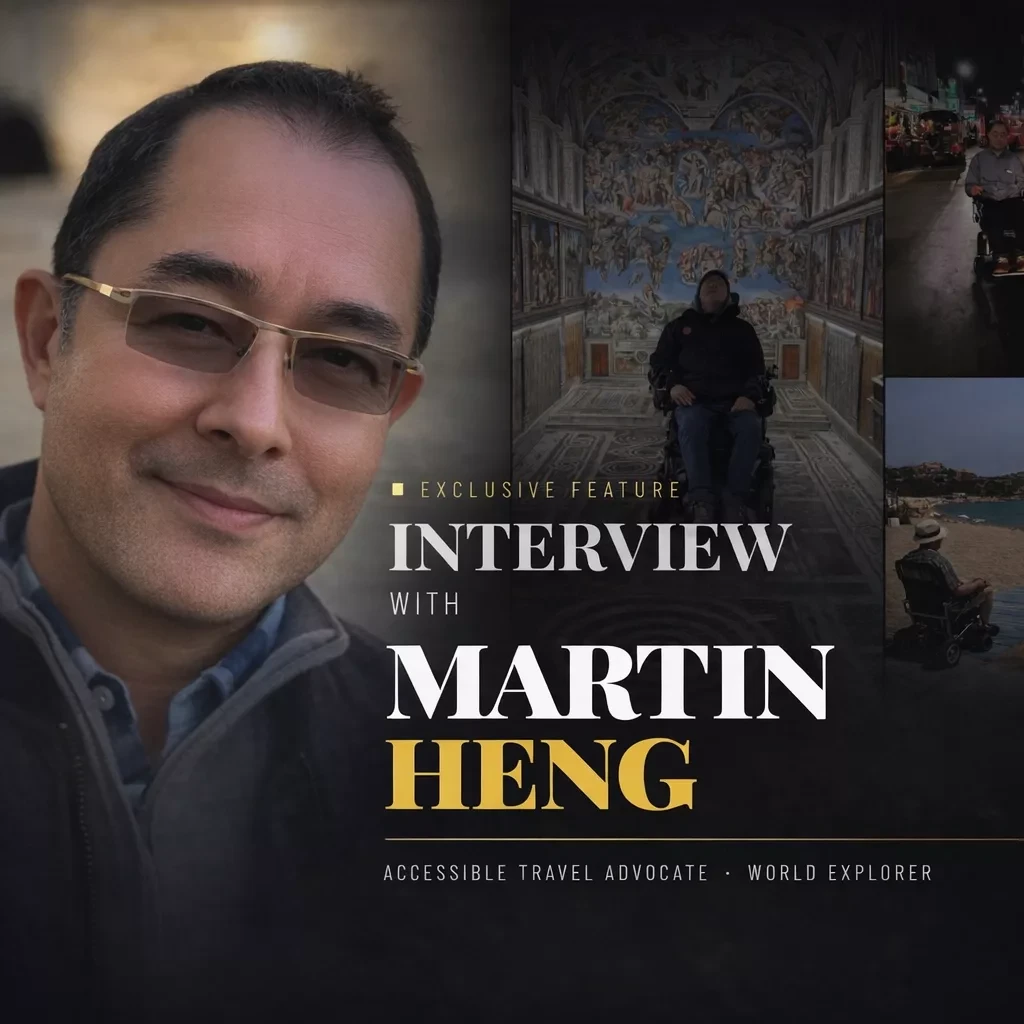
In an in-depth conversation on inclusive tourism, Ashley Olson, founder of the accessible travel platform WheelchairTraveling.com, sat down with Martin Heng, a former Lonely Planet manager and prominent Australian accessible tourism advocate. The discussion provided a comprehensive assessment of Australia’s travel landscape, highlighting strengths, identifying persistent infrastructure gaps, and addressing broader perceptions of disability within the global tourism industry.
Focusing heavily on Melbourne as well as regional destinations like Cairns, Heng offered a nuanced evaluation of how Australian cities accommodate travelers with access requirements. While rating Melbourne highly overall for its accessible infrastructure, Heng emphasized that true accessibility extends far beyond basic physical modifications like ramps and elevators. The conversation explored public transit logistics, hotel design oversights, neurodiverse accommodations, and the significant economic opportunity represented by an aging global population.
Melbourne Wheelchair Accessibility Review
When assessing Melbourne’s overall suitability for wheelchair travelers, Heng awarded the Victorian capital high marks, noting that the city compares favorably with many international destinations. However, he cautioned that a high rating does not imply a complete absence of obstacles, as navigating the urban environment still presents notable challenges depending on the mode of transport and the specific mobility device used.
A primary area of concern involves Melbourne’s iconic tram network. While public transport infrastructure across Victoria is generally well-regarded, tram accessibility remains inconsistent. The network operates a mix of modern low-floor trams and older high-step models. Additionally, not all tram stops along the network feature level-access raised platforms. This structural variation creates uncertainty for travelers relying on low-floor vehicles, as an accessible tram is of little utility if the corresponding stop lacks a raised platform suitable for boarding.
Melbourne’s suburban and regional train system presents a different set of operational hurdles. While train carriages themselves are designed to accommodate wheelchairs, physical boarding relies on human intervention. Passengers require station staff or train drivers to manually deploy portable ramps between the platform and the carriage door. To manage passenger drop-offs at targeted destination stations, train drivers frequently rely on low-tech organizational methods—such as placing post-it notes on the cab dashboard—to remind themselves to deploy ramps for exiting passengers at specific stops.
Taxis form another vital component of Melbourne’s accessible transit network. Heng noted that Melbourne boasts a substantial fleet of wheelchair-accessible vans. However, booking these vehicles through central dispatch channels can involve substantial delays, with wait times extending up to two hours during peak periods. To circumvent these dispatch bottlenecks, experienced wheelchair travelers and locals often establish direct relationships with individual accessible taxi drivers, booking trips directly to ensure timely service.
Accessible Transportation in Melbourne
Expanding on the mechanics of Melbourne’s transport system, Heng and Olson discussed the design features of the city’s specialized taxi fleet. Many of these wheelchair-accessible vans are outfitted with flexible interior layouts, featuring flip-up seats that can be stowed to accommodate multiple wheelchair users in a single trip. This feature provides flexibility for groups traveling together or individuals carrying additional equipment.
Despite the relative strengths of the public transit and taxi systems, navigating Melbourne’s commercial corridors on foot or by wheelchair reveals localized physical barriers. While most major points of interest and public institutions are fully accessible, individual street-level retail shops, restaurants, and small businesses frequently feature single threshold steps at their entrances.
These small architectural barriers present distinct challenges depending on the type of mobility equipment utilized. Manual wheelchair users may occasionally negotiate a minor threshold step independently or with assistance, whereas power wheelchair users face an absolute barrier due to the weight and clearance of their motorized chairs.
To assist travelers attending cultural and recreational events, Victoria utilizes the Companion Card program. Under this scheme, eligible individuals with lifelong disabilities who require attendant care support can obtain a complimentary secondary ticket for their support worker when purchasing tickets for participating sporting, arts, or cultural events.
Melbourne Accessibility Challenges Discussion
Beyond physical transit and streetscapes, Heng detailed how Melbourne’s cultural and public spaces manage accessibility, noting that major institutions in the South Central Business District (CBD) are leading the way in comprehensive inclusion.
Melbourne’s museums and galleries have increasingly expanded their access mandates to cater to neurodiverse communities and visitors with sensory sensitivities. Several major cultural venues in the South CBD now provide sensory kits—containing items such as noise-canceling headphones and tactile tools—alongside designated quiet rooms designed to offer low-stimulation environments for visitors experiencing sensory overload.
Public restroom infrastructure in Melbourne is supported by national digital mapping systems. Visitors and residents can utilize the National Toilet Map app, a government-supported directory that details the precise locations, opening hours, and specific features of accessible public toilets across Australia.
Additionally, Australia has seen an increased rollout of "Changing Places" facilities. Unlike standard accessible toilets, Changing Places facilities are larger, specialized restrooms equipped with full-sized, height-adjustable adult change tables and overhead tracking hoist systems. Because these facilities house specialized equipment, access is restricted to qualified individuals carrying standardized security keys to ensure the equipment remains clean, operational, and available for those with complex personal care needs.
For outdoor recreation, Heng highlighted the Royal Botanic Gardens Victoria as an exemplary accessible destination within the city, offering paved pathways, gentle gradients, and clear signage that allow visitors with physical disabilities to navigate the grounds with relative ease.
Accessibility Challenges for Wheelchair Users
The discussion addressed the practical distinctions between different mobility requirements, reinforcing that accessibility is not a one-size-fits-all metric. Heng pointed out that manual and power wheelchair users often encounter entirely different practical outcomes when facing the same built environment. A small single-step threshold at a storefront might be manageable for an experienced manual chair user, yet completely halt progress for someone operating a heavy power wheelchair.
Because physical layouts, temporary obstructions, and facility conditions change over time, Heng strongly advised against relying solely on website information or generalized online reviews when planning travel. Online descriptions can frequently be outdated, incomplete, or authored by individuals without a clear understanding of specific accessibility needs.
Instead, Heng recommended that travelers directly call venues, hotels, and tour operators in advance to verbally verify access details. Direct communication allows travelers to ask targeted questions about doorway clear widths, step-free access points, roll-in shower configurations, and specific path-of-travel conditions before making commitments.
Accessible Travel in Cairns
Turning the focus to regional destinations outside Victoria, Heng highlighted his positive experiences in Cairns, located in Far North Queensland. As a major gateway to the Great Barrier Reef and the Wet Tropics rainforest, Cairns features notable examples of barrier-free eco-tourism.
Heng identified two specific operators in the region that have successfully integrated universal access into their core operations:
- Skyrail Rainforest Cableway: Operating through the Barron Gorge National Park canopy, Skyrail offers disability-friendly gondolas designed to accommodate wheelchairs, allowing passengers with mobility impairments to experience the rainforest environment seamlessly alongside other travelers.
- Quicksilver Cruises: Operating out of Port Douglas and Cairns to the outer Great Barrier Reef, Quicksilver provides accessible reef excursions via specialized marine pontoons. Their facilities feature custom chairlifts, allowing travelers with physical disabilities to safely lower into the water for barrier-free snorkeling and adaptive scuba diving experiences.
Reflecting on Australia’s comparative advantages on the international stage, Heng praised the nation’s dedicated accessible taxi fleets—particularly in major urban centers like Melbourne and Sydney—as a major asset. Compared to many other developed and developing nations where accessible vehicle fleets are scarce or nonexistent, Australia’s regulated supply of modified taxi vans provides a foundational level of mobility for visiting travelers.
Disability Awareness and Accessibility
A central theme of the dialogue was the necessity of broadening public and industry understanding of what disability encompasses. Heng emphasized that physical mobility impairments represent only a fraction of the broader disability community, noting that less than 5 percent of people living with disabilities actually use wheelchairs.
The remaining majority includes individuals who are blind or have low vision, people who are deaf or hard of hearing, individuals with neurodivergent conditions, and those living with chronic pain, cognitive impairments, or temporary physical conditions.
To illustrate how rigid assumptions about disability can create unnecessary friction, Heng shared a personal experience regarding a visit to a cinema. Although the venue lacked traditional step-free wheelchair access at its primary entrance, it offered alternative accommodations that rendered the space fully accessible for non-wheelchair users with other access requirements.
Heng and Olson agreed that businesses and service providers must refrain from making broad assumptions about what a customer can or cannot do. Instead, the industry should adopt an approach centered on active listening, transparent information provision, and allowing individuals to evaluate their own capabilities based on clear, factual details about the environment.
Accessible Travel Best Practices
Addressing systemic challenges within the broader hospitality sector, Heng criticized common flaws in hotel room design. Even when hotels market rooms as "accessible," architectural errors remain common—particularly in bathroom layouts. Common mistakes include placing grab bars at incorrect heights, installing shower controls out of reach from seat positions, providing inadequate clearance beneath sinks, or designing glass shower enclosures that prevent assistant access.
These recurring mistakes often stem from property developers seeking basic regulatory compliance on paper without consulting individuals who have lived experience with disability or specialized knowledge of universal design.
Heng also highlighted positive technological shifts enhancing accessibility across the travel industry. Audio guides and sound-based interpretation tools have grown rapidly in popularity, supported by a global podcast audience exceeding two billion listeners. These audio tools offer major benefits for travelers who are blind or have low vision, as well as neurodiverse visitors who benefit from self-paced, auditory learning formats while navigating museums, heritage sites, and national parks.
Ultimately, Heng identified the primary hurdle facing global accessible tourism as a fundamental economic misconception. All too often, businesses, hotel operators, and destination marketing organizations view accessibility strictly through the lens of cost, physical compliance, or philanthropic obligation, rather than recognizing it as a profitable commercial market.
With an aging global demographic—characterized by older citizens who possess both the time and financial resources to travel, yet increasingly acquire age-related mobility, sensory, or health conditions—accessibility represents one of the fastest-growing segments in the travel industry.
Heng stressed that by adopting universal design principles and adhering to global frameworks, such as the United Nations World Tourism Organization’s (UNWTO) 2017 declaration calling for "Tourism for All," travel destinations and commercial operators can unlock substantial business potential while ensuring equal access for all travelers.