
The intersection of artificial intelligence and healthcare regulation presents one of the most complex policy challenges of the modern era. As machine learning algorithms begin to diagnose diseases, predict patient outcomes, and streamline hospital operations, policymakers face a fundamental dilemma: how to oversee a technology that constantly learns and evolves using regulatory frameworks designed decades before modern computing took shape.
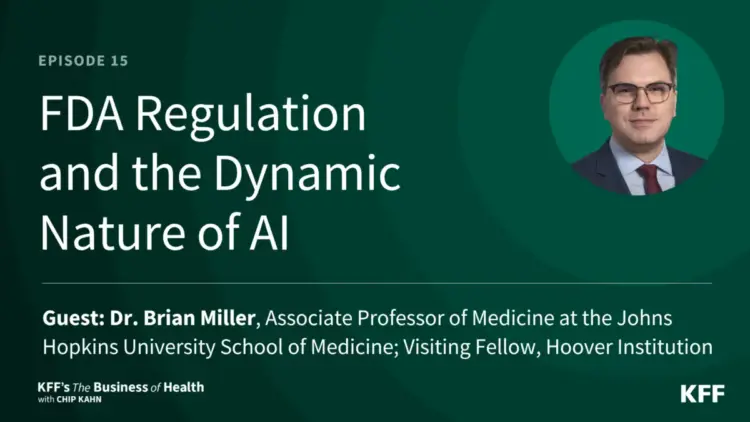
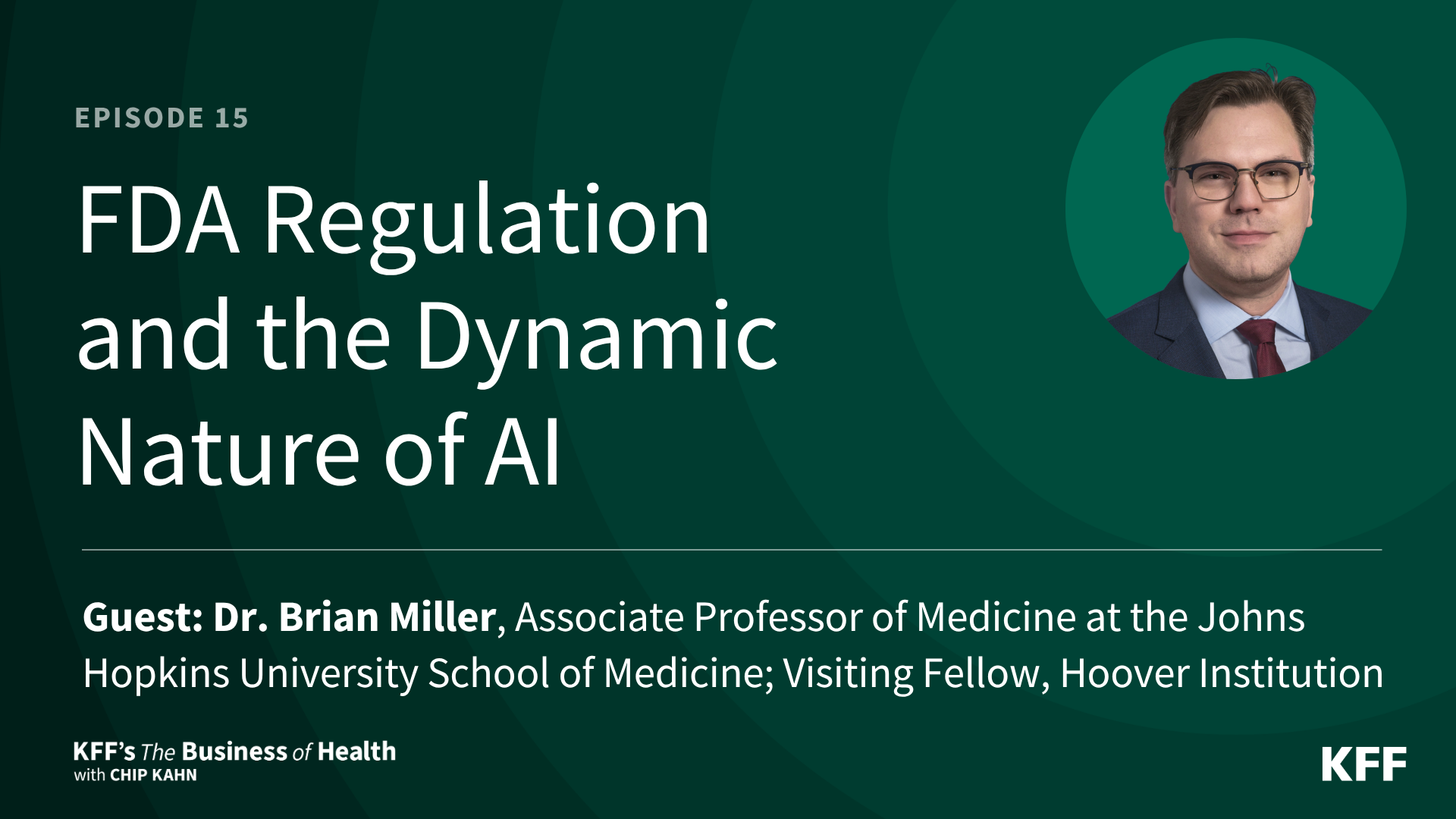
This critical tension is the focal point of a recent installment of The Business of Health with Chip Kahn, a weekly podcast series produced by KFF. In Episode 15 of the podcast’s special series on artificial intelligence, host Charles N. "Chip" Kahn III sits down with Dr. Brian Miller, a practicing hospitalist, prominent health policy expert, and associate professor at the Johns Hopkins University School of Medicine. The episode explores the profound implications that arise when the U.S. Food and Drug Administration (FDA) applies its decades-old medical device framework—rooted in the Medical Device Amendments of 1976—to artificial intelligence tools that adapt in real time.
About This Episode: The 1976 Framework Meets 21st-Century AI
Dr. Brian Miller brings a uniquely comprehensive perspective to the table. Having experienced medical technology regulation from nearly every angle—as a practicing clinician at the bedside, a former federal official, and an academic researcher—he understands both the practical realities of patient care and the bureaucratic machinery of Washington. At Johns Hopkins, Dr. Miller leads a multidisciplinary research group of approximately twenty professionals focused on market-driven approaches to FDA regulatory policy and Medicare payment policy.
During the podcast conversation, Dr. Miller challenges conventional wisdom regarding the safety of modern healthcare systems. His core argument may surprise many listeners: the traditional, manual system of medicine practiced today is already considerably less safe, less standardized, and less consistent than the general public typically assumes. Human error, cognitive fatigue, and systemic variability lead to significant diagnostic discrepancies and treatment delays across healthcare settings nationwide.
Against this backdrop, Dr. Miller expresses concern that the primary danger facing healthcare innovation is not necessarily the rapid speed at which artificial intelligence is developing. Instead, what keeps him awake at night is the distinct risk that fear-driven, overly restrictive regulation will stifle innovation, ultimately costing patients and the healthcare system the immense opportunities that artificial intelligence offers.
Significantly, the conversation was recorded shortly before the FDA released an anticipated discussion paper outlining potential new regulatory pathways for AI-enabled medical devices and inviting comprehensive stakeholder feedback. Capitalizing on this timing, host Chip Kahn offers his own expert analysis and closing thoughts on the FDA’s discussion paper in the final segments of the episode, connecting Dr. Miller’s academic insights directly to emerging regulatory policy.
The Host: Charles N. Kahn III
Guiding the conversation is Charles N. "Chip" Kahn III, a highly respected figure in American health policy. Kahn serves as a senior visiting fellow at KFF, bringing decades of high-level experience in healthcare administration, legislative policy, and economic analysis.
In addition to his role at KFF, Kahn maintains influential academic and policy positions across the country. He serves as a visiting senior fellow at the American Enterprise Institute and a nonresident senior scholar at the University of Southern California’s Schaeffer Center for Health Policy and Economics. Furthermore, his leadership extends internationally as the co-chair of the Future of Health collaborative, positioning him at the center of global dialogues regarding the evolution of healthcare delivery systems. Through The Business of Health, Kahn bridges the often-disconnected worlds of healthcare commerce, government policymaking, and everyday patient experiences.
The Guest: Dr. Brian Miller
Dr. Brian Miller, MD, MBA, MPH, FACPM, offers a multifaceted viewpoint grounded in clinical practice, economics, and public service. As a practicing hospitalist at the Johns Hopkins Hospital, Dr. Miller cares directly for hospitalized patients while concurrently holding academic appointments as an Associate Professor of Medicine and Business (courtesy) at Johns Hopkins University, as well as a Visiting Fellow at the Hoover Institution.
His extensive government background includes regulatory and advisory roles across several major federal agencies, including the Centers for Medicare & Medicaid Services, the Federal Trade Commission, the Federal Communications Commission, and the FDA. This deep regulatory experience spans merger reviews, software and medical device product evaluations, and complex payment policies.

Beyond his research and clinical duties, Dr. Miller maintains prominent public service responsibilities. He serves as a Commissioner on the Medicare Payment Advisory Commission (MedPAC), an independent legislative branch agency that advises the U.S. Congress on issues affecting the $1 trillion Medicare program. Additionally, he serves as a Trustee for the North Carolina State Health Plan, a $4.5 billion health program providing comprehensive coverage to more than 750,000 state employees, dependents, and retirees. Operating from Washington, D.C., he regularly advises members of Congress and other elected officials on healthcare economics and regulatory reform.
Exploring the Business of Health and AI
The conversation between Kahn and Dr. Miller is part of a broader editorial mission established by The Business of Health with Chip Kahn. The weekly podcast is designed to unpack the intricate business mechanisms driving the American health sector, explicitly connecting the dots between corporate healthcare strategies, government policy frameworks, and the direct impact on patients.
The podcast’s dedicated series on artificial intelligence represents a timely and vital contribution to ongoing industry discussions. As healthcare organizations nationwide race to deploy machine learning models, natural language processing tools, and diagnostic algorithms, the series illuminates how these technologies are actively reshaping clinical workflows. By bringing together guests who are directly deploying these technologies in hospital systems, managing their clinical and financial consequences, and designing the governance frameworks around them, the podcast provides listeners with a comprehensive look at the digital transformation of medicine.



