Every year on February 25, advocates, medical professionals, and individuals worldwide mark International Cochlear Implant Day. The occasion serves as a dedicated moment to celebrate the remarkable medical advances, technological innovations, and life-changing impact that cochlear implants provide for individuals living with severe or profound hearing loss. Behind the clinical milestones and engineering breakthroughs, however, lie deeply personal human stories of adaptation, resilience, and transformation.
For Qais Khan, International Cochlear Implant Day is more than just a date on the calendar; it represents the milestone of a lifelong journey from profound isolation to international advocacy. Born profoundly deaf into a hearing family, Khan’s early life was defined by the sudden disruption his diagnosis brought to his household. For a family with no prior experience with deafness, the news turned their world upside down, introducing them to an entirely unfamiliar landscape of medical appointments, communication strategies, and educational hurdles.
Yet, from the very beginning, his parents demonstrated an unwavering commitment to learning, adapting, and securing the essential support structures he needed. That foundational support paved the way for a critical turning point in his early childhood: the activation of his first cochlear implant at the age of three and a half. For Khan, this technological milestone was not merely a medical procedure; it laid the essential groundwork for his linguistic development, communication skills, and educational access as he grew from a toddler into a student.
Despite the early intervention and the invaluable access provided by his cochlear implant, growing up deaf presented a continuous series of complex challenges and formidable obstacles. As he transitioned through secondary school and into college, Khan confronted significant mental health struggles. Plagued by low self-esteem and a profound lack of confidence, he found himself isolated, dealing with poor communication skills and a distinct absence of real friendships.
Compounding these personal struggles were the external limitations imposed by some of the educators and professionals around him. Low expectations from authority figures weighed heavily on his academic and personal outlook. Within educational settings, a prevailing sentiment suggested that his future prospects were limited and that he would struggle to succeed academically or pass standard examinations. The prospect of pursuing a university education, let alone carving out a meaningful and self-determined career path, often felt entirely out of reach during those difficult years.
Overcoming the Obstacles Through Resilience and Support
The narrative of low expectations, however, did not have the final say. Bolstered by the continuous, unwavering encouragement of his parents, specialized charities, and dedicated hearing health professionals, Khan embarked on a mission to challenge and dismantle the preconceptions that had been projected onto him. Through focused perseverance, he applied himself to his studies, ultimately passing his examinations with excellent grades, progressing smoothly through college, and ultimately graduating with a university degree.
Earning his degree remains one of the defining moments of his life, carrying profound weight both academically and personally. It served as the tangible reward for years of quiet determination, resilience, and an unyielding refusal to accept the notion that deafness inherently limits a person’s potential or caps their ambition.
Yet, transitioning from the structured environment of higher education into the professional world introduced a fresh set of trials. The timing proved particularly demanding as he entered the workforce during the COVID-19 pandemic—a period characterized by unprecedented global uncertainty, professional disruption, and a sense that normal life had been placed on hold. Ironically, it was within this climate of isolation and disruption that Khan found his true calling in advocacy.
Looking for a way to channel his experiences into meaningful action, he connected with the Cochlear Implant International Community of Action, commonly known as CIICA. This involvement offered a vital intersection between his lived experience and creative, impactful work. Collaborating closely with established hearing health experts and professionals, Khan began contributing to practical solutions designed to support individuals navigating the challenges of hearing loss.
Stepping into leadership roles within the organization, including serving as a board member and a coordinator dedicated to young adults with cochlear implants, allowed him to shape strategic initiatives. In these capacities, he helped spearhead and participate in online events specifically tailored to address the unique social, emotional, and practical challenges faced by young adults between the ages of 18 and 35—a critical transitional window in education, employment, and identity formation.
Finding and Sharing a Voice on the Global Stage
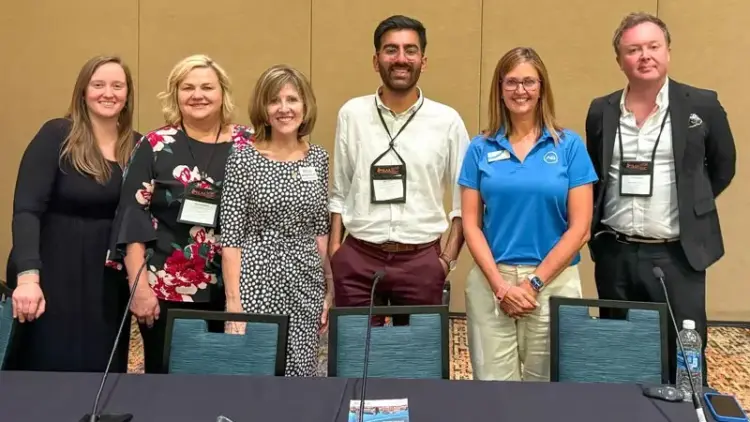
As a child, Khan’s spoken voice was frequently difficult for others to understand, a common hurdle for many individuals learning to process auditory signals through a cochlear implant. Today, however, that reality has been completely upended. Khan now regularly takes the podium at high-profile global events sponsored by major international entities, including the United Nations, the World Health Organization, and the United Kingdom Parliament.
Through these prominent platforms, he has dedicated himself to fostering vital conversations, sharing his personal narrative, and actively contributing to the creation of inclusive spaces where young adults with cochlear implants feel truly seen, heard, and understood. Reflecting on the trajectory of his life, Khan acknowledges the profound role that technology has played in his development. While his cochlear implant did not magically erase every barrier or solve every challenge he encountered along the way, it provided him with fundamental auditory access, personal independence, and the vital self-assurance required to stand tall within educational, professional, and advocacy environments. Most importantly, it provided the mechanical and physiological foundation that helped him find his own voice.
Looking back at the hurdles he has cleared—from the initial shock of a profound hearing loss diagnosis in a hearing family to the low expectations of educators and the isolation of adolescence—Khan takes immense pride in how far he has traveled. His experiences have taught him a defining lesson: progress is rarely about achieving an elusive state of perfection; rather, it is about showing up and persevering, even on the most difficult days. Disabilities, he emphasizes, do not define the core of who a person is. With the right combination of personal determination, belief, and strong support networks, individuals are capable of achieving their dreams. On International Cochlear Implant Day and beyond, Khan’s story stands as a resonant reminder of that enduring truth.