
Mindfulness has long been celebrated as a powerful tool for cultivating calm, reducing stress, and fostering relaxation in everyday life. However, a growing body of educational and psychological insight reveals that turning our attention inward to focus on the present moment does much more than simply soothe frayed nerves. Increasingly, educators, specialists, and youth advocates are recognizing that mindfulness plays a critical role in sharpening executive functioning skills. For children and teenagers who frequently require an extra boost in areas such as sustained attention, impulse control, and working memory, incorporating mindful practices into daily routines offers a practical, evidence-based pathway toward cognitive growth.
Executive functioning skills serve as the foundational, brain-based abilities that individuals utilize to plan daily schedules, initiate necessary tasks, manage time efficiently, and work through inevitable challenges. People rely on these cognitive processes every single day, often operating on autopilot without actively analyzing the mental mechanics involved. When executive functioning skills are robust, individuals navigate their daily environments smoothly, applying these capacities to reach both short-term and long-term goals. Yet, when these systems falter—as they frequently do during the developmental years of childhood and adolescence—academic tasks, social interactions, and personal organization can become significant hurdles.
The Link Between Mindfulness and Executive Functioning
The intersection between mindfulness and executive functioning lies in how the brain responds to intentional calm. When an individual achieves a state of calm awareness, the physiological stress response diminishes, and the prefrontal cortex—often referred to as the "thinking brain"—becomes fully activated. This activation allows learners to make more reasoned choices, focus their attention more effectively, and engage in higher-level problem-solving when confronted with difficulties.
Because mindfulness is a straightforward, meaningful, and highly adaptable activity, it can be seamlessly integrated into the lives of children and young adults across various age groups. Experts emphasize that as an evidence-based strategy, introducing brief, intentional moments of mindfulness into a daily routine yields measurable benefits for cognitive development. Understanding the specific ways mindfulness interacts with individual executive functions highlights why these practices are gaining traction in schools and homes alike.
Focus and Attention
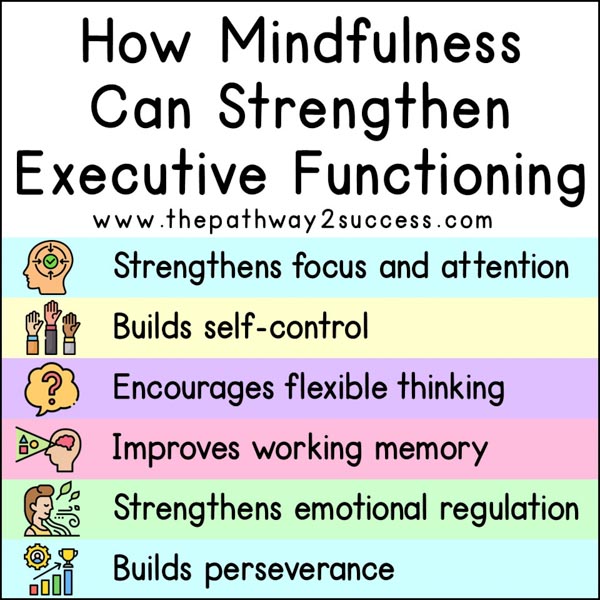
Attention forms the bedrock of cognitive engagement, defined as the ability to concentrate exclusively on a specific person, task, or abstract idea for a designated period. Children and teenagers draw upon attention skills continuously throughout their daily lives, from maintaining a thoughtful, reciprocal conversation with a peer to staying on task while working through a complex mathematics assignment.
Mindfulness exercises directly train these neural pathways of focus. By devoting time solely to observing the rhythm of one’s breathing, an individual actively trains the mind to anchor itself in the present moment.Inevitably, during any mindfulness practice, attention will drift away from the breath toward wandering thoughts or environmental distractions. Specialists stress that this wandering is entirely normal and expected. The essential mechanism of growth occurs when the practitioner notices the distraction and gently brings the focus back to the breath. Through repetition, this simple act strengthens both general attention span and mindfulness endurance over time.
Self-Control
Closely tied to attention is the concept of self-control, which represents the capacity to pause and reflect before executing a decision. This cognitive ability relies heavily on inhibitory control, allowing a person to stop an impulsive reaction in its tracks rather than acting immediately on reflex.
Mindfulness provides routine, low-stakes practice in cultivating this exact pause. The more frequently an individual engages in mindful reflection, the more robust their internal braking system becomes. For example, consider a teenager walking down a school hallway who encounters a locker decorated with a festive balloon for a classmate’s birthday. An unmanaged, immediate impulse might prompt the student to pop the balloon as they walk past. However, regular mindfulness training equips that same learner with the internal capacity to pause, take a centered breath, let the impulsive urge pass, and walk away without reacting. This heightened self-control carries profound implications for both immediate decision-making and long-term behavioral development.
Emotional Regulation
Managing daily emotions effectively is another critical pillar of executive functioning, laying the crucial groundwork for how individuals feel, think, and act from moment to moment. Emotional regulation enables people to interpret their internal states without becoming completely overwhelmed by them.
Practicing mindfulness fosters deep self-awareness, allowing individuals to observe their feelings objectively rather than reacting to them defensively. When a teenager experiences the disappointment of being excluded from a collaborative group project, the initial emotional wave might trigger yelling, crying, or emotional withdrawal. By utilizing a few intentional, mindful deep breaths, the student can recenter their physiological state and transition back to a calm baseline. From this grounded perspective, the young person is far better equipped to engage in constructive problem-solving and navigate social challenges in a healthy, productive manner.
Working Memory
Working memory involves the mental workspace required to hold, manipulate, and process information simultaneously while performing complex cognitive tasks. People rely on working memory for a wide array of activities, including listening to multi-step verbal instructions, retaining narrative details while reading a novel, and calculating numbers in a math problem.
Regular mindfulness practice contributes to working memory enhancement by systematically reducing mental clutter. When individuals intentionally clear out extraneous thoughts and worries, they free up vital cognitive bandwidth for the important information required in the immediate present. A student listening to complex morning instructions, for instance, benefits greatly from starting the day with a clear mental slate achieved through brief mindfulness exercises, rather than feeling overwhelmed by a backlog of competing thoughts.
Flexible Thinking and Perseverance
Beyond attention and memory, mindfulness actively supports flexible thinking, which is the mental agility required to view situations from multiple perspectives, consider alternative viewpoints, and adapt mindsets when circumstances shift. By encouraging a non-judgmental acceptance of thoughts and experiences, mindfulness teaches learners to accept reality even when it presents unexpected challenges. A young adult receiving critical editorial feedback on an essay, for example, can utilize flexible thinking—supported by mindful acceptance—to process the critique objectively, transforming a potentially discouraging moment into a valuable pathway for personal growth.
Similarly, perseverance relies on the mental stamina to stick with a difficult task in pursuit of a goal. During mindfulness practices, maintaining focus can feel genuinely challenging as the mind naturally seeks distraction or abandonment of the task. Consistently returning to the practice builds the mental resilience required to persevere through discomfort, reinforcing the broader habit of sticking with difficult endeavors rather than giving up prematurely.
Mindfulness Strategies for Kids and Teens
Before introducing mindfulness practices to children and adolescents, educators and parents often benefit from having an open dialogue about the underlying purpose and benefits. Explaining that mindfulness serves as a practical tool to help them feel and perform at their best establishes immediate relevance. Young people can learn to utilize these techniques to center themselves before public speaking engagements, athletic competitions, or academic assessments, recognizing that mindfulness is a versatile resource applicable to virtually any aspect of daily life.

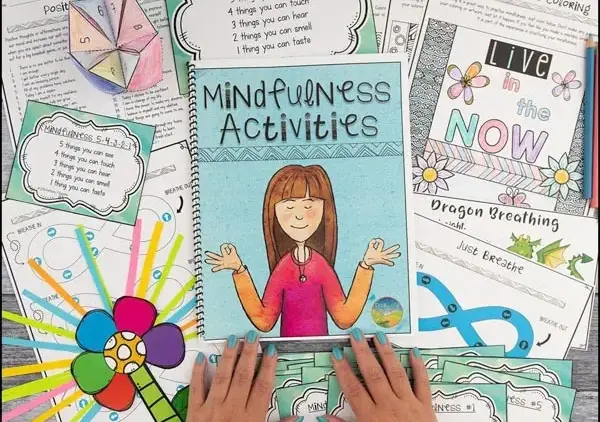
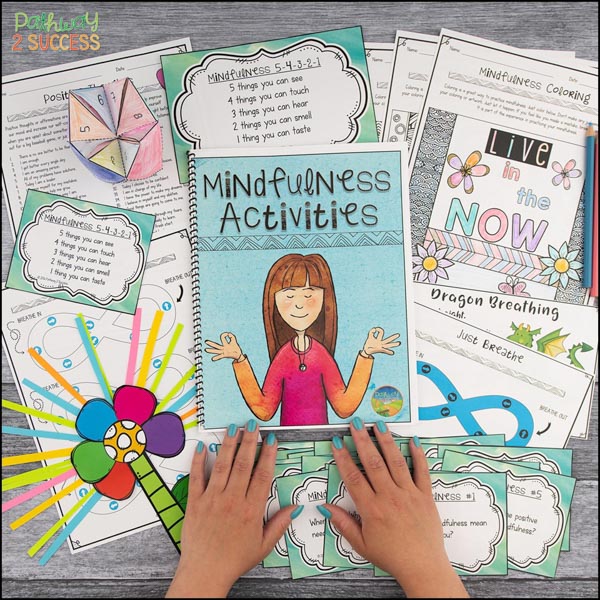
To implement these concepts, educators frequently rely on structured mindfulness lessons and SEL (Social-Emotional Learning) activities that incorporate hands-on exercises, discussions, and visual resources like posters and coloring pages. Literature also serves as an accessible bridge, with various picture books and novels providing natural starting points for classroom or household discussions about focus and emotional awareness.
Mindful breathing remains the cornerstone of these practices. By encouraging learners to sit comfortably and focus exclusively on the physical sensations of inhalation and exhalation, participants build a portable strategy they can deploy anywhere. Variations such as shape breathing or imaginative visualization exercises double as effective brain breaks between demanding academic tasks.
Other approachable modalities include mindful coloring, where participants direct their complete attention to the physical act of filling spaces with color without striving for perfection. Gentle yoga and stretching integrate physical movement with breath awareness, while mindful journal writing encourages students to respond to reflective prompts at the start of the school day. Outdoor mindfulness activities—such as observing wildlife, tending to a garden, or watching clouds—utilize natural environments to anchor attention in the present.

Additionally, incorporating mindful affirmations and mindful observance exercises, where a student studies a simple everyday object like a pen or water bottle by examining its textures, colors, and shapes, helps reinforce these foundational cognitive muscles. Through consistent exposure and thoughtful application, mindfulness continues to prove itself as an invaluable asset in strengthening the executive functioning skills essential for lifelong learning and personal well-being.



