Cartagena, Colombia, is globally celebrated for its enchanting, UNESCO World Heritage-listed Old Town, where colonial architecture, horse-drawn carriages, and centuries-old stone fortifications define the urban landscape. Historically, the destination has rarely been associated with barrier-free beach tourism, as its sprawling Caribbean coastline often presented formidable physical obstacles for travelers with reduced mobility. However, a significant transformation is underway in the city’s bustling Bocagrande district, where recent infrastructure improvements have officially established Cartagena’s very first wheelchair-accessible beach. This progressive development marks a notable milestone for South American coastal tourism, offering residents and international visitors alike a rare opportunity to experience the sun, sand, and surf without traditional physical barriers.
A Wheelchair Accessible Beach in Bocagrande
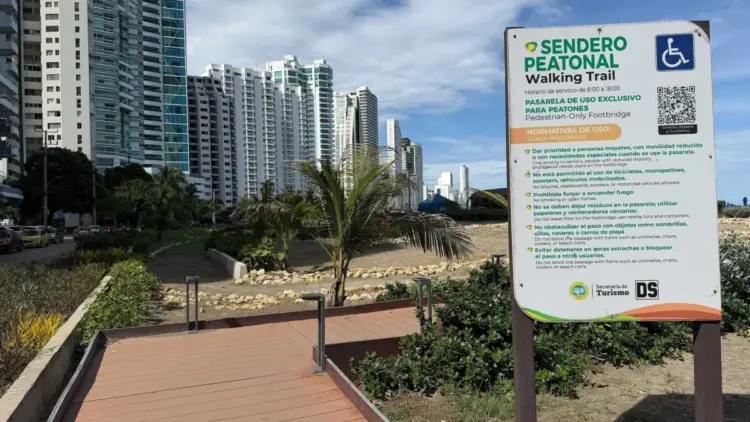
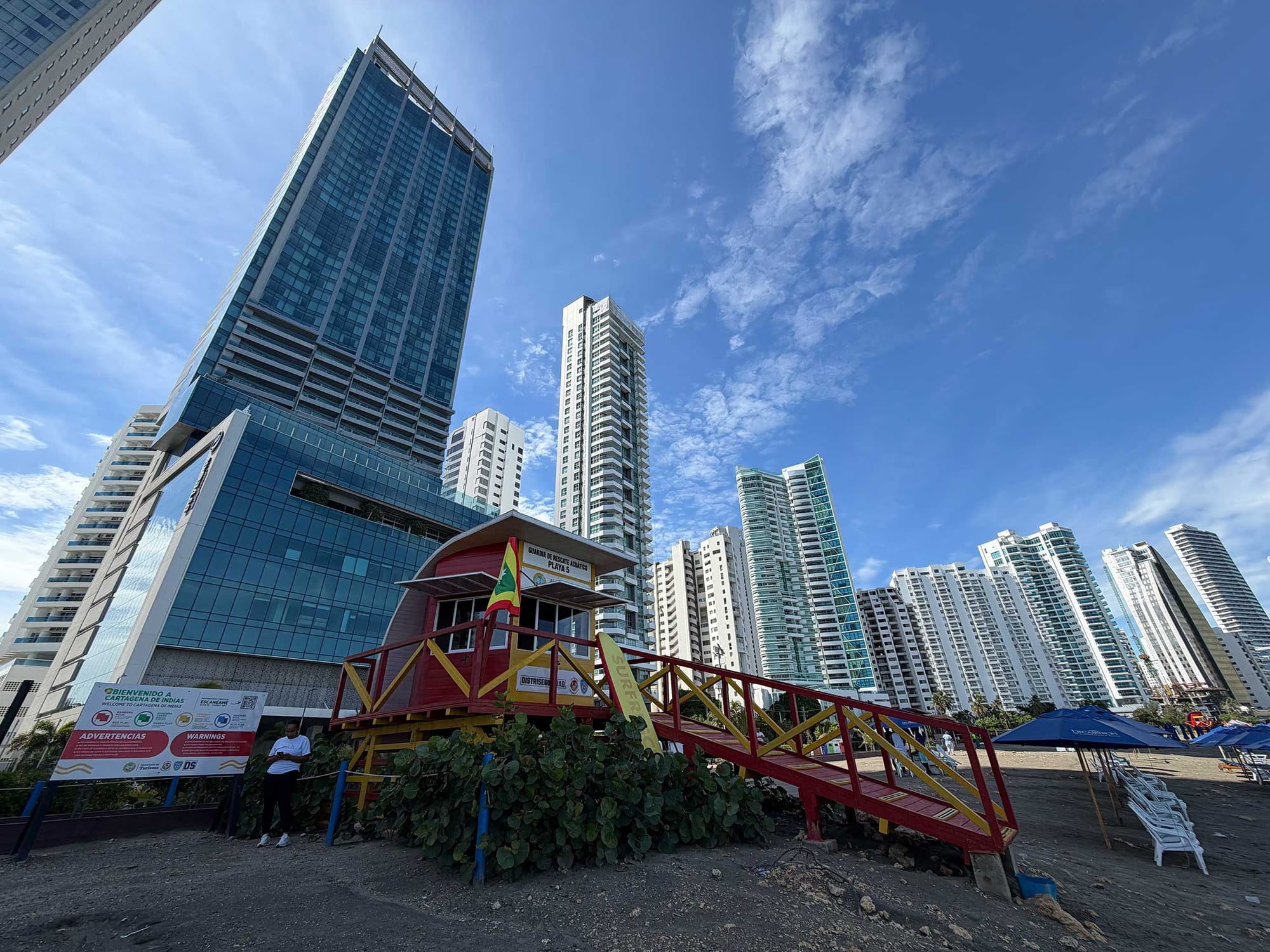
The pioneering accessibility initiative is centered at Playa 5 within the vibrant Bocagrande neighborhood. Situated directly across the street from prominent high-rise hospitality landmarks—specifically the Hyatt Regency Cartagena and the ESTELAR Cartagena de Indias Hotel—the designated beach access point is strategically positioned at the busy intersection of Carrera 1 and Calle 12. At this juncture, visitors are greeted by a smooth, modern boardwalk that stretches outward from the urban streetscape toward the shoreline.
Officially designated as the "Sendero Peatonal" or Walking Trail, this expansive boardwalk has been reserved exclusively for pedestrian traffic. Prominently posted regulatory signs remind the public to grant priority usage to senior citizens and individuals with reduced mobility, ensuring a safe and orderly environment for everyone utilizing the coastal pathway.
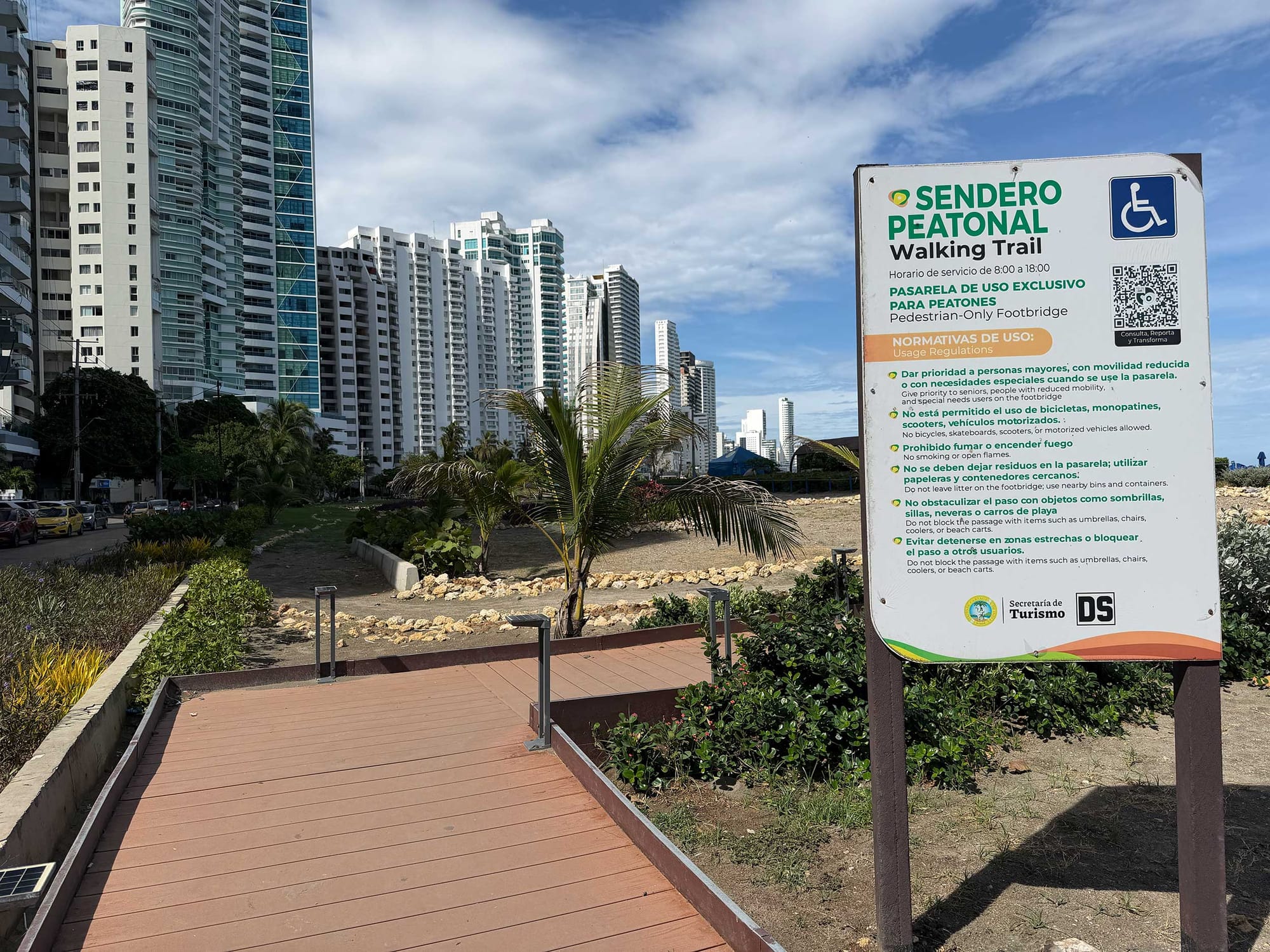
While the boardwalk provides a seamless transition from the urban thoroughfare to the threshold of the beach, navigating the final stretch to the Caribbean Sea requires additional accommodation. A concrete or wooden ramp leads downward from the elevated boardwalk directly onto the soft sand, but it stops short of extending all the way to the water’s edge. Although the installation of a continuous rubber or fabric beach mat running from the boardwalk directly to the surf would offer an even more complete transit route, current arrangements rely on specialized aquatic equipment to bridge the remaining gap between the dry sand and the tide.
Free WaterWheels Beach Wheelchair
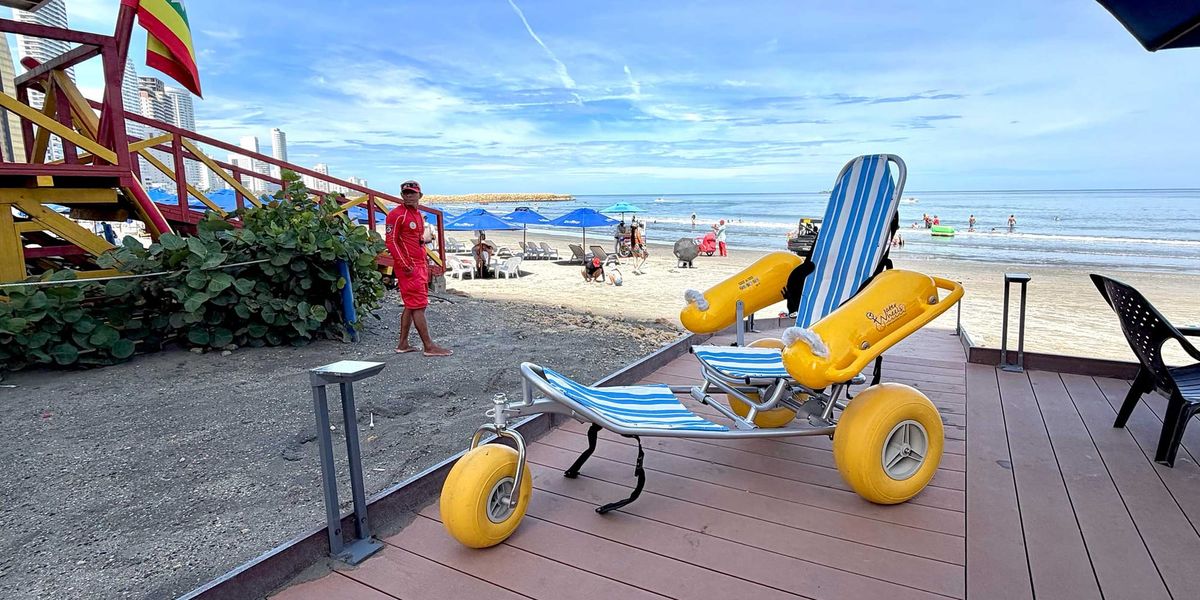
To overcome the challenge posed by soft, shifting coastal sands, local authorities have introduced the WaterWheels Floating Beach Wheelchair, which is made available to the public completely free of charge. Travelers wishing to utilize the specialized mobility equipment can do so by simply coordinating with the lifeguards stationed on duty at the Playa 5 lifeguard post. During recent observational visits to the site, the attending municipal lifeguards proved exceptionally welcoming and eager to assist visitors with the deployment and operation of the chair.
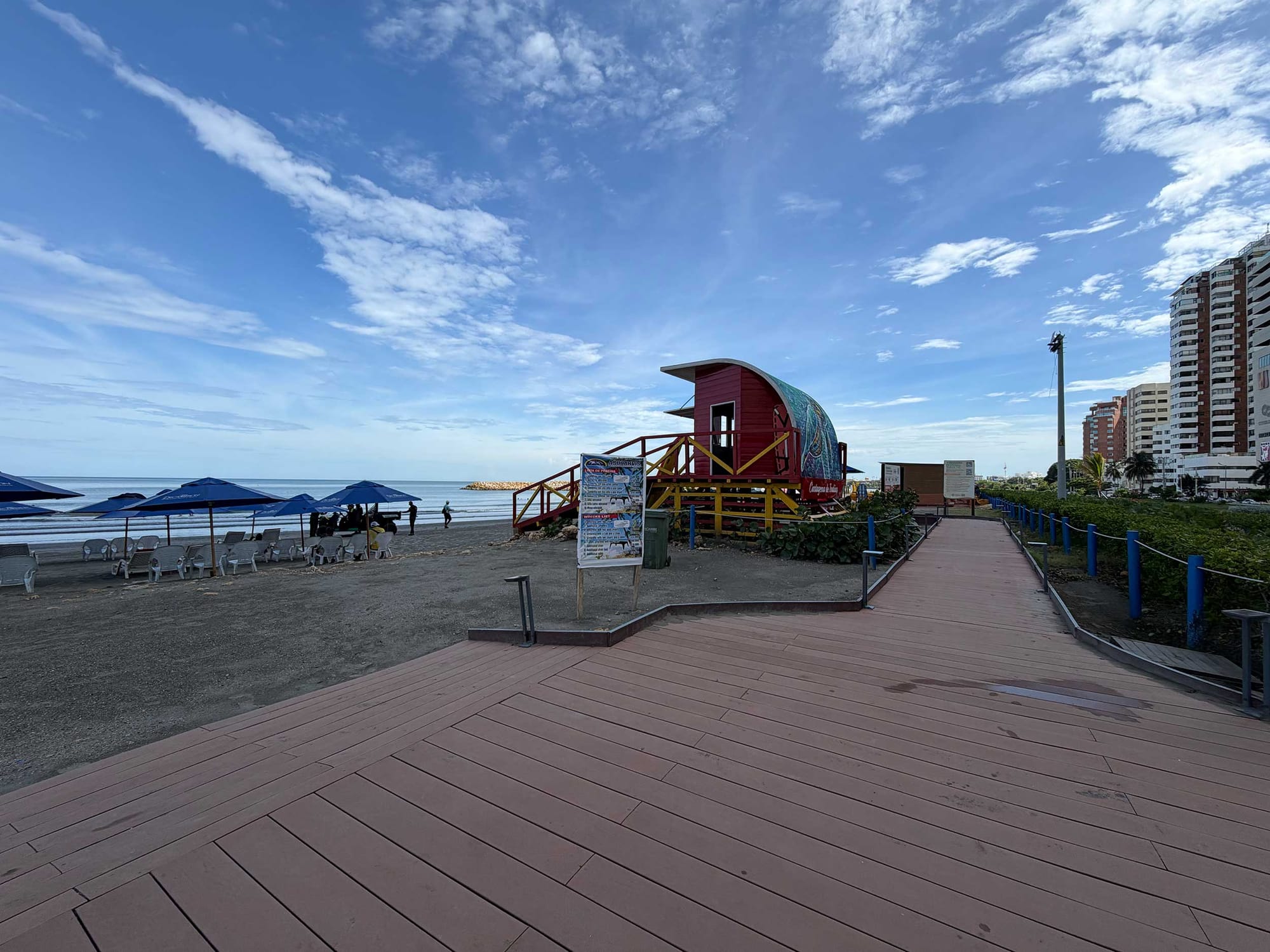
The WaterWheels model is engineered specifically for sandy environments, featuring oversized balloon tires designed to glide smoothly across loose grains without sinking. Additionally, the chair is equipped with specialized flotation armrests that provide buoyancy, allowing users to safely enter the shallow waters of the Caribbean Sea alongside their companions. Because this is a manual beach chair, its practical use relies on the presence of a family member, friend, or caregiver who can assist by pushing the device across the sand and into the surf. For travelers exploring Cartagena with a supportive network, the availability of this complimentary equipment transforms a previously inaccessible natural resource into an inclusive and memorable Caribbean experience.
Wheelchair Accessible Seating, Shade & Facilities
Infrastructure updates at Playa 5 extend well beyond transit pathways, incorporating essential amenities designed for comfort and security. Positioned directly adjacent to the red-and-yellow lifeguard station, visitors will discover a designated accessible seating zone on the boardwalk deck, furnished with tables, chairs, and protective umbrellas. These specialized accommodations operate on a convenient first-come, first-served basis, allowing individuals requiring accessible shade to settle comfortably near the coast.
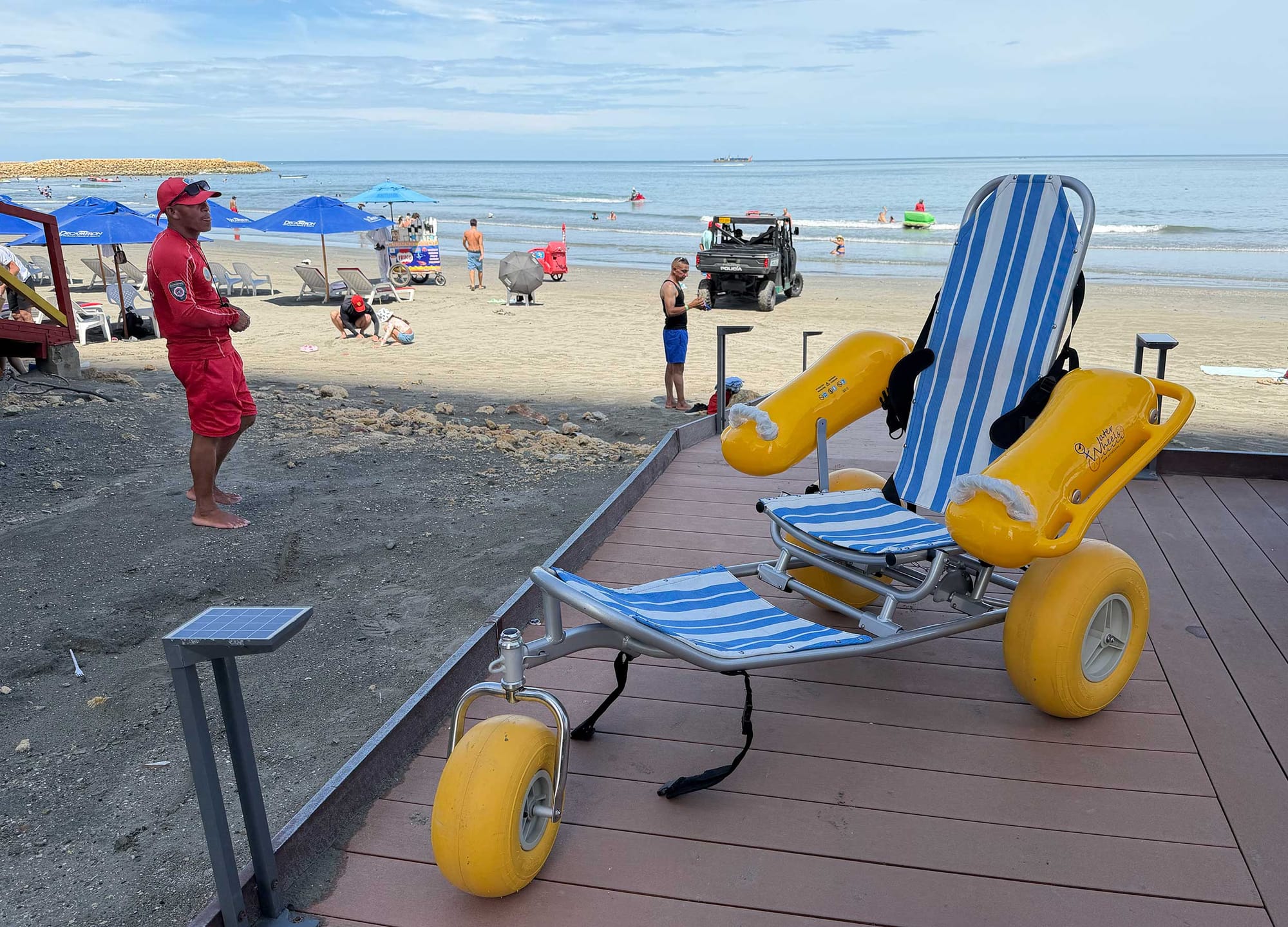
For travelers venturing further down onto the sandy expanse, traditional beach chairs and sun umbrellas remain available for daily rental through local beach vendors. The presence of active lifeguards, coupled with regular patrols by municipal police forces, establishes Playa 5 as one of the most secure and well-monitored stretches of coastline within the entire city.
Sanitary facilities have likewise been integrated into the beach’s modern layout. A dedicated restroom and shower building operates daily along the boardwalk from 8:00 a.m. to 6:00 p.m., featuring an adapted, wheelchair-accessible stall. The interior of the accessible stall is functional, equipped with a wall-mounted grab bar positioned next to the toilet to assist with transfers. However, visitors utilizing larger motorized power wheelchairs should note that the physical dimensions of the stall are relatively compact, which may make executing a complete 360-degree turn inside the facility challenging.
Final Thoughts
The integration of inclusive infrastructure along the coastline of Bocagrande represents a notable departure from the historical norm. Wheelchair-accessible beaches remain an uncommon sight throughout much of South America, making Cartagena’s proactive investment in barrier-free coastal tourism both refreshing and culturally significant. By combining specialized floating beach chairs, dedicated pedestrian pathways, accessible seating zones, and adapted restroom facilities, the city has established a progressive standard. Observers and advocates alike hope that the successful implementation at Playa 5 will serve as a foundational blueprint, inspiring similar accessibility transformations at beaches across Colombia and the broader region in the years ahead.