
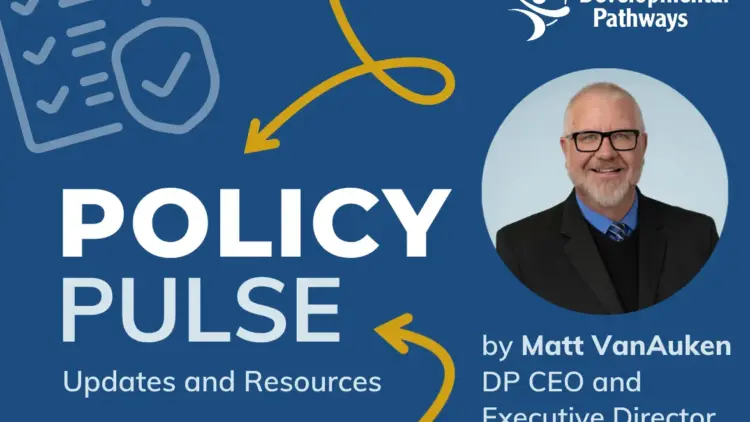
By Matt VanAuken, DP Chief Executive Officer & Executive Director
Earlier this year, the Colorado Legislature enacted a significant new piece of legislation known as Senate Bill 26-187. This landmark measure officially established a dedicated state body called the Commission on Medicaid, marking a major step forward in how the state addresses the ongoing evolution, management, and financial planning of its public health care systems. Because these legislative decisions carry direct implications for thousands of residents who rely on public assistance for their daily health and support needs, state leaders and advocacy organizations are working to ensure that the public remains fully informed about what this new commission means for individuals and their families across Colorado.
What is this Commission?
The newly formed Commission on Medicaid brings together a bipartisan group of state lawmakers, comprising both Republican and Democratic members of the Colorado Legislature. This collaborative panel has been tasked with addressing one of the most pressing and complex questions facing state government today: how Colorado can successfully make Medicaid work better and last longer for the residents who depend on it for their health and well-being.
Under the statutory guidelines established by Senate Bill 26-187, the Commission is required to hold a specific series of deliberations. By law, the panel must convene for a minimum of six meetings, but no more than twelve meetings, scheduled between the months of May and December. During these intensive working sessions, lawmakers examine various facets of the state’s Medicaid program, listening to expert testimony, reviewing financial data, and evaluating operational efficiencies.
Once these meetings conclude, the Commission is mandated to submit a comprehensive report to the Colorado Legislature and the Governor. This official document will outline specific findings and deliver concrete policy recommendations detailing what structural, financial, or programmatic changes should be considered and implemented in the future.
Why does this matter?
Medicaid serves as a vital financial pillar for the state, funding a vast array of medical and support services for low-income individuals, children, families, and people with disabilities. Among its many functions, Medicaid pays for Long-Term Services and Supports, commonly referred to as LTSS. These specialized programs are critical because they help people with significant disabilities live independently in their own homes and local communities rather than being forced into institutional settings.
Although individuals who utilize LTSS represent a relatively small percentage of the total population enrolled in Colorado Medicaid, the specialized care they require accounts for a substantial share of the program’s overall expenditures. Because of this dynamic fiscal reality, policy experts and participants alike anticipate that the Commission on Medicaid will spend a considerable amount of time discussing program costs, the breadth and depth of available services, and the adequacy of the reimbursement rates paid to care providers.
The findings and legislative recommendations produced by the Commission are expected to carry significant weight, ultimately shaping future bills and statutory changes introduced at the Capitol. During a standard, fast-paced legislative session, lawmakers often grapple with a massive volume of proposed bills and rarely have the luxury of time required to deeply investigate the intricate details of Medicaid funding, service delivery mechanisms, and administrative structures. This newly established interim Commission provides lawmakers with the dedicated time and focused framework needed to thoroughly study these complex issues between the conclusion of the 2026 legislative session and the start of the 2027 legislative session.
To ensure clarity during these broad policy discussions, organizations like Developmental Pathways emphasize the importance of understanding the distinct differences within the state’s health care offerings. Health First Colorado, which functions as the Medicaid State Plan or public health insurance, primarily covers traditional medical needs such as physician visits, hospital care, and prescriptions. Long-Term Services and Supports operate differently by providing comprehensive, non-medical and supportive assistance that goes far beyond standard medical care. Crucially, LTSS programs empower individuals to maintain their independence and participate fully in their communities rather than moving to more costly institutional care environments.
What is DP Doing?
As a leading organization dedicated to supporting individuals with developmental disabilities and their families, Developmental Pathways is monitoring the work of the Commission on Medicaid closely. Leadership and advocacy teams are actively preparing to bring relevant operational information, real-world experiences, and clear data directly to lawmakers. By engaging proactively in these discussions, the organization aims to ensure that the individuals and families it supports remain a central part of the conversation as state leaders weigh potential policy adjustments.
How Can You Follow Along?
Transparency is a core component of the Commission’s mandate, and every official meeting held by the panel is fully open to the public. Members of the community who wish to stay informed about the ongoing deliberations have multiple ways to participate. Interested individuals can listen to the proceedings live as they happen or access digital recordings of the sessions to review at a later time. The official schedule, along with related documents and agendas, is publicly accessible through the Colorado General Assembly website.
How Can You Share Your Story?
For individuals, families, and caregivers whose lives are directly touched by Medicaid and long-term support programs, this legislative process represents a genuine opportunity to make their voices heard by state decision-makers. The Commission has structured avenues for public participation, including public input surveys that were formally integrated into the process following updates made during the summer. Engaging with these platforms allows community members to share personal stories, highlight practical challenges, and offer constructive ideas directly to the lawmakers shaping the future of Colorado’s health care safety net.
Those seeking additional support, educational materials, or advocacy resources can also turn to a wide network of community organizations and state agencies dedicated to empowering Medicaid beneficiaries. Navigating the intersection of public policy and personal care can often feel overwhelming, but a wealth of guidance is available across the state for anyone looking to better understand their rights and options.
We’ll Keep You Posted
Navigating major policy shifts and structural updates can naturally raise a multitude of questions for participants and their families. Developmental Pathways remains firmly committed to monitoring this ongoing legislative process closely, analyzing new developments as they unfold, and sharing vital updates with the community in a timely and transparent manner.
For those who need assistance finding appropriate supports, exploring available resources, or better understanding their health care options, help is readily accessible. Community members can reach out directly through the organization’s online contact platform or via email. Additionally, individuals are encouraged to sign up for regular newsletters and follow official social media channels across platforms such as Facebook, Instagram, and LinkedIn to ensure they do not miss any critical updates regarding the Commission on Medicaid and its potential impacts on Colorado families.



