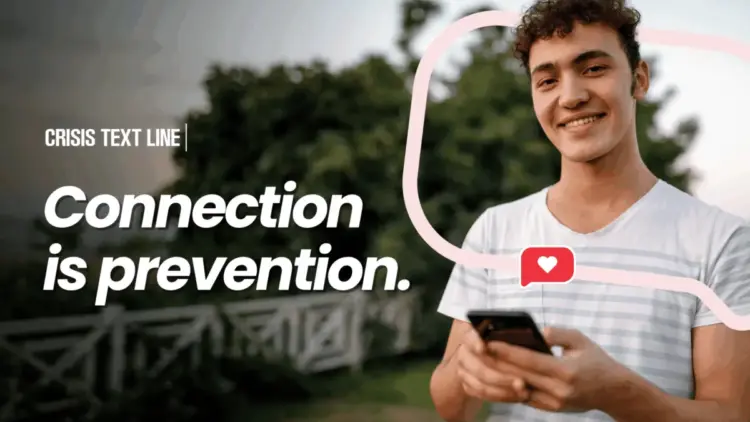
As September marks National Suicide Prevention Month, organizations across the United States are ramping up efforts to address mental health challenges and provide accessible resources to those in need. This year, the Crisis Text Line is anchoring its annual campaign around a fundamental and powerful concept: connection is prevention. Extending through World Mental Health Day on October 10th, the initiative highlights a simple yet frequently overlooked truth—feeling connected to another human being, even through a brief interaction, can serve as the critical turning point between a difficult night and a tragedy.
Throughout the month, the organization is encouraging communities and individuals to actively reach out and check in on the people in their lives. By emphasizing that a simple conversation can be a meaningful act of prevention, the campaign seeks to dismantle the isolation that so often exacerbates mental health crises. For anyone experiencing immediate distress or needing urgent mental health support, the Crisis Text Line remains available 24/7. Individuals can text the keyword CONNECT to 741741 to be connected with a live, volunteer Crisis Counselor, offering a free, confidential, and judgment-free lifeline at any hour of the day or night.
Understanding the Urgency of Suicide Prevention
Mental health support and accessible suicide prevention resources remain critically important. The ongoing global mental health landscape highlights an urgent and sustained need for community awareness, robust advocacy, and accessible support systems. Insights drawn from annual trend reports further reinforce the necessity of proactive suicide prevention, emphasizing the importance of recognizing warning signs early and ensuring that reliable lifelines are consistently available to the public.
Every single day, support services show up for individuals navigating their darkest moments, ensuring that no one is forced to carry overwhelming emotional weight entirely alone. For those who are struggling, engaging in even a single text conversation can foster a renewed sense of hope, establish vital human connection, and ultimately prove lifesaving. Organizations continue to invite public participation and financial support to sustain these critical, round-the-clock conversations for anyone facing a crisis, ensuring services remain completely free, confidential, and open to all without judgment.
The Protective Power of Social Connection
Extensive research into suicide risk underscores a vital protective factor: strong, dependable relationships. Public perception of suicide prevention often focuses heavily on acute interventions that occur during a severe crisis, such as emergency room visits or sessions with a licensed therapist. While those clinical resources undeniably save lives, the majority of effective prevention actually takes place much earlier, during ordinary, everyday moments when an individual feels genuinely seen and safe rather than invisible and isolated.
Individuals who maintain strong connections to family, friends, or a broader community are demonstrably less likely to reach a critical mental health crisis point, and they are significantly more equipped to reach out for help if they do. Meaningful social ties fundamentally change how a person navigates and endures exceptionally difficult times.
However, understanding loneliness requires looking beyond physical isolation. Loneliness does not always manifest as being entirely by oneself; an individual can experience profound isolation while sitting in a crowded room or surrounded by household members who do not truly know them. It can feel like having a phone filled with contacts yet lacking a single person to actually call. For anyone experiencing these familiar feelings, advocates stress that they are not alone in their experience, noting that loneliness remains one of the most common and treatable human conditions.
Removing Barriers to Reaching Out
One of the primary reasons individuals hesitate to check in on friends, family members, or colleagues is the fear of saying the wrong thing. In reality, there is no need for a perfect script or clinical expertise. A simple, genuine message—such as letting someone know they have been on your mind and asking how they are doing—can go a very long way toward making them feel valued and supported.
Furthermore, effective support means looking out for those who are struggling, rather than waiting exclusively for someone to explicitly ask for help. Most individuals experiencing severe emotional pain do not use the word suicide or outwardly demand assistance. Instead, the warning signs are often subtle, such as abruptly canceling social plans, withdrawing from daily routines, or suddenly going quiet in group chats. Supporting someone through a difficult period involves noticing these minor behavioral shifts and reaching out regardless, even when there is uncertainty about whether something is definitively wrong. Mental health advocates emphasize that it is always better to check in and be mistaken than to remain silent and wonder later.
Raising Awareness Through Color and Visibility
As communities observe National Suicide Prevention Month throughout September, official symbols help unify messaging and foster public dialogue. The recognized colors for the awareness month are purple and teal. These distinct colors frequently appear on awareness ribbons, digital graphics, and at various community-led events, serving as a visible, shared signal that suicide is entirely preventable and that confidential support is readily available.
Organizations encourage the public to incorporate these colors into their attire or share awareness materials throughout the entire month. Visual visibility plays a crucial role in opening the door to important, life-saving conversations that might otherwise never take place.
No matter how individuals choose to participate or raise awareness during September, advocates emphasize that everyone has the capacity to make a meaningful impact in suicide prevention. By fostering open communication, recognizing subtle signs of distress, and promoting accessible resources, communities can ensure that those experiencing a mental health crisis or suicidal ideation never have to face their darkest moments in isolation. For immediate support, individuals can text CONNECT to 741741 to reach a trained counselor at any time.