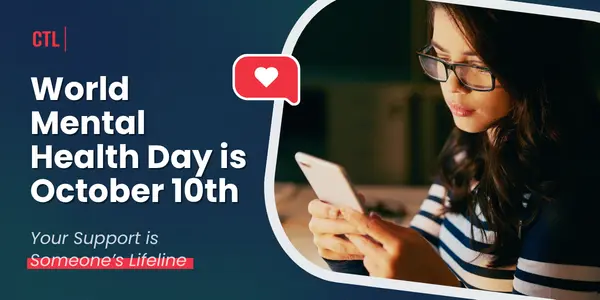
Every October 10, the global community pauses to openly discuss mental health, working to dismantle stigma and encourage broader conversations. For World Mental Health Day 2026, the World Federation for Mental Health has established a powerful theme: Lived Experiences Heard: Real Voices, Real Change. This year’s focus calls on organizations, institutions, and advocates everywhere to actively amplify the stories and insights of individuals who possess direct, lived experience with mental health challenges.
At organizations like Crisis Text Line, this philosophy serves as a foundational operational principle. The core belief driving this work is that individuals who have successfully navigated profound mental health struggles should not merely be talked about or studied from a distance; rather, they must be at the forefront of shaping what accessible support looks like for future generations. As the organization expands its reach to more communities and across multiple languages, the emphasis on genuine listening remains paramount.
What "Lived Experience" Truly Means in Crisis Support
Everything that Crisis Text Line has learned about navigating acute emotional distress has come directly from the people who reached out first. The service was never designed in a vacuum by waiting for individuals in crisis to fit into a rigid corporate framework. Instead, the platform was built organically from the ground up, guided by what texters articulated they needed in the absolute middle of a panic attack, a painful relationship breakup, or a dark night that felt entirely unbearable, one conversation at a time.
This approach represents the quiet, practical implementation of making lived experience heard. It moves beyond a transient marketing or campaign slogan to become a core design principle. For over eleven years, the accumulation of lessons regarding what actually works and what falls short—derived directly from the individuals who trusted the service with their most vulnerable moments—has been systematically folded back into how volunteer Crisis Counselors prepare for and respond to the next person who reaches out.
Expanding Reach Across Languages and Borders
In the context of modern mental health intervention, the call for more voices naturally translates into breaking down linguistic and geographic barriers. Crisis Text Line provides free, confidential, 24/7 mental health support in both English and Spanish. A significant milestone in this mission occurred when the organization acquired ¡Aquí Estoy!, a dedicated nonprofit that historically supported individuals across twenty Spanish-speaking countries spanning Latin America, Spain, and the Caribbean.
While providing Spanish-language support is not entirely new for the organization, the formal integration and expansion reflect a multi-year commitment to meeting communities in their native tongue. Answering a texter in their primary language creates an essential bridge, representing the profound difference between a text message that simply receives a reply and a text message that is genuinely understood. This understanding encompasses regional slang, the specific cultural weight that a phrase carries in Spanish compared to English, and the nuanced context surrounding what a person might be hesitant to state directly. Spanish-language support built by and alongside the very communities it serves exemplifies what it means to put lived experience into practice on a global scale.
The Power of Real Voices
The heart of World Mental Health Day remains grounded in the authentic narratives of those most closely affected by mental health struggles. Allowing individuals to speak for themselves illuminates the transformative impact of accessible, empathetic intervention.
Reflecting on her undergraduate years, one texter shared how cultural silence surrounding mental health had previously forced her to internalize immense pain and isolation. "I came to understand that my voice matters, that I matter, and that my feelings are valid," she noted. She recalled utilizing Crisis Text Line on numerous occasions during particularly difficult periods, explaining that having someone listen, guide, and support her made a tangible difference that allowed her to keep moving forward.
The journey from receiving support to offering it is a common trajectory within the volunteer community. Another individual described using the platform as a vital resource during periods of deep hopelessness and suicidal ideation. Thanks to the guidance of a volunteer who helped her connect with a therapist specializing in neurodiversity, she began a gradual recovery. Today, she serves as a volunteer Crisis Counselor herself, viewing it as a profound privilege to assist others navigating the exact same emotional terrain she once endured.
The impact of this linguistic and cultural attunement is similarly echoed by Spanish-speaking participants. One anonymous texter expressed gratitude for the representative who assisted her, noting that the interaction made her feel genuinely comprehended and reminded her that her feelings were important. Another anonymous participant emphasized the critical nature of the service, particularly for individuals lacking even a minimal support network. Knowing that someone cares deeply can alter a person’s perspective, replacing the feeling that everything is perpetually bleak with the hopeful realization that something better may be waiting just ahead.
Real Change Starts with Connection
When examining the concept of real voices driving real change, the process almost invariably begins with fundamental human connection. Loneliness and isolation emerge as persistent themes in the conversations managed by Crisis Counselors, frequently lurking beneath the surface of whatever immediate trigger prompted a texter to reach out in the first place.
Reaching out to check on someone who has grown quiet or appears noticeably more distant does not require eloquence or a complex script. Often, it requires very few words at all; it simply requires observation, care, and the willingness to show up for another human being. Understanding the heavy toll of isolation remains a crucial step in community-level prevention and support.
Sustaining Lifesaving Conversations
Every authentic voice—ranging from the individual who felt slightly less isolated to the texter who transitioned into a volunteer role or the person reaching out in Spanish for the very first time—exists because supporters funded the essential infrastructure making it possible. This infrastructure includes rigorously trained Crisis Counselors, robust technology capable of operating seamlessly across diverse time zones and languages, and a reliable platform standing ready at all hours of the night, every single day of the year.
As communities mark World Mental Health Day, organizations continue to invite public support to sustain these vital, lifesaving conversations for anyone facing a crisis, ensuring services remain entirely free, confidential, and judgment-free around the clock.
For anyone experiencing immediate distress or emotional overwhelm, confidential support remains available at all times. Individuals can connect with a trained volunteer Crisis Counselor by texting the word CONNECT to 741741, ensuring that help is always within reach.