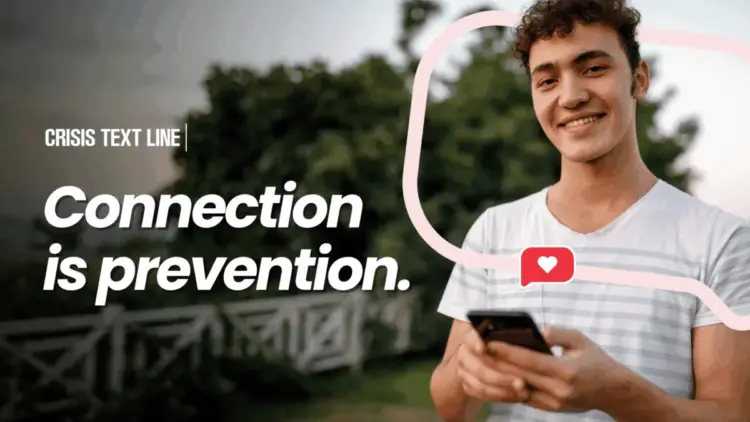
As communities across the United States mark National Suicide Prevention Month this September, organizations nationwide are ramping up efforts to address what public health advocates increasingly view as a pervasive crisis of isolation. Leading this year’s national initiative is the Crisis Text Line, which has anchored its campaign around a singular, foundational concept: Connection is Prevention.
Extending through World Mental Health Day on October 10, the campaign draws attention to a simple yet frequently overlooked truth of human psychology. According to mental health professionals and researchers, feeling connected to another person, even through a brief and seemingly ordinary interaction, can serve as the critical margin between enduring a difficult night and facing a tragedy. Throughout the month, the organization is urging individuals to proactively reach out, check in on loved ones, and engage in conversations that serve as meaningful, everyday acts of suicide prevention.
For individuals experiencing immediate distress or emotional overload, the organization continues to provide round-the-clock intervention. Anyone in the United States can text the keyword CONNECT to 741741 to reach a live, trained volunteer crisis counselor. The service is available free of charge, entirely confidential, operates 24 hours a day, seven days a week, and is designed to provide a non-judgmental space for those navigating their darkest moments.
Understanding the Timing and Significance of Suicide Prevention Month
National Suicide Prevention Month takes place every September across the United States, serving as a dedicated period for public awareness campaigns, community events, and educational outreach. The observance brings together advocates, survivors, and mental health professionals to dismantle the stigma surrounding mental illness, encourage open dialogue, and highlight the resources available to those in crisis.
Public health advocates emphasize that mental health support and suicide prevention resources are more crucial now than ever before. Contemporary societal pressures, economic uncertainties, and widespread feelings of alienation have amplified the urgency for robust awareness, advocacy, and accessible support systems. Data and insights gathered from annual crisis trend reports further underscore this necessity, highlighting the persistent warning signs that indicate when an individual is struggling and reinforcing the vital importance of maintaining an available, reliable lifeline.
Every single day, crisis counselors step forward to support individuals navigating acute emotional distress, ensuring that no one is forced to carry an overwhelming burden in solitude. For those experiencing profound hopelessness, even a single text-based conversation can restore a sense of perspective, foster human connection, and ultimately prove lifesaving. Organizations leading these efforts continually invite community members and stakeholders to support the continuation of these vital, round-the-clock conversations through advocacy and contributions, ensuring that help remains free, confidential, and universally accessible.
The Science of Social Connection as a Protective Factor
Extensive research conducted by public health organizations and suicide prevention experts points to a powerful protective factor against self-harm: strong, dependable interpersonal relationships. Public discourse often frames suicide prevention strictly as an intervention that occurs during an acute crisis, such as inside a hospital emergency room or a therapist’s office. While these institutional resources are undeniably vital and save countless lives, the majority of suicide prevention actually occurs much earlier, embedded within ordinary, everyday moments where an individual feels genuinely safe and seen rather than invisible.
Social connection acts as a profound psychological buffer. Individuals who maintain meaningful bonds with family members, friends, or broader communities are statistically less likely to reach an acute crisis point, and significantly more likely to reach out for help if they do. Strong connections fundamentally alter how a person manages adversity and holds on during profoundly difficult times.
Conversely, understanding the reality of loneliness is essential for recognizing who might be at risk. Loneliness does not always present as physical isolation or empty rooms. An individual can experience profound loneliness while sitting in a crowded room or living in a household filled with people who do not truly understand them. It can manifest as a smartphone filled with contacts accompanied by the aching realization that there is no one they feel comfortable calling. Mental health advocates emphasize that if these feelings sound familiar, individuals should know they are not alone in experiencing them, as loneliness remains one of the most common and treatable human conditions.
Overcoming Hesitation in Reaching Out
One of the primary barriers preventing people from checking in on friends or family members is the fear of saying the wrong thing. However, mental health professionals stress that effective check-ins do not require a perfect script or specialized clinical training. A simple, genuine message—such as letting someone know they have been on your mind and asking how they are doing—can travel a remarkably long distance in making a struggling person feel valued.
Furthermore, experts advise that supporters should not wait for someone to explicitly use the word "suicide" or directly ask for assistance before initiating contact. The vast majority of individuals who are privately suffering do not explicitly ask for help. Instead, they may exhibit subtle behavioral shifts, such as canceling plans more frequently or withdrawing from group chats and social gatherings.
Supporting someone who is struggling involves noticing these small behavioral signals and reaching out regardless of uncertainty. Public health guidance consistently emphasizes that it is far better to ask and be mistaken than to remain quiet and experience profound regret later.
Symbolism and Action During National Suicide Prevention Awareness Month
Visually, National Suicide Prevention Month is recognized by the official colors of purple and teal. These colors appear prominently on awareness ribbons, digital graphics, and at community gatherings as a visible signal to the public that suicide is preventable and that confidential support is widely available. Communities are encouraged to display these colors throughout September to foster visibility, which frequently opens the door to crucial conversations that might otherwise never take place.
As the campaign continues through World Mental Health Day, Crisis Text Line maintains its core message that everyone possesses the capacity to make a tangible impact by raising awareness and supporting community members in distress. The organization encourages the public to learn more about the "Connection is Prevention" initiative and to utilize available resources to ensure that no individual faces a mental health crisis alone. Anyone needing immediate support can text CONNECT to 741741 at any time of day or night.