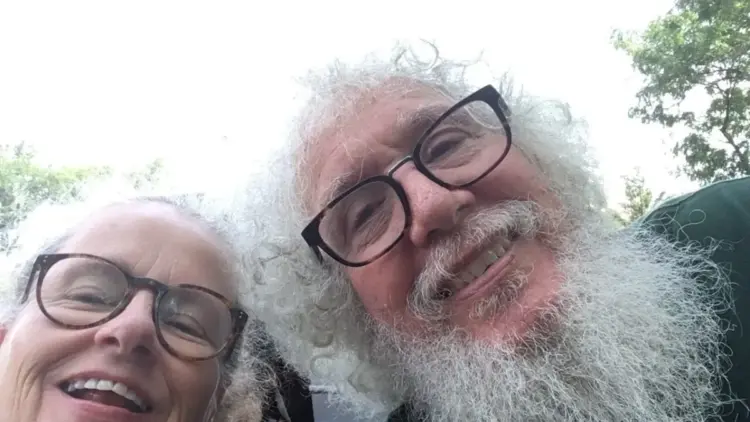
As the national movement known as REV UP—an acronym standing for "Register, Educate, Vote, Use your Power!"—marks its tenth anniversary, advocates and organizers are looking back at the foundational efforts that built the political power of the disability vote. Founded in 2016 by grassroots activists in Texas, REV UP has grown over the past decade into an influential national force. To celebrate this milestone of impact, national organizations are highlighting the leaders whose lifelong work reflects the strength and enduring influence of the movement. At the heart of that history are the late Bob Kafka and his wife, Stephanie Thomas, whose decades of tireless organizing laid the groundwork for what the movement is today.
Before There Was a Movement
Long before REV UP expanded into a recognized national coalition, Bob Kafka and Stephanie Thomas were prominent grassroots organizers in Texas who fiercely believed in the political agency of people with disabilities and the absolute necessity of an accessible democracy. As longtime disability rights activists, they spent years organizing, mobilizing, and building a cohesive community among disabled individuals across the Lone Star State. Kafka ultimately founded and co-led the very first REV UP coalition in Texas before partnering with the American Association of People with Disabilities (AAPD) to help take the movement national. Thomas stood right alongside him every step of the way, serving as a powerful collaborator, activist, and visionary in her own right. Together, they did not merely demand social change; they actively worked to empower voters directly at the ballot box.
Thomas’s own journey into the world of activism began during her college years. Alongside other disabled students, she organized and agitated for greater physical and institutional accessibility at her university. Reflecting on that era, Thomas noted that a broader demand for societal change was steadily building across the country.
"I felt that the time for change was now," she recalled, pointing to the cultural backdrop of the time. "It was during and after the anti-war movement… the women’s rights movement, and, of course, the civil rights movement… Everybody was talking about change."
When Thomas and Kafka first met in Texas, they were living on opposite sides of a vast state. As Thomas frequently observed with a touch of humor, looking at the sheer geographical size of Texas means two points can be very far apart. Consequently, they decided to meet in the middle and moved to El Paso together. From that point onward, their personal lives and their advocacy journeys became inextricably intertwined.
While living in El Paso, Thomas received a promotional brochure from ADAPT, a prominent national, grassroots disability rights organization known for its direct-action tactics. The brochure featured a striking and satirical image of a city bus being flushed down a toilet bowl, accompanied by the bold slogan, "Don’t flush, organize!" and the direct question, "Are you sick of not being able to ride the bus?"
This clever blend of satirical political art and uncompromising activism immediately resonated with both Thomas and Kafka. It drew them directly into the fierce community of ADAPT changemakers who were fighting for public transit accessibility.
"It was just magical to me that people were a community," Thomas shared, describing her early impressions. "They were very interested in making change, very serious about it. Ideas were flying left and right, and it was so thrilling. I immediately fell in love with the organization, and Bob and I worked with them."
REVing UP from Local to National
For years, Kafka and Thomas brainstormed and discussed ways to dramatically expand the impact of their advocacy work. As Kafka began exploring new, structured methods to influence elected officials and policy outcomes, voting quickly emerged as a uniquely powerful vehicle for systemic change.
"People with disabilities were not seen as voters," Thomas explained. "They weren’t seen as really much of anything, and so that’s why [Bob] started REV UP Texas. But he also felt like this was a problem across the whole country."
Thomas recalled that after relocating to Austin, Texas, Kafka focused his early organizing efforts on helping people with disabilities recognize both the intrinsic power of their individual votes and the collective strength of working together in solidarity.
To bring that ambitious vision to life, Kafka and Thomas teamed up with Bill Emery, a longtime friend and fellow activist, to launch an unprecedented voter outreach initiative. They requested an official list from the Texas Attorney General’s office containing the names of individuals with disabilities who utilized local paratransit services. By carefully cross-referencing and matching that administrative list with active voter registration records, they managed to compile phone numbers and organize a widespread robocall campaign that directly encouraged disabled Texans to participate in the upcoming election.
"I hate robocalls, and I couldn’t believe Bob was doing that, but he did, and it was really good," Thomas shared with a laugh. "It called people all over the state who had disabilities and said to vote in the upcoming elections."
As is often the case with large-scale political activism, the campaign quickly introduced a measure of chaos. Standard regulatory guidelines for the robocalls required the inclusion of a functioning contact phone number where recipients could call to seek more information or voice complaints. True to form, Kafka provided his own personal phone number as the primary point of contact.
"One weekend it was just solid calls of angry people," Thomas recalled. "We talked to them, and then they realized this wasn’t for a candidate; it was just to get them to vote, and most of them really calmed down."
Rather than shutting down the feedback loop, the frank conversations Kafka and Thomas maintained with these callers generated valuable opportunities for disabled voters to share their personal stories, air their frustrations, and ultimately become more civically engaged.
"When they realized that we wanted to hear things from them too, that was something that really got people more excited, and I think it really did help to get some folks out to vote," Thomas noted.
Eager to scale these grassroots lessons, Kafka looked for ways to extend this coalition-building framework far beyond the borders of Texas. He began collaborating closely with AAPD to assist local communities across the United States in establishing their own independent REV UP coalitions, thereby constructing a nationwide movement dedicated to elevating the disability vote from local municipalities to federal elections.
"He was really proud that so many people took this issue on, and decided to run with it," Thomas recalled of her late partner’s legacy.
Pitchfork Approach to Advocacy
Over decades of frontline activism, Kafka developed and refined what he termed the "pitchfork approach" to advocacy—a comprehensive, multi-pronged strategy designed to achieve lasting social and political change. The framework rested on five distinct pillars: media and education, legal action, direct action, political engagement, and systemic or administrative reform.
Kafka naturally brought this sophisticated strategic mindset to the development of REV UP. He firmly believed that civic participation extended far beyond simply registering, educating, and encouraging disabled voters to cast a ballot; it fundamentally required holding elected officials strictly accountable to the specific policy concerns of the disability community.
"[Bob] felt that people should be informed and involved so that they could put pressure on candidates to show that there was a disability community that was caring about our issues and was going to vote according to our issues," Thomas explained.
At the core of Kafka’s philosophy was an unwavering faith in the collective power of the disability community. He consistently maintained that the unified voice of disabled people could and should be substantially louder and stronger than conventional political structures allowed.
Organizers Working Together — Thomas and Kafka
Collaboration served as the foundational bedrock of Kafka and Thomas’s lifelong advocacy work. Drawing heavily upon his formative experiences with the Coalition for Barrier-Free Living, Kafka deeply understood the tangible difference that disabled individuals could make by organizing collectively rather than in isolation. Thomas similarly emphasized the critical importance of localized coalitions, noting that many of the everyday political elections and governance decisions that most directly impact people’s daily lives happen primarily at the local level.
Both Thomas and Kafka took immense pride in watching local REV UP coalitions flourish across the country and observing grassroots organizers remain steadfastly active within their respective communities.
"AAPD embracing REV UP, and giving it legs to speak at the national level, is something that meant a great deal to Bob," Thomas shared.
Looking ahead toward the next decade of the REV UP movement, Thomas believes Kafka would urge organizers to keep expanding, experimenting, and pushing boundaries. She encourages emerging leaders to celebrate even the smallest victories, to view setbacks and failures as an inevitable and educational part of community organizing, and to remember that building a sustainable movement relies on a continuous cycle of teaching and learning from one another.
Offering parting wisdom to the next generation of disability rights advocates, Thomas keeps her guidance direct and timeless: "Don’t be shy."