Contraceptive care remains a cornerstone of overall health for millions of people, with the vast majority of women utilizing some form of birth control during their lifetimes. The critical importance of robust contraceptive access has only intensified in recent years, driven heavily by sweeping abortion restrictions enacted across numerous states. Yet, even as birth control enjoys widespread usage and a proven long-term safety record, the landscape is shifting amidst a backdrop of changing federal funding priorities, administrative shifts toward fertility services and crisis pregnancy centers, and the persistent spread of misleading information across social media platforms.
At the same time, the broader delivery network has experienced notable disruptions, including a one-year federal Medicaid funding ban targeting Planned Parenthood and temporary pauses in federal spending for Title X, the national family planning program. Observers have also noted explicit signals from the Trump administration prioritizing fertility services and crisis pregnancy centers over traditional contraceptive providers. These policy signals include a heightened focus on coverage for fertility drugs, a reallocation of Title X federal family planning grant support toward a training center dedicated entirely to natural family planning and infertility services, and active federal efforts to channel women toward crisis pregnancy centers via a newly launched government website.
To understand how these evolving dynamics affect everyday individuals, a comprehensive new brief provides a detailed examination of women’s direct experiences with contraception, insurance coverage gaps, contraceptive preferences, and routine interactions with the health care system. The findings are drawn directly from the 2026 KFF Women’s Health Survey, a nationally representative study that surveyed 4,688 women and 1,148 men between the ages of 18 and 64 from March 11 to April 14, 2026. The specific analyses focus on a national sample of 3,538 reproductive-age women between 18 and 49.
Contraceptive Use
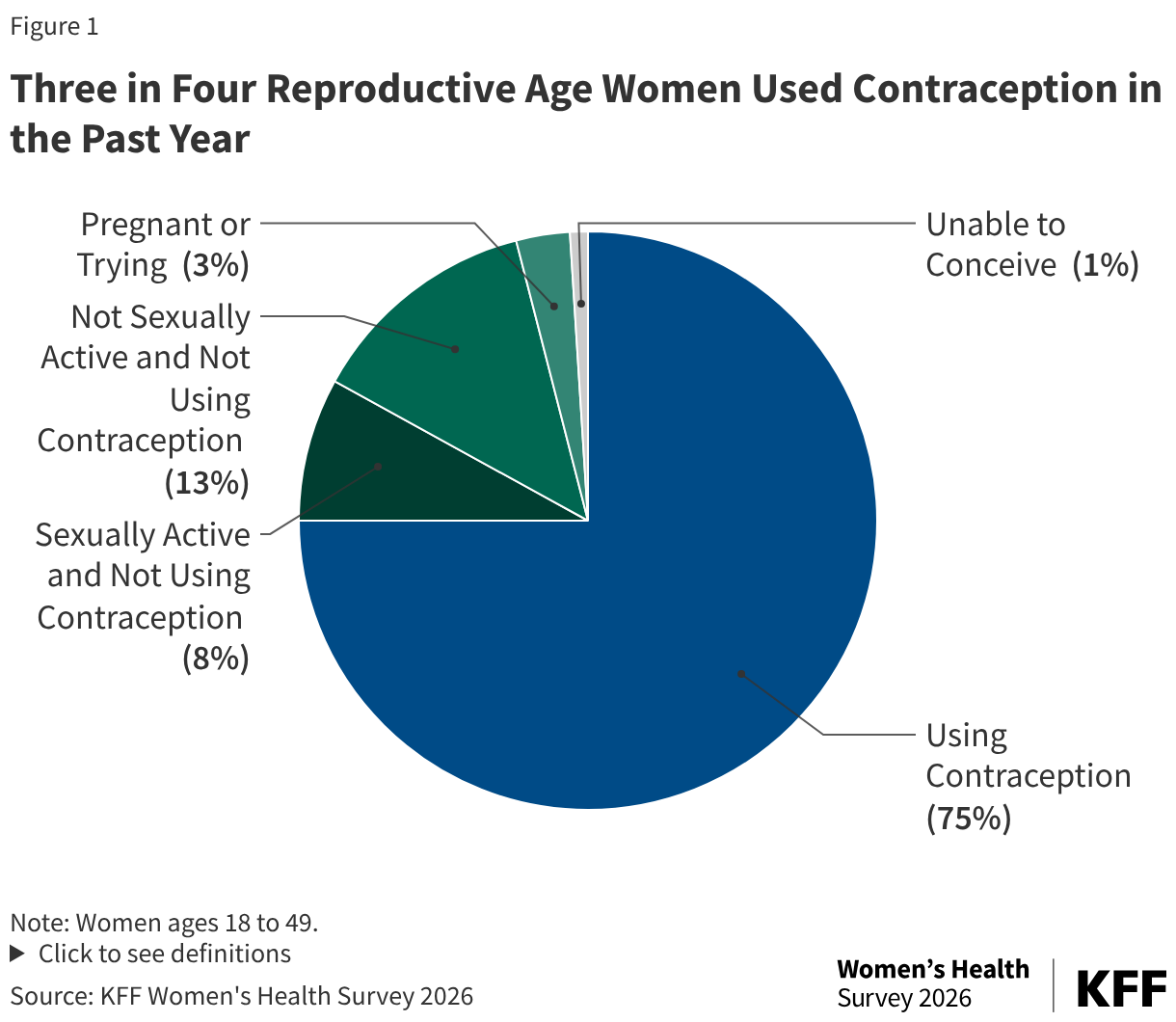
The survey data shows that three in four women, or 75%, between the ages of 18 and 49 report using some form of contraception over the past 12 months. This broad category encompasses female sterilization, a partner’s vasectomy, birth control pills, patches, vaginal rings, injectables, intrauterine devices, contraceptive implants, male condoms, emergency contraception, fertility awareness-based methods, and withdrawal. Among the remaining quarter of reproductive-age women who did not use contraception, over one in ten state they were not sexually active, 3% were currently pregnant or actively trying to conceive, 1% were medically unable to conceive, and 8% were sexually active, able to conceive, and not pregnant or trying, yet still did not use any method over the past year.
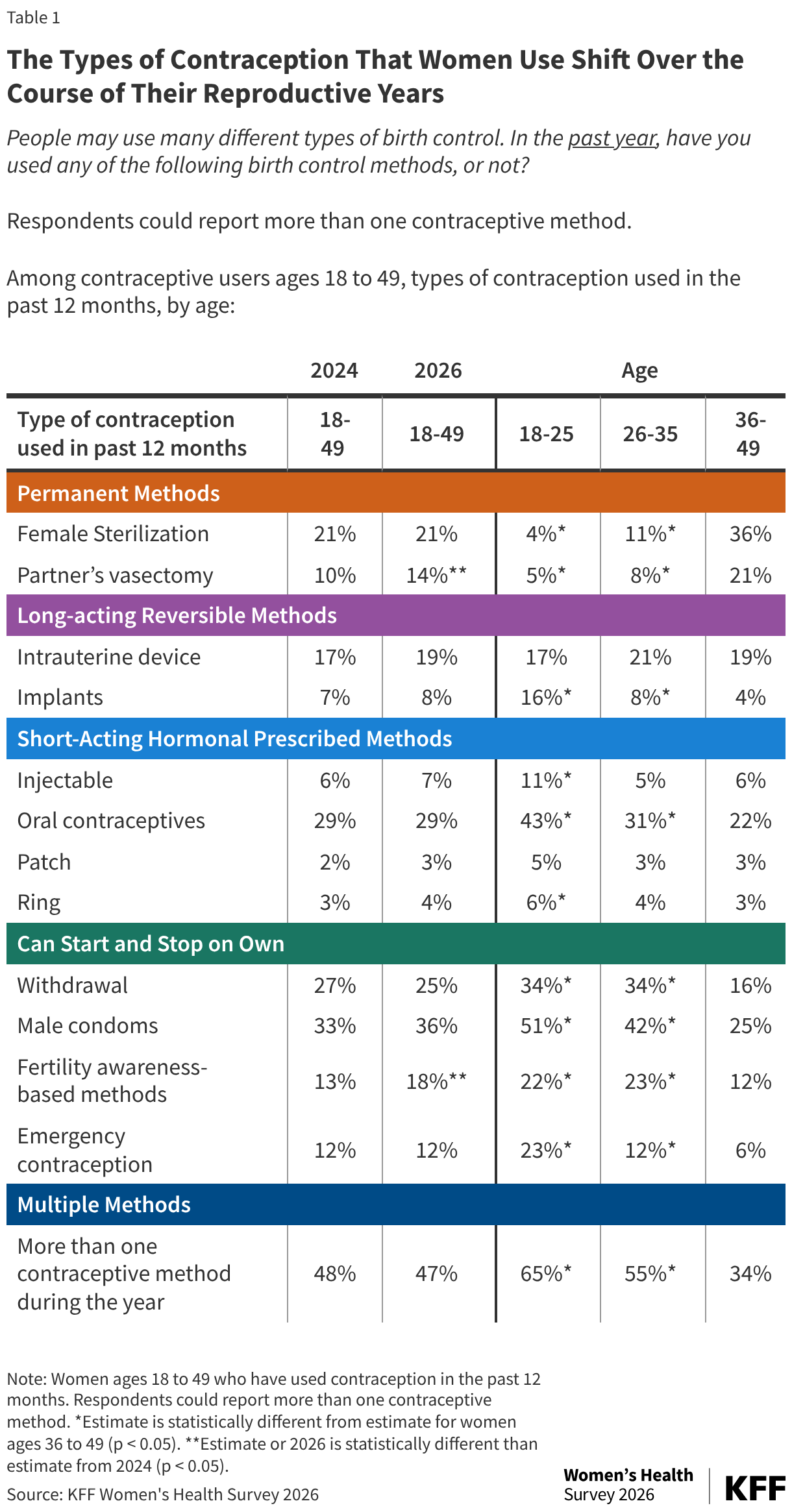
Notably, nearly half of all contraceptive users, or 47%, report utilizing more than one kind of birth control method within the past year. The specific choice of method varies significantly across different age groups. Among those using contraception, one in three rely on permanent methods, such as female sterilization at 21% or a partner’s vasectomy at 14%. Among women ages 36 to 49 who currently use contraception, reliance on permanent methods climbs to over half, at 57%. Furthermore, reliance on a partner’s vasectomy has risen to 14% overall, marking an increase from 10% when the survey was last fielded in 2024, with increases observed across every age bracket.
Long-acting reversible contraceptives, commonly known as LARCs, are utilized by 27% of contraceptive users, with IUDs most prevalent among women ages 26 to 35 and implants more common among those ages 18 to 25. Meanwhile, short-acting hormonal prescription methods are used by 43% of contraceptive users, with oral contraceptive pills representing the largest share across all age demographics.
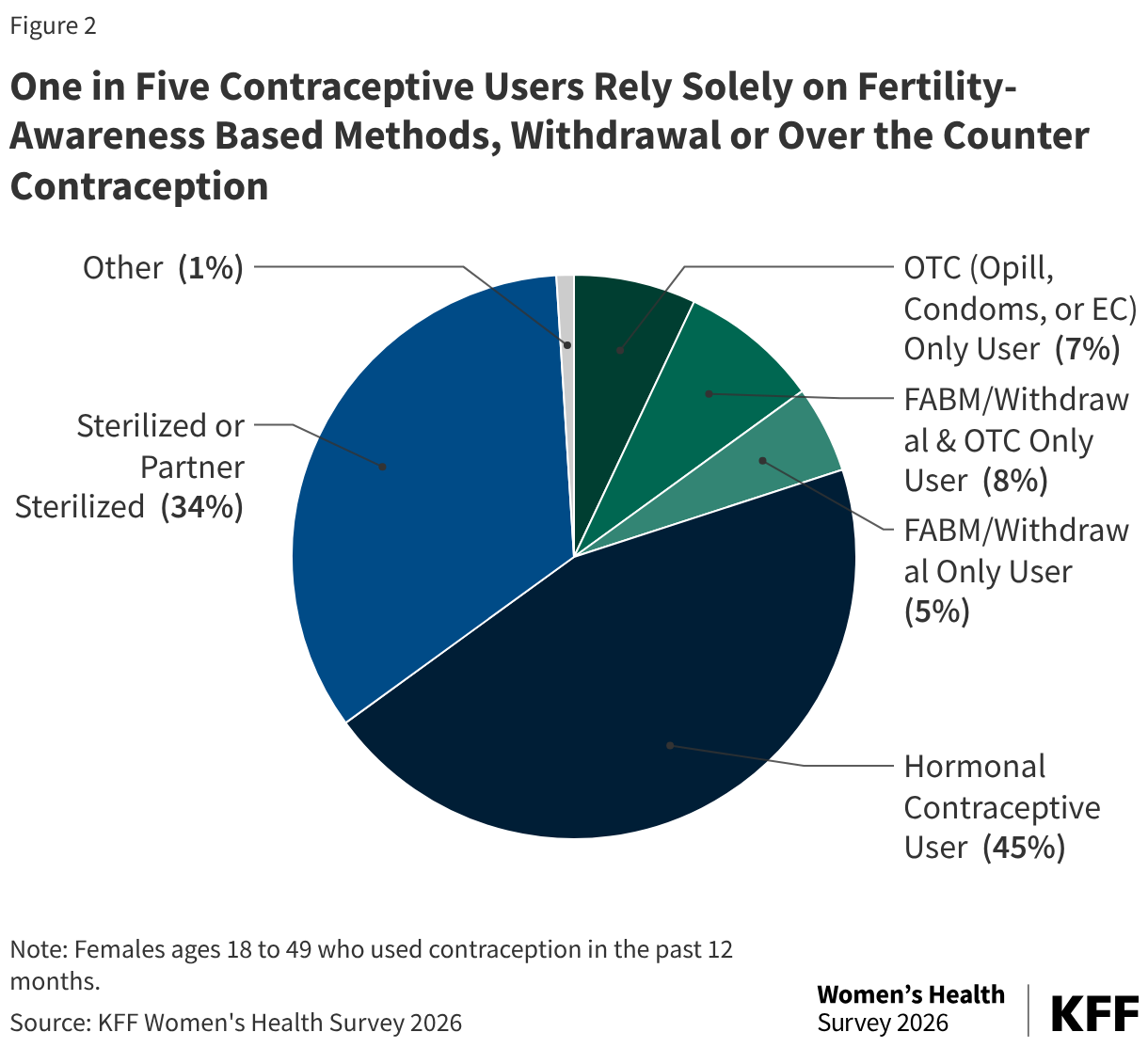
Male condoms remain the single most commonly reported contraceptive method because they do not require a prescription and are easily accessible over the counter, with more than a third of contraceptive users ages 18 to 49 reporting their use. Additionally, 25% of users report utilizing withdrawal. Use of fertility awareness-based methods, which track a woman’s fertile days during her menstrual cycle, has also climbed, reaching 18% in 2026 compared to 13% in 2024, with the sharpest increase occurring among women ages 26 to 35, jumping from 13% to 23%. A vast majority of users who rely on condoms and fertility awareness-based methods also report utilizing other methods concurrently over the course of the year.
While most contraceptive users rely on methods requiring provider involvement—such as prescription hormonal options at 45% or sterilization at 34%—one in five users rely exclusively on methods they can access independently without a clinician. Only 4% of reproductive-age contraceptive users rely solely on fertility awareness-based methods or withdrawal, while another 8% use exclusively non-prescription methods like condoms, over-the-counter emergency contraception, or Opill, the nation’s first daily over-the-counter birth control pill. An additional 7% report using only over-the-counter methods.
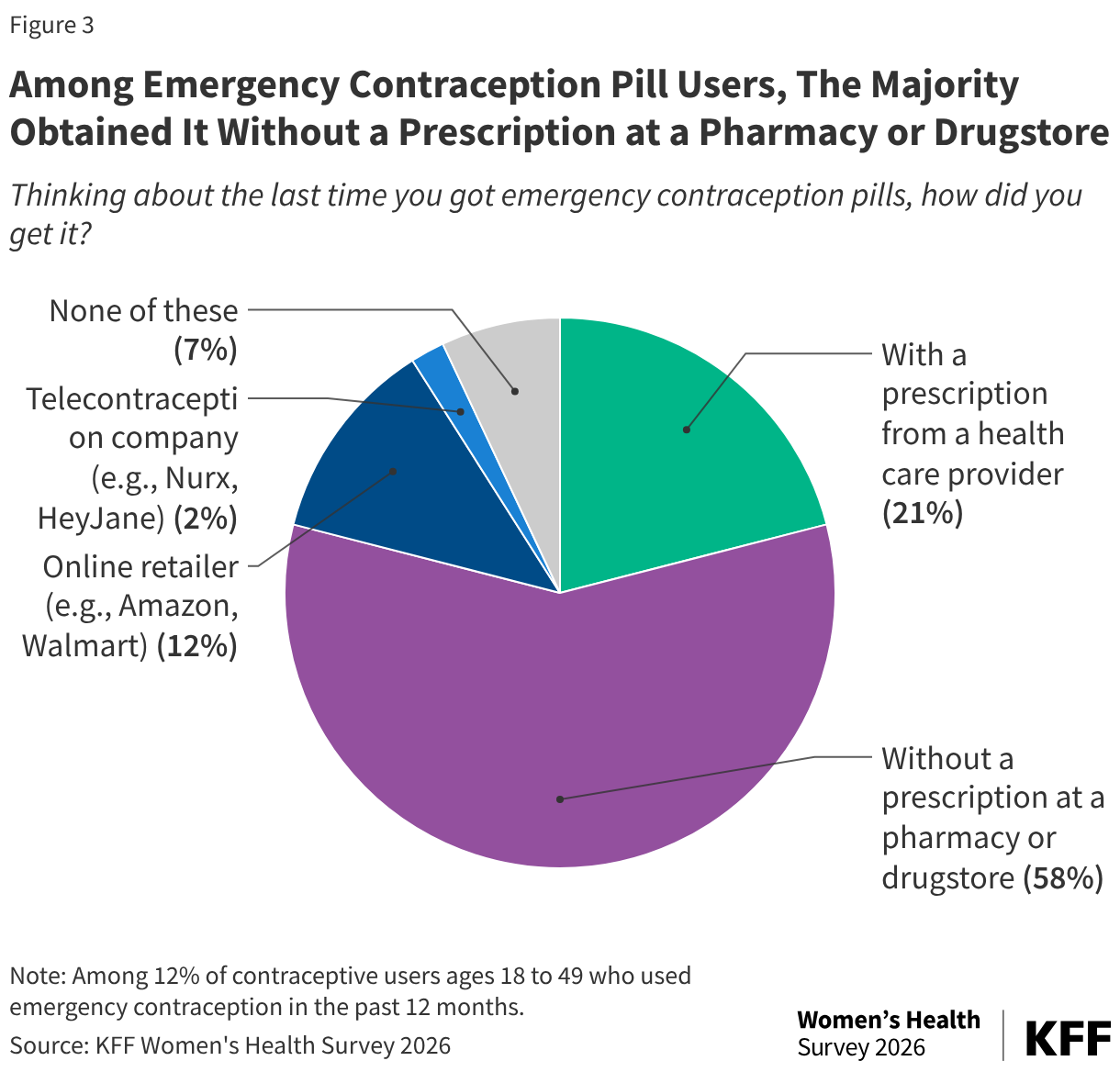
Emergency contraceptive pills, which serve as backup birth control following unprotected intercourse or contraceptive failure, are utilized by just over one in ten reproductive-age women who used contraception in the past year. Among these emergency contraception users, 58% purchased the product without a prescription at a pharmacy or drugstore, 12% bought it online, and 21% obtained a prescription directly from a clinician.
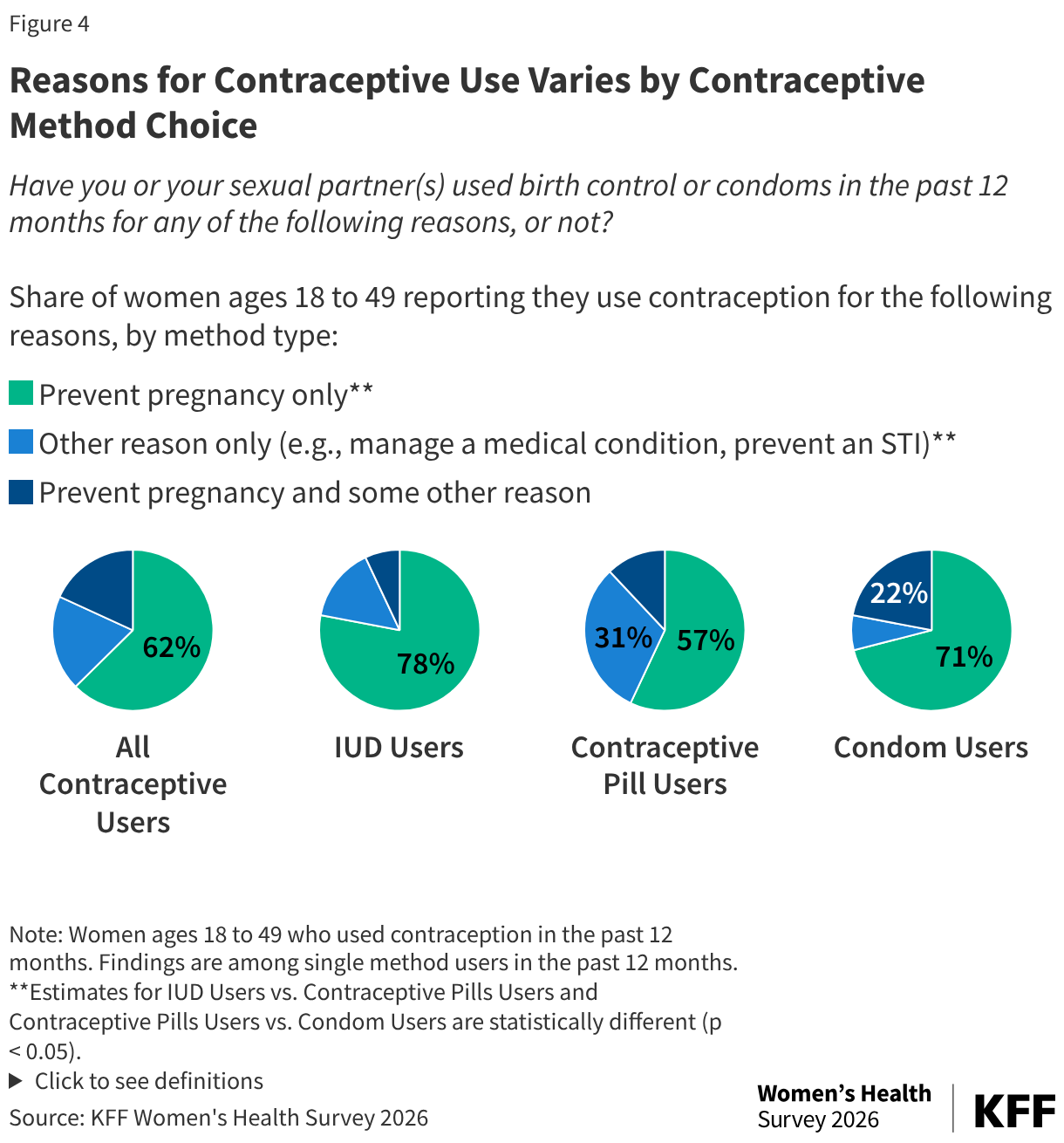
Motivations for using birth control extend beyond pregnancy prevention. Eight in ten women who used contraception in the past year did so to prevent pregnancy, while nearly one in five used it exclusively for other medical or preventive reasons, such as managing a medical condition or preventing sexually transmitted infections via condoms. Among women who rely solely on oral contraceptive pills, nearly one in three use them exclusively for reasons other than preventing pregnancy. These pills are frequently prescribed to manage menstrual irregularities, treat acne, alleviate menstrual migraines, and control symptoms associated with conditions such as endometriosis, uterine fibroids, and polycystic ovary syndrome.
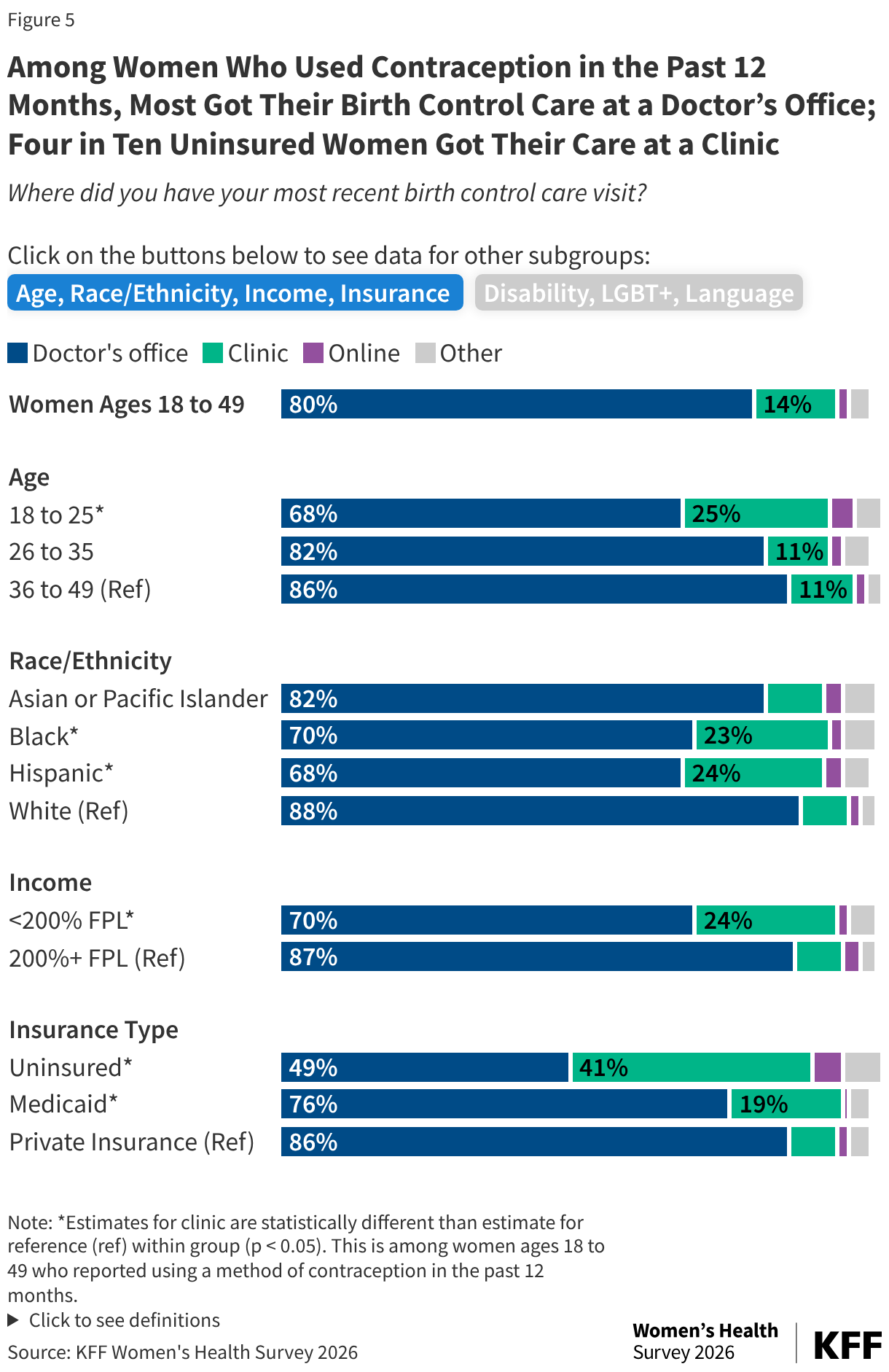
When seeking birth control care, most contraceptive users visit private doctors’ offices, though nearly one in four low-income, Black, or Hispanic women rely on publicly funded clinics. Overall, 80% of reproductive-age women visited a private doctor’s office for their most recent birth care visit, while 14% utilized a clinic such as Planned Parenthood or a community health center. Clinics play a disproportionately larger role for younger women, the uninsured, and those with lower household incomes.
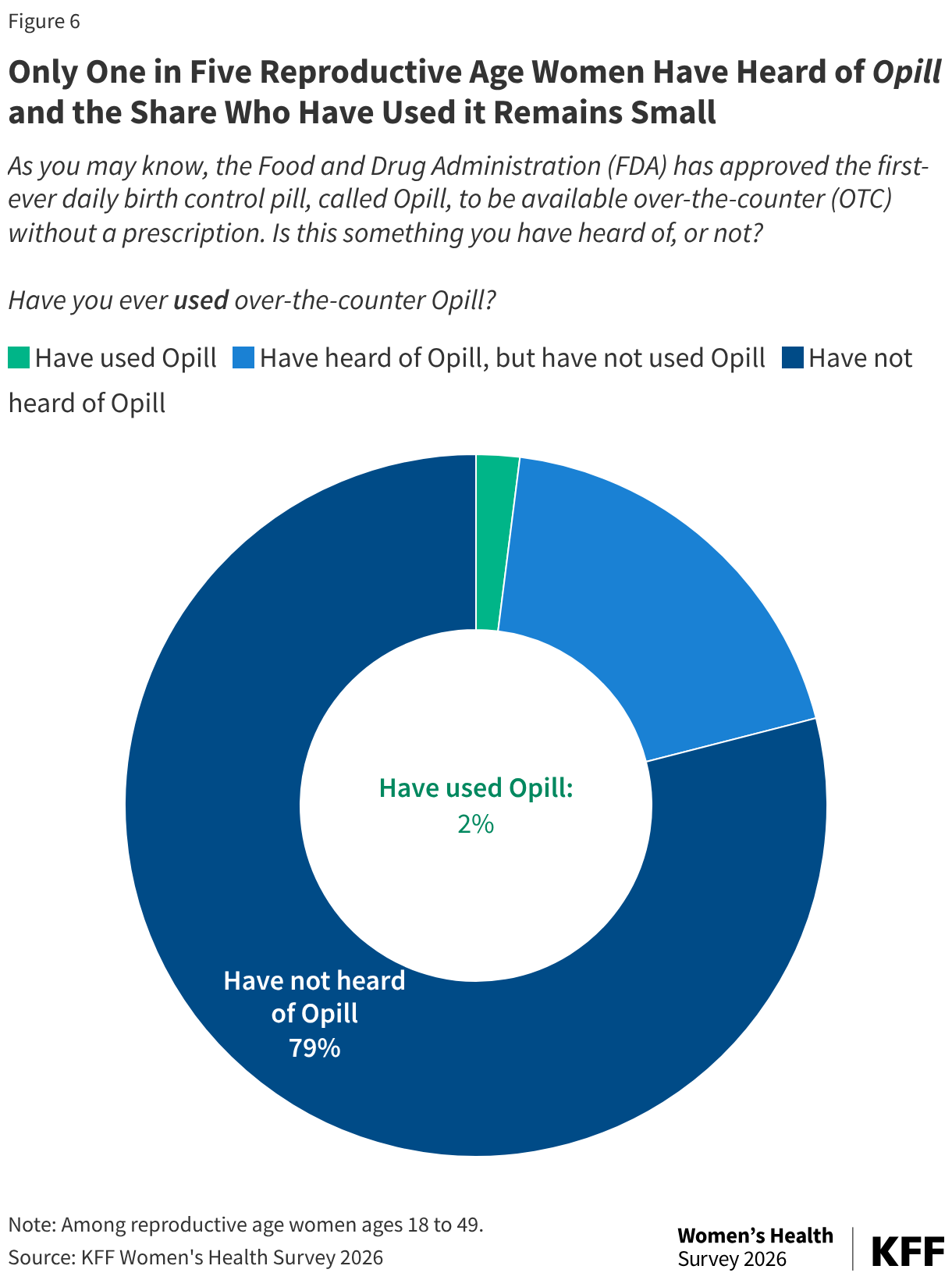
Public awareness regarding Opill, the over-the-counter daily oral contraceptive available since March 2024, remains low. Only about 21% of all reproductive-age women have heard of Opill, and just 2% have actually used it. This represents a slight but statistically significant decline in awareness from 26% in 2024, a drop likely attributed to the heavy marketing campaigns accompanying its initial product launch. Younger women ages 18 to 35 exhibit higher awareness compared to older counterparts, yet uninsured women display notably lower awareness than those with private insurance coverage.
Insurance Coverage
The Affordable Care Act mandates that private health insurance plans cover out-of-pocket costs for contraceptive services and prescribed supplies for most individuals utilizing in-network providers. Small shares of women may face costs if enrolled in grandfathered health plans, if their employers maintain religious or moral objections, or if they seek out-of-network care.
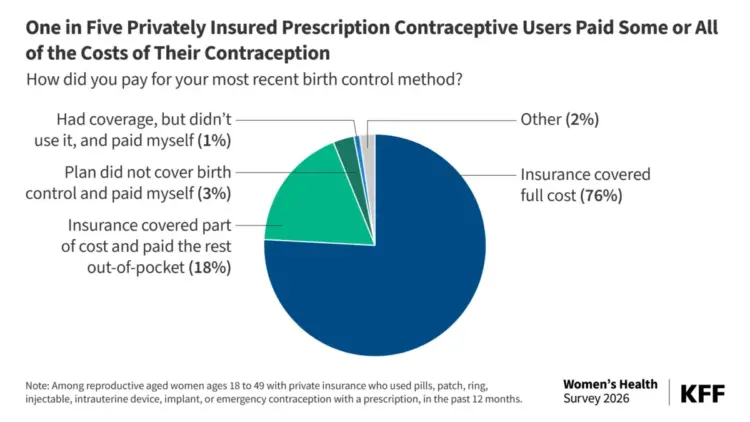
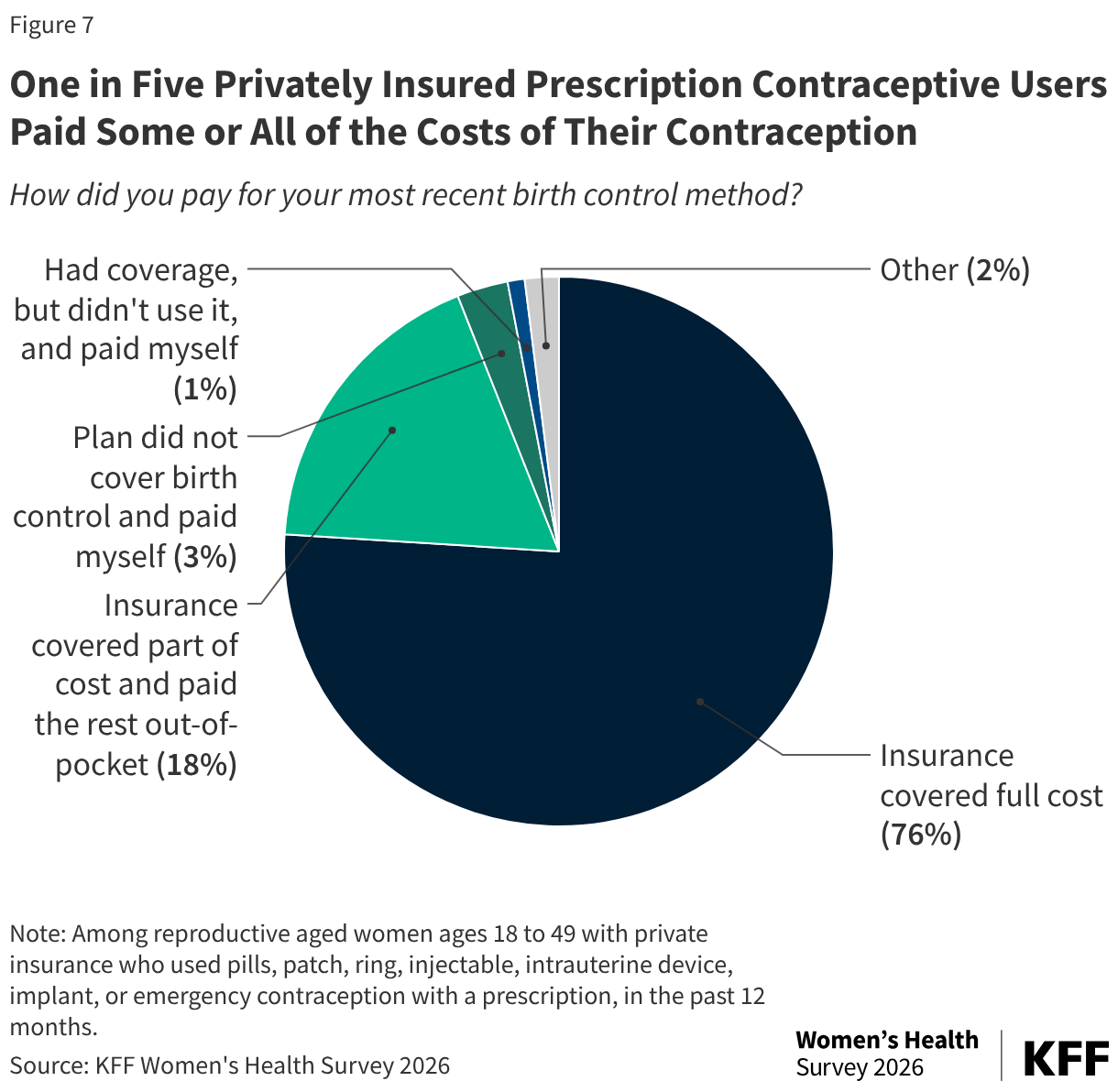
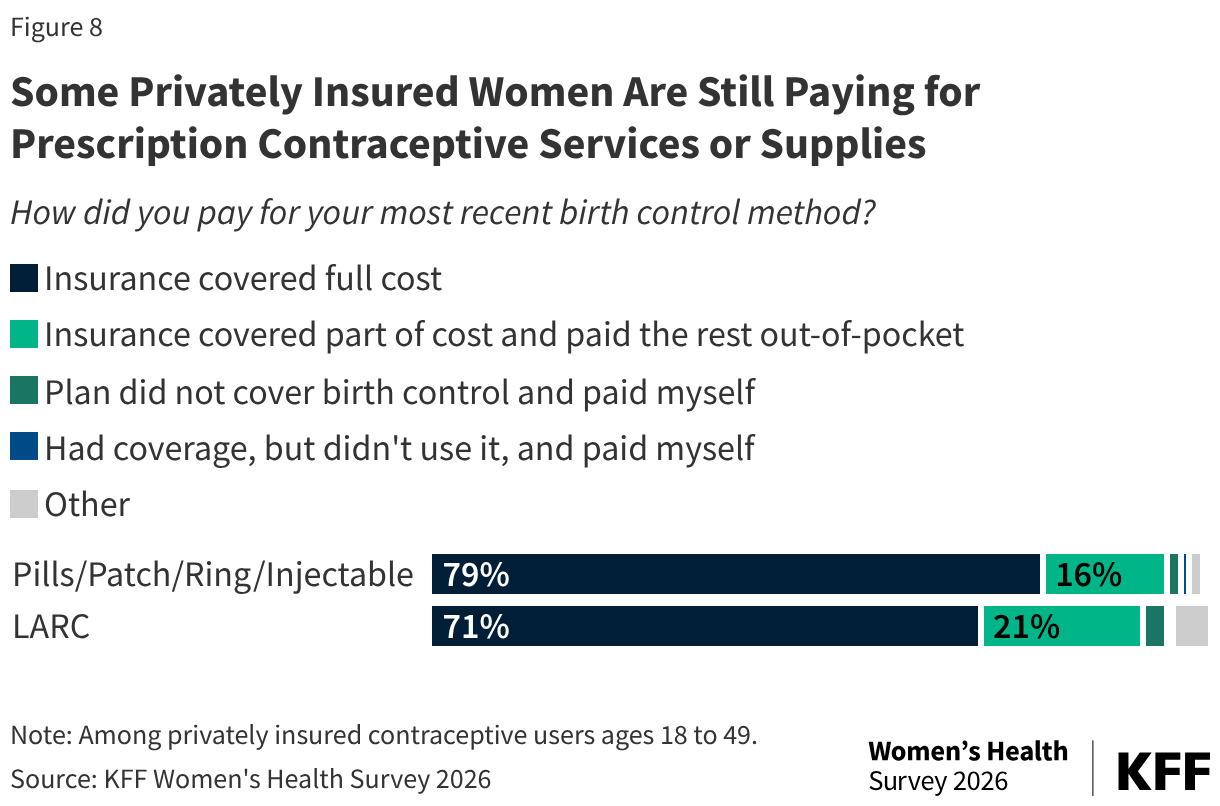
Among privately insured women utilizing a prescription method, 76% report that their insurance covered the full cost of their most recent birth control method. However, 21% report paying out-of-pocket for some or all of their contraceptive expenses because their health plan failed to cover the total cost or omitted birth control coverage entirely. Out-of-pocket charges are particularly pronounced for IUDs and implants, with 24% of users reporting personal costs, compared to 18% of those using pills, patches, rings, or injectables. Previous research indicates that privately insured individuals often face unexpected charges for ancillary services like pregnancy tests during contraceptive visits, or incur copayments if contraception is prescribed during a visit addressing an unrelated medical condition.
Furthermore, awareness of the federal mandate requiring full insurance coverage for contraceptive services without cost-sharing is low and declining. In 2026, 40% of reproductive-age women correctly knew that most insurance plans must cover contraception in full, marking a slight decrease from 43% in 2024. Approximately 31% do not know if such a requirement exists, and 29% are entirely unaware of the mandate. Among men, 46% are unsure whether vasectomies are covered without cost-sharing, a reflection of the reality that no federal mandate exists for vasectomies, though nine states require state-regulated private health plans to cover them without patient cost-sharing.
Access and Quality
Despite broad insurance requirements, cost remains a persistent barrier. Overall, 7% of contraceptive users—including 18% of uninsured women and 12% of low-income women—report having to stop using a contraceptive method because they could not afford it. Discontinuation due to cost is also higher among younger women ages 18 to 25, Black women, and Hispanic women compared to their respective demographic counterparts.
Quality of counseling also varies significantly. Less than half of contraceptive users who had a visit in the past year rate their counseling as "excellent" across all four dimensions of the Person-Centered Contraceptive Counseling measure, which evaluates clinician respect, engagement with patient preferences, seriousness given to patient choices, and sufficiency of information provided. Overall, 44% of users gave top ratings to their clinicians, with lower ratings reported by younger women, low-income women, Hispanic women, Spanish speakers, the uninsured, and those visiting clinics rather than private offices.
Finally, just over one in five women using contraception state they would prefer to use a different method. This sentiment is higher among low-income women, the uninsured, individuals with Medicaid, and women with disabilities, nearly double the rate of those without disabilities. Side effects and affordability are cited as the primary reasons for remaining on non-preferred methods, underscoring the ongoing challenges patients face in navigating the complex contraceptive care landscape.