The great outdoors has long been celebrated for its physical and psychological benefits, but educators and child development experts are increasingly looking to nature as an invaluable environment for cultivating core brain-based capabilities. Recent educational frameworks and developmental research highlight how green spaces provide a uniquely motivating and engaging backdrop for building executive functioning skills—the fundamental mental processes that allow children and teenagers to plan, organize, initiate, and complete daily tasks.
Executive functioning skills act as the command center of the brain. They govern a wide array of cognitive processes, including attention, working memory, cognitive flexibility, self-control, metacognition, and task initiation. These abilities are utilized in virtually every aspect of daily life, serving as the bedrock for academic achievement, emotional regulation, and interpersonal relationships. When children and teens struggle with these foundational skills, they often face hurdles in classrooms and social settings. Conversely, strengthening these neural pathways empowers individuals to regulate their emotions, focus under pressure, and navigate complex social dynamics more successfully.
While these critical skills can be developed through various indoor curricula and targeted exercises, researchers and educators note that stepping outside offers a particularly potent window for cognitive growth. Nature functions as an original, unstructured classroom that inherently reduces stress and enhances psychological well-being. Landmark studies underscore the immediate neurological impacts of the natural world. Research published by Harvard Health indicates that a mere 20-minute excursion into nature significantly reduces stress hormones. Furthermore, expansive public health research involving tens of thousands of participants reveals that spending at least two hours a week outdoors strongly correlates with reports of positive well-being, improved sleep quality, enhanced attention spans, and overall cognitive function.
These scientific findings align with everyday experience. Simply observing wildlife, listening to rustling leaves, or watching a scenic sunset often yields an immediate sense of calm and mental clarity. Translating these restorative effects into structured or semi-structured activities provides an ideal framework for nurturing specific executive functions such as focused attention, impulse control, and cognitive flexibility.
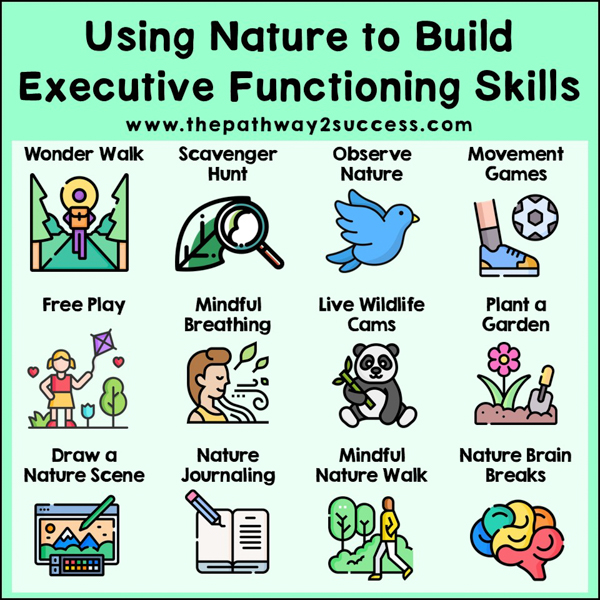
To bridge the gap between cognitive development and outdoor exploration, educators utilize a wide variety of nature-based activities that can be integrated into schoolyards, local neighborhood parks, or wooded trails. These exercises are designed to prompt deliberate thinking while leveraging the natural motivation found outdoors.
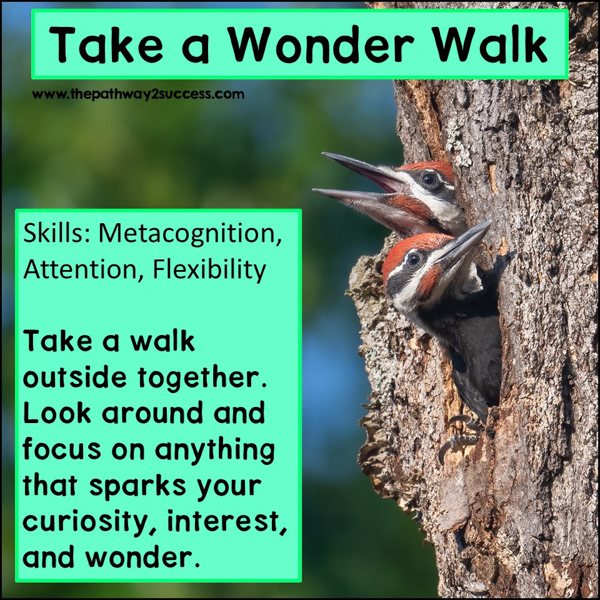
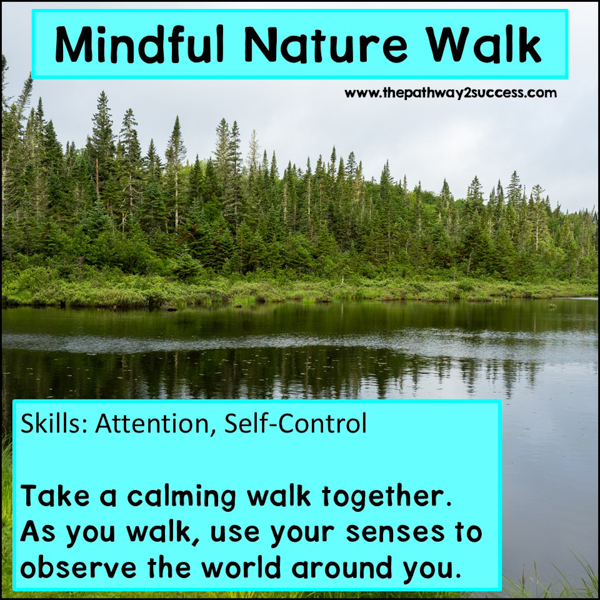
A foundational approach often utilized is the "Wonder Walk," an activity centered around metacognition, attention, and flexibility. By encouraging children to focus specifically on elements of the environment that spark their curiosity, educators help cultivate intrinsic motivation. Participants are invited to generate "wonder lists"—collections of questions regarding natural phenomena, such as why the sky appears blue or how wildlife communicates. These moments of inquiry encourage children to look beyond the surface and later engage in active research to satisfy their curiosity, thereby strengthening task initiation and persistence.
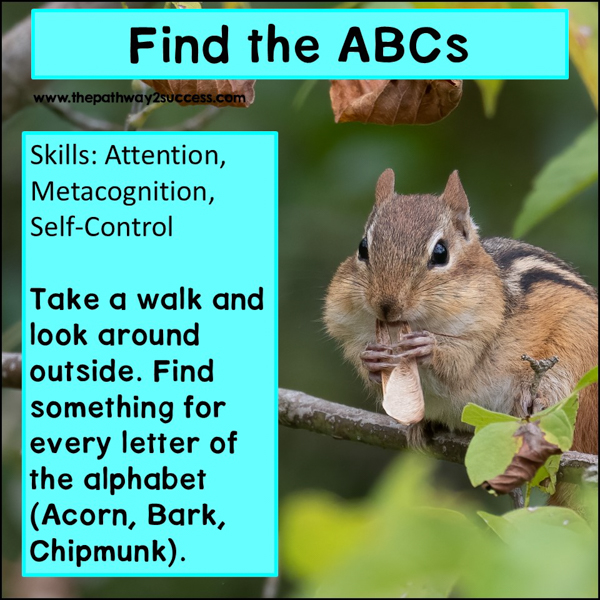
Similarly, alphabet-based outdoor games harness the power of focused attention and self-control. By challenging participants to locate natural objects corresponding to each letter of the alphabet sequentially—from air and acorns to distant airplanes—the exercise trains the brain to direct and sustain attention amidst environmental distractions. This practice teaches learners that cognitive focus is a controllable resource that can be reclaimed when the mind wanders.
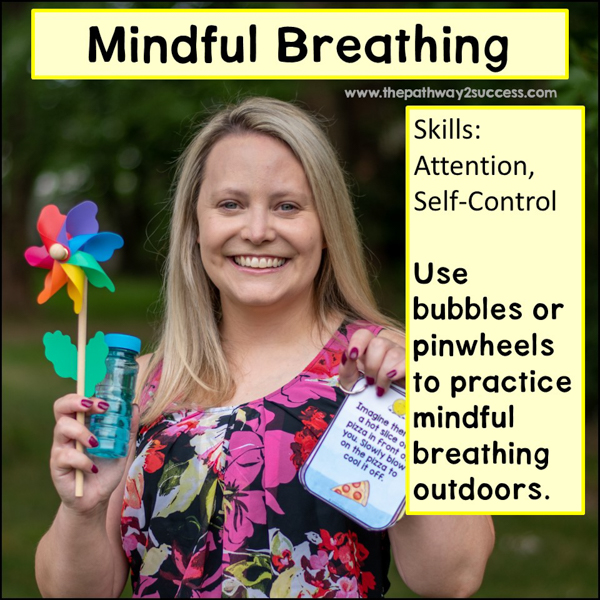
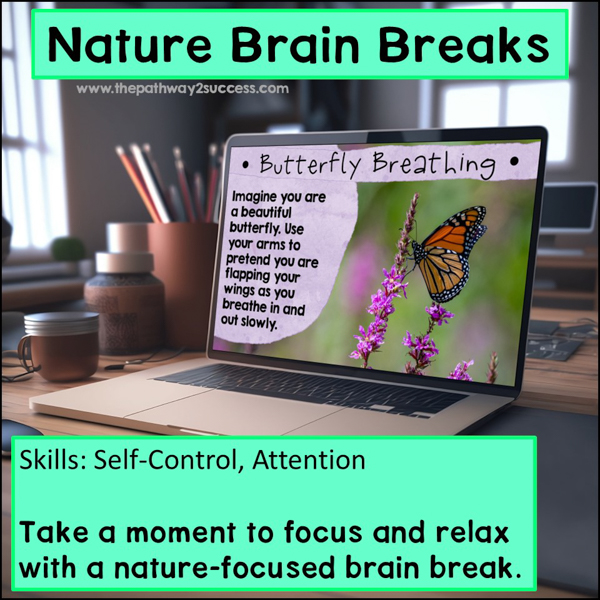
Self-regulation is further reinforced through outdoor mindfulness practices. Deep breathing exercises, whether paired with props like bubbles and pinwheels or adapted into seasonal imagery such as bear and butterfly breathing, offer tangible strategies for self-control and stress management. When practiced in a natural setting, these routines become anchored to the surrounding environment, giving children portable tools they can draw upon whenever they require emotional grounding.
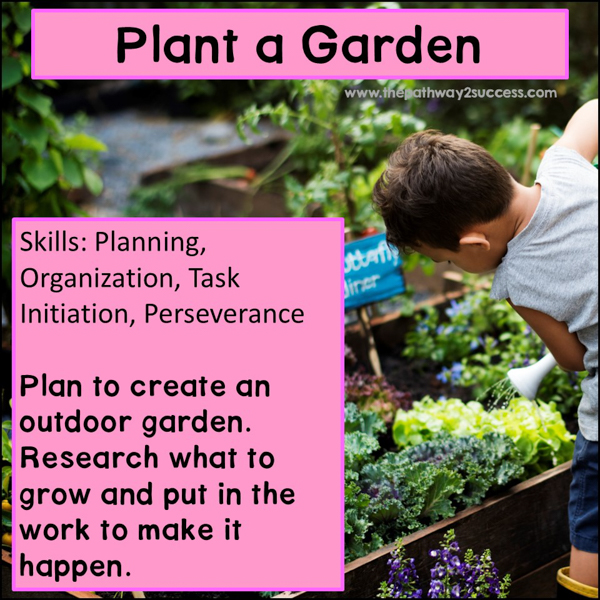
For deeper, long-term development of planning, organization, and task initiation, educators and families frequently turn to gardening projects. Designing and planting an outdoor garden requires a comprehensive preliminary phase. Children must research appropriate vegetation, determine optimal growing strategies, and compile necessary supplies such as soil, seeds, and tools. This upfront planning directly targets executive functioning networks before the physical labor even begins, culminating in a profound sense of accomplishment as the garden grows.
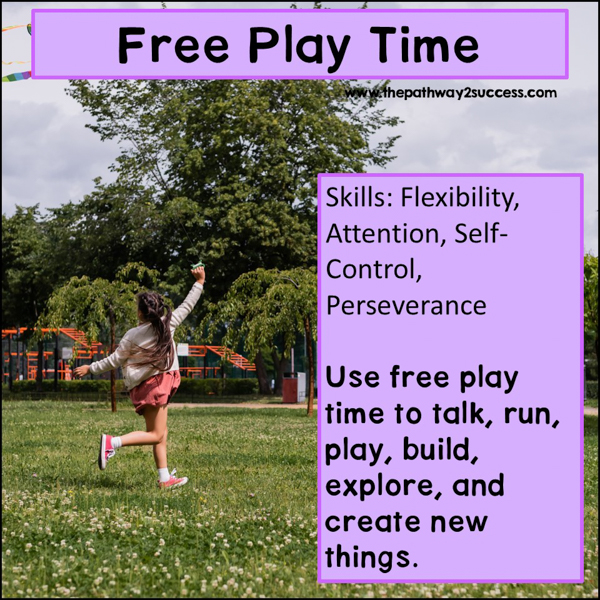
Unstructured free play remains one of the most organic methods for building cognitive flexibility, time management, and peer cooperation. In an era where daily schedules are tightly managed, designated blocks of unstructured outdoor time allow children to navigate social rules, resolve challenges, and exercise self-control naturally. When guidance is helpful, simple prompts can encourage kids to build collaborative structures, explore boundaries, and sustain attention over extended periods.
When physical access to the outdoors is limited, educators often integrate nature-themed brain breaks, positive affirmations, and digital wildlife observation. Nature-focused brain breaks allow students to engage in visualization exercises—such as imagining the flight of a hawk—which help replenish cognitive resources when indoor focus wanes. Additionally, utilizing live wildlife cameras monitoring nesting ospreys, eagles, or zoo habitats allows learners to observe animal behaviors over time, fostering sustained attention and patience even from a classroom desk.
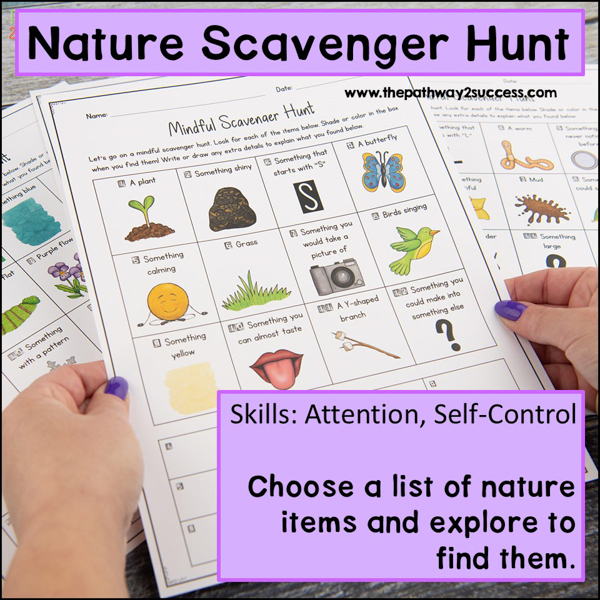
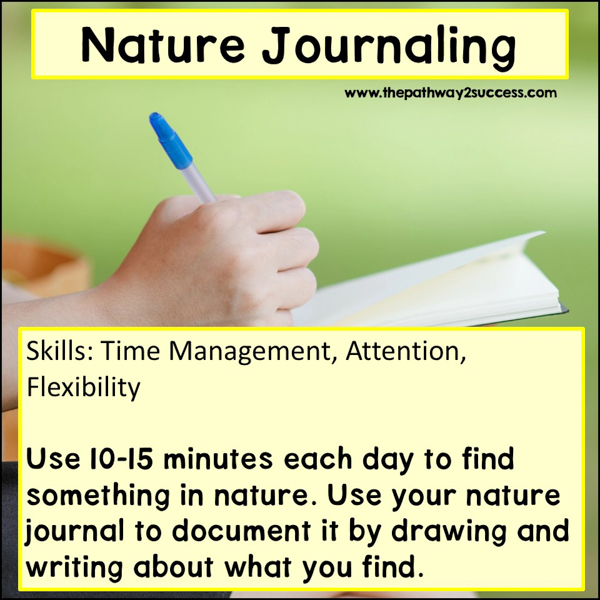
Journaling, scavenger hunts, color-matching exercises, and nature-based art projects offer additional avenues for reinforcing executive functioning. Whether students are cataloging shades of green and blue, sketching a flowing river, or meticulously tracking the growth of a plant over weeks, these practices demand heightened observation, organization, and metacognitive reflection. Group clean-up initiatives further expand these benefits by coupling organization and task management with community responsibility and empathy.
Ultimately, integrating nature into developmental frameworks offers a holistic approach to strengthening the brain’s executive control system. By grounding cognitive exercises in the sights, sounds, and rhythms of the natural world, educators and caregivers can provide children and teens with engaging, evidence-backed pathways toward lifelong mental health and self-regulation.