
When shopping for a reliable personal emergency response system, navigating the crowded marketplace can be an overwhelming task for seniors and their families. In the 2026 landscape of medical alert systems, Medical Guardian remains a heavy presence, commanding the attention of consumers with a robust user base of approximately 625,000 active subscribers. Heavily marketed across digital platforms and television to older adults and family caregivers alike, the company occupies a unique position in the assistive technology sector. However, industry analysts and consumer advocates frequently emphasize the importance of looking past polished advertising campaigns to determine whether the brand’s distinct price tag aligns with individual household needs and financial realities.
For families evaluating their options, choosing Medical Guardian often involves paying a slight financial premium for several specific advantages, including perceived brand confidence, sleek device aesthetics, flexible cancellation policies, and access to a proprietary mobile caregiver application. For many households, these added benefits justify the investment, though experts note that this calculation remains deeply personal. Consumers who require nothing more than a basic, functional button to call for help in an emergency can explore less expensive alternatives on the market. Even so, basic service plans across the broader industry typically fall within a comparable monthly price range, meaning dramatic cost savings are rarely found by simply swapping out basic hardware.
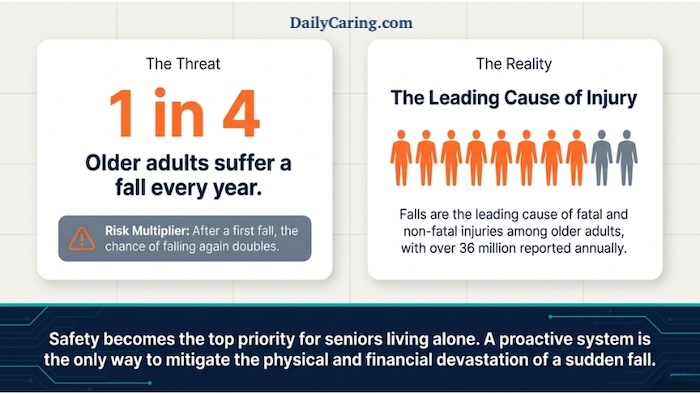
The value proposition shifts significantly for long-distance caregivers and families managing complex care routines. For those who demand precise GPS tracking and advanced digital monitoring capabilities to keep tabs on a loved one from afar, Medical Guardian’s hardware ecosystem stands out as exceptionally capable. This technological edge arrives at a time when safety remains a paramount concern for aging households. According data from the Centers for Disease Control and Prevention, over 36 million falls are reported among older adults in the United States each year, establishing accidental falls as a leading cause of both fatal and non-fatal injuries. Investing in a reliable personal emergency response system represents a critical safety net, prompting experts to encourage thorough research to match specific lifestyle habits and budgetary constraints with the right provider.
Medical Guardian Products and Their Monthly Costs
Unlike companies that offer a simplified, flat-rate pricing model across all equipment, Medical Guardian structures its catalog by dividing hardware into distinct categories. Furthermore, nearly every product tier requires customers to cover an upfront equipment fee alongside their ongoing monthly service charges.
The entry-level MGHome Cellular model relies on traditional cellular networks through AT&T or Verizon, carrying a base monthly cost of $38.95 accompanied by an upfront equipment fee of $149.95. For users seeking broader mobility, the MGMini integrates cellular connectivity, Wi-Fi, and GPS tracking, raising the base monthly cost to $43.95 with a matching $149.95 upfront equipment fee. Stepping up to the MGMini Lite, which also incorporates cellular, Wi-Fi, and GPS features tailored for different physical profiles, brings the base monthly cost to $46.95 alongside the same $149.95 equipment charge. Finally, the MGMove Smartwatch option, which packages cellular, Wi-Fi, and GPS capabilities into a wrist-worn design, carries a base monthly cost of $42.95 and requires a higher upfront equipment fee of $199.95.
Choose the Right Medical Guardian Alert System to Fit Your Lifestyle
Decades ago, medical alert systems were universally designed as rigid, one-size-fits-all devices that frequently faced rejection from seniors reluctant to display visible signs of medical dependency. Today, the marketplace reflects a much higher degree of specialization, with modern features catering directly to specific daily routines, physical preferences, and personal aesthetics.

The MGHome Cellular system is engineered specifically for homebound adults whose daily routines center primarily around the house and immediate surroundings like a garden or porch. Because the stationary base station provides ample in-home coverage, users are spared the inconvenience of remembering to charge a mobile battery every few days.
By contrast, the MGMini is built for active seniors who maintain a busy schedule of driving, running errands, or pursuing outdoor hobbies. Utilizing built-in GPS and cellular data, this standard mobile pendant allows emergency dispatchers to pinpoint a user’s exact geographical location anywhere across the United States.
For petite individuals or those sensitive to physical strain, the MGMini Lite offers a wrist-worn alternative that weighs a fraction of an ounce, successfully eliminating the neck fatigue and discomfort sometimes associated with traditional pendant lanyards.

Meanwhile, the MGMove Smartwatch is tailored directly for style-conscious users who reject the traditional aesthetic of medical hardware. By completely masking the appearance of an emergency help button within the familiar form factor of a digital smartwatch, the device effectively mitigates the social stigma that often discourages aging adults from wearing safety equipment consistently.
Is Fall Detection Worth It?
Among the advanced technologies shaping the modern market, automated fall detection has become a major focal point for families evaluating personal emergency response systems. This capability relies on internal sensors designed to recognize the sudden physical dynamics of a fall and automatically initiate an emergency call to the monitoring center, providing a vital layer of protection even if the user becomes incapacitated and is unable to press the alert button manually.
Major providers typically offer fall detection as an optional add-on service rather than a standard inclusion, with Medical Guardian pricing the feature at an additional ten dollars per month. Given public health statistics confirming that falls occur with alarming regularity among older adults and remain the leading catalyst for serious senior injuries, many safety advocates view the technology as a worthwhile investment. For households whose budgets can comfortably accommodate the monthly surcharge, adding fall detection provides an extra measure of security against unexpected accidents.
The Bottom Line on Medical Guardian Reviews for 2026
Industry evaluations indicate that Medical Guardian is generally unsuited for seniors operating on strict financial restrictions. Instead, it functions as a premium consumer product engineered explicitly for long-distance caregivers and families who are willing to pay extra for granular tracking data, sophisticated companion applications, and sleek hardware designs.
Consumers who do not plan to utilize the company’s proprietary mobile application to monitor their loved one’s status risk paying for advanced digital features that will ultimately go unused. However, for those who value the combination of premium safety technology, responsive customer support, and freedom from long-term service contracts, the system delivers reliable performance. Independent testing of Medical Guardian’s equipment portfolio confirms that the devices operate effectively in practice, reinforcing the company’s reputation as a trustworthy provider backed by solid organizational leadership and customer service infrastructure.



