
When shopping for a medical alert system, navigating the crowded marketplace can feel overwhelming for seniors and their families. Among the leading providers in 2026, Medical Guardian remains impossible to ignore. Backed by a large user base of approximately 625,000 individuals who rely on its services daily, the company is heavily marketed toward aging adults and their caregivers. However, industry analysts and consumer advocates emphasize the importance of looking past the advertising veneer to determine whether the platform’s price tag is genuinely justified for unique household needs.
When evaluating Medical Guardian Personal Emergency Response Systems (PERS), consumers are essentially paying a slight premium for confidence, modern aesthetics, flexible cancellation policies, and a proprietary mobile caregiver app. While industry experts suggest that this premium can be well worth the investment, the decision ultimately rests on individual household circumstances and budget constraints. For families who simply need a basic button that initiates a call for help, less expensive alternatives exist on the market, though standard service plans across the industry generally occupy a comparable price range.
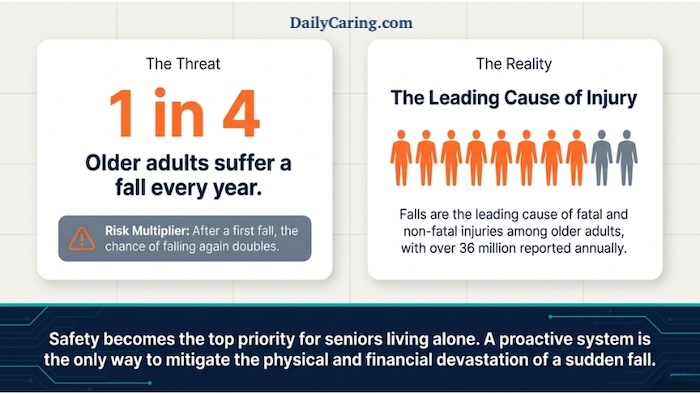
For long-distance caregivers who demand precise GPS tracking and advanced digital monitoring capabilities, Medical Guardian’s hardware stands out as one of the most capable offerings currently available. According to data from the Centers for Disease Control and Prevention (CDC), over 36 million falls are reported among older adults each year, making a reliable emergency response system a critical investment. Because these tools play such a vital role in senior safety, experts recommend shopping around to find the exact fit for a specific lifestyle and financial plan.
Medical Guardian Products and Their Monthly Costs
Medical Guardian does not utilize a simple, flat-rate pricing structure. Instead, the company categorizes its hardware into distinct models, and nearly every option requires an upfront equipment fee alongside a monthly subscription cost.
The MGHome Cellular model relies on a traditional cellular connection utilizing either AT&T or Verizon networks. It carries a base monthly cost of $38.95, accompanied by an upfront equipment fee of $149.95. For users seeking broader mobility, the MGMini integrates cellular, Wi-Fi, and GPS connectivity, featuring a base monthly cost of $43.95 and a $149.95 upfront equipment fee. A variation of this mobile unit, the MGMini Lite, is designed with similar cellular, Wi-Fi, and GPS features and costs $46.95 per month with a $149.95 upfront equipment fee. Finally, the MGMove Smartwatch provides cellular, Wi-Fi, and GPS tracking in a wearable watch format, priced at $42.95 per month with a $199.95 upfront equipment fee.
Choosing the Right Medical Guardian Alert System to Fit Your Lifestyle
Historically, medical alert systems were treated as one-size-fits-all devices. In today’s market, however, significant differences exist among medical alert systems and the providers behind them. Modern safety devices increasingly cater to specific user personas and daily routines.

The MGHome Cellular system is built primarily for homebound adults. If a user’s daily routine consists primarily of moving between the house and the garden, the base station provides ample in-home coverage without requiring the user to charge a mobile battery every few days.
By contrast, the MGMini is engineered for active seniors. If an aging adult still drives, plays golf, or runs daily errands, this standard mobile pendant utilizes integrated GPS and cellular data to ensure emergency dispatchers can pinpoint an exact location anywhere in the United States.
For petite individuals, the MGMini Lite offers an alternative solution. Weighing a fraction of an ounce, this wrist-worn device removes the physical strain often associated with traditional neck lanyards.

Meanwhile, the MGMove Smartwatch is tailored for style-conscious users. By completely masking the appearance of traditional medical monitoring equipment, it serves as a top choice for aging adults who might otherwise refuse to wear a standard help button due to social stigma or self-consciousness.
Is Fall Detection Worth the Additional Investment?
Fall detection technology remains a prominent topic of discussion among families evaluating medical alert systems. This advanced feature is designed to sense a sudden descent and automatically trigger an emergency call to a monitoring center, even if the user is incapacitated or unable to manually press their alert button.
With major medical alert providers, fall detection is typically offered as an add-on service. Medical Guardian prices its fall detection service at an additional $10 per month. Given that statistical data highlights falls as a frequent occurrence among older adults and the leading cause of both fatal and non-fatal injuries within the demographic, many households find the added layer of security worthwhile if their budget permits.
Considerations When Shopping for a Medical Alert System
Purchasing a medical alert system requires careful evaluation beyond the surface-level features and monthly fees. Industry observers note that consumers should remain vigilant regarding contract terms, hidden activation fees, equipment return policies, and the reliability of cellular coverage providers in their specific geographic region. While Medical Guardian avoids long-term contracts—allowing users the freedom to cancel when they wish—understanding the total cost of ownership, including equipment fees and optional add-ons like fall detection, remains essential for avoiding unexpected expenses.
The Bottom Line on Medical Guardian
Medical Guardian is positioned as a premium product tailored particularly for long-distance caregivers and families who are willing to pay for granular tracking data, modern hardware design, and comprehensive mobile applications. Analysts point out that households with strict budget limitations or those who do not plan to utilize digital companion apps may find that simpler, lower-cost alternatives better suit their needs. However, for those seeking reliable equipment backed by positive customer service and flexible terms, Medical Guardian continues to be a trusted option in the senior safety sector.



