
Mindfulness has long been celebrated for its ability to cultivate inner calm and relaxation in individuals of all ages. However, a growing body of educational and developmental insights suggests that mindful practices play an equally critical role in sharpening our executive functioning skills. By turning attention inward to focus exclusively on the present moment, educators, parents, and caregivers can harness mindfulness to provide vital support to children and teenagers who need an extra boost with fundamental cognitive capabilities, including attention, self-control, and working memory.
Executive functioning skills serve as the foundational, brain-based abilities that individuals rely on daily to plan ahead, initiate tasks, manage time effectively, and work through challenges. People use these cognitive mechanisms continuously, frequently without conscious thought. When these executive functioning skills are strong, individuals can navigate daily demands and reach their goals seamlessly. Conversely, when these areas require support, children and young adults may struggle with organization, emotional reactions, and task completion.
Practicing mindfulness has been shown to strengthen several distinct executive functioning skills simultaneously. This connection is rooted in human neurobiology: when individuals are calm and centered, the "thinking brain" is activated, allowing for better decision-making, enhanced focus, and more effective problem-solving during difficult moments. Because mindfulness is a simple, accessible, and engaging activity, incorporating these practices into daily routines offers a practical, evidence-based strategy for supporting youth development across various educational and home environments.
The Link Between Mindfulness and Executive Functioning
To understand how mindfulness impacts young minds, it is essential to examine the core components of executive functioning and how mindful habits directly influence them.
Attention forms the first major pillar of this relationship. Defined as the ability to focus on a person, task, or idea for a sustained period, attention is utilized by children and teens in nearly every daily endeavor, from maintaining a thoughtful conversation with a peer to staying focused on a complex academic assignment. Mindfulness exercises directly train this attentional muscle. By dedicating time to focus solely on the sensation of breathing, an individual trains the mind to anchor itself in the present moment. Because human attention naturally drifts, the core practice lies in gently bringing that focus back to the breath, thereby strengthening attentional capacity and mindfulness resilience over time.
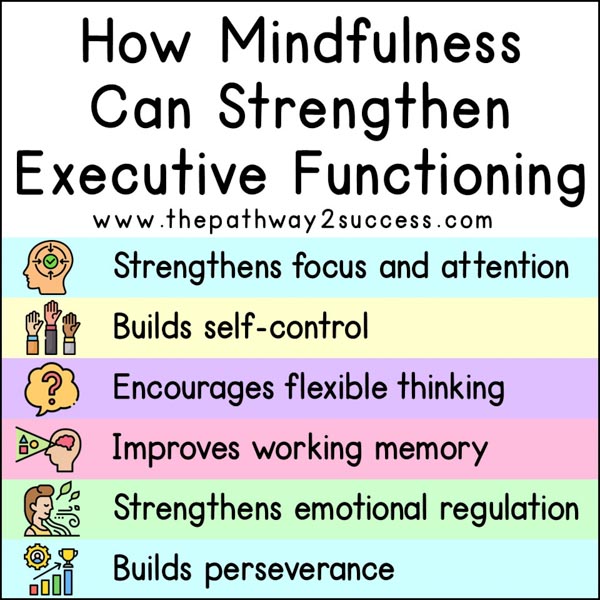
Self-control, another crucial executive function, involves the ability to stop and think before making a decision, relying on cognitive inhibition to pause rather than acting purely on impulse. Mindfulness actively fosters self-control by creating a brief space between a stimulus and a reaction. Regular practice expands this window of awareness. For example, a teenager walking down a school hallway and passing a decorated birthday locker might experience an immediate, impulsive urge to interfere with the display. With established mindfulness habits, that same student is better equipped to pause, take a breath, and let the impulse pass before reacting, supporting both short-term choices and long-term behavioral development.
Emotional regulation is similarly intertwined with these practices. Defined as the capacity to understand and manage daily emotions, emotional regulation establishes the baseline for how individuals feel, think, and act throughout the day. Mindfulness helps individuals become acutely aware of their emotional states without becoming overwhelmed by them. This heightened self-awareness sets the stage for appropriate management techniques. When a student feels upset after being excluded from a group project, for instance, a few mindful deep breaths can center the individual, allowing them to approach problem-solving in a healthier manner rather than resorting to immediate outbursts or withdrawal.
Working memory, the cognitive ability to hold and manipulate information simultaneously, benefits significantly from reduced mental clutter. People rely on working memory to process multi-step instructions, recall narrative details, and solve mathematical equations. Regular mindfulness practice helps clear extraneous thoughts, creating a psychological "clean slate" for incoming information. A student who begins the morning with mindfulness practices enters the classroom with a less congested mental workspace, making it easier to retain and execute complex teacher instructions.
Flexible thinking and perseverance round out the primary executive functioning skills influenced by mindfulness. Flexible thinking allows individuals to view situations from multiple perspectives, consider alternative ideas, and adapt to novel circumstances. By encouraging non-judgmental acceptance of thoughts and experiences, mindfulness helps learners accept challenging situations without immediate resistance, facilitating personal growth when receiving critical feedback. Similarly, perseverance—the determination to stick with a difficult task—is exercised every time an individual maintains a mindfulness practice despite a wandering mind, translating directly to greater academic and personal resilience in the face of obstacles.
Integrating Mindfulness Strategies into Daily Life
Before introducing mindfulness initiatives to children and teens, educators and parents benefit from discussing the underlying benefits. Explaining that mindfulness is a practical tool to help them feel and perform their best—whether preparing for a public speaking presentation or maintaining focus during an athletic event—builds essential buy-in. While these scenarios provide concrete examples, framing mindfulness as a versatile, all-purpose strategy ensures young learners understand its broad utility.
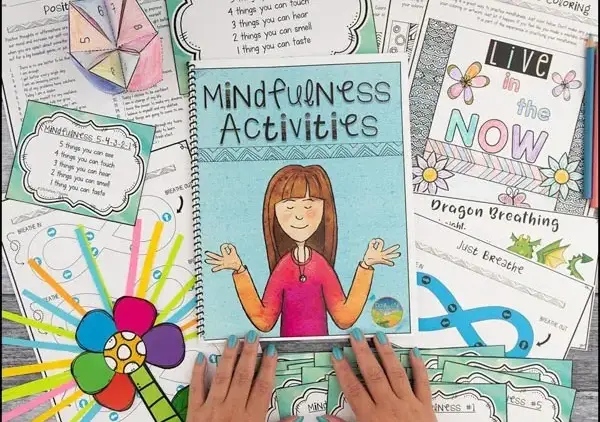
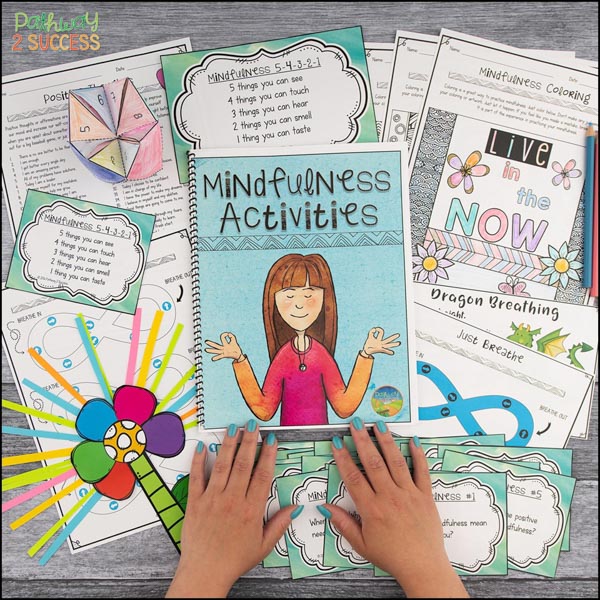
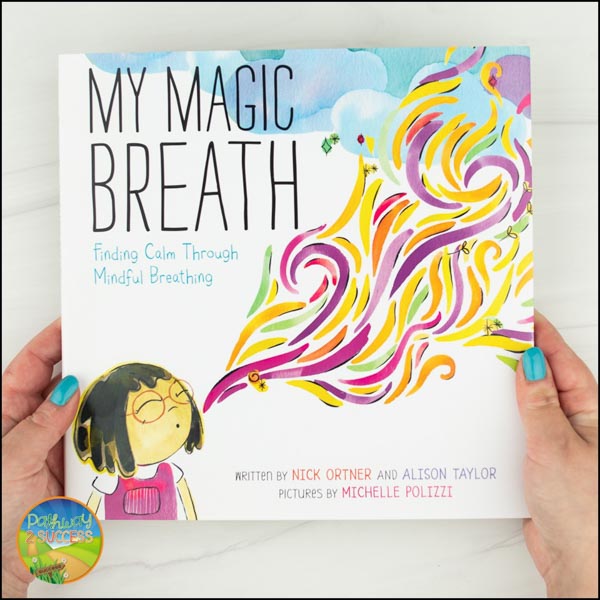
Various practical approaches can be woven into everyday routines to support these cognitive skills. Dedicated lessons and hands-on activities provide a structured framework for teaching self-regulation through crafts, discussion cards, and visual posters that can be revisited throughout the academic year. Literature also serves as an effective medium, with numerous picture books and narrative texts offering natural springboards for discussions around mindfulness, even when read with older students.

Mindful breathing remains the foundational practice of any mindfulness routine, offering a portable strategy that children and teens can employ anywhere. Simple breathing exercises can be expanded into engaging activities such as guided imagery or pacing techniques that function effectively as cognitive brain breaks between rigorous academic tasks. Similarly, mindful coloring allows individuals to direct their attention entirely to an artistic process in the present moment, prioritizing engagement and breathing over artistic perfection.
Additional strategies include incorporating gentle yoga and stretching movements, starting the day with mindful journal writing prompts, and engaging in outdoor observation. Outdoor environments naturally lend themselves to attentive awareness through activities such as nature walks, gardening, or cloud-watching. Furthermore, introducing mindful affirmations and encouraging mindful observance of everyday objects—such as focusing entirely on the textures, colors, and details of a common classroom item—helps reinforce attentional control and self-regulation muscles over time.



