

As soon as that lingering stare locked onto John, her lips caught between a downturned pout and a sympathetic smile, the expectation in the air was palpable. It was the prelude to one of those all-too-familiar inspirational affirmations that frequently shadow the disability experience—something along the lines of "you’re an angel." Having already grown accustomed to navigating the world adjacent to the disability experience with Robert, the assumption was that the situation was entirely predictable. Yet, what was said next shattered those expectations completely, catching everyone entirely off-guard.
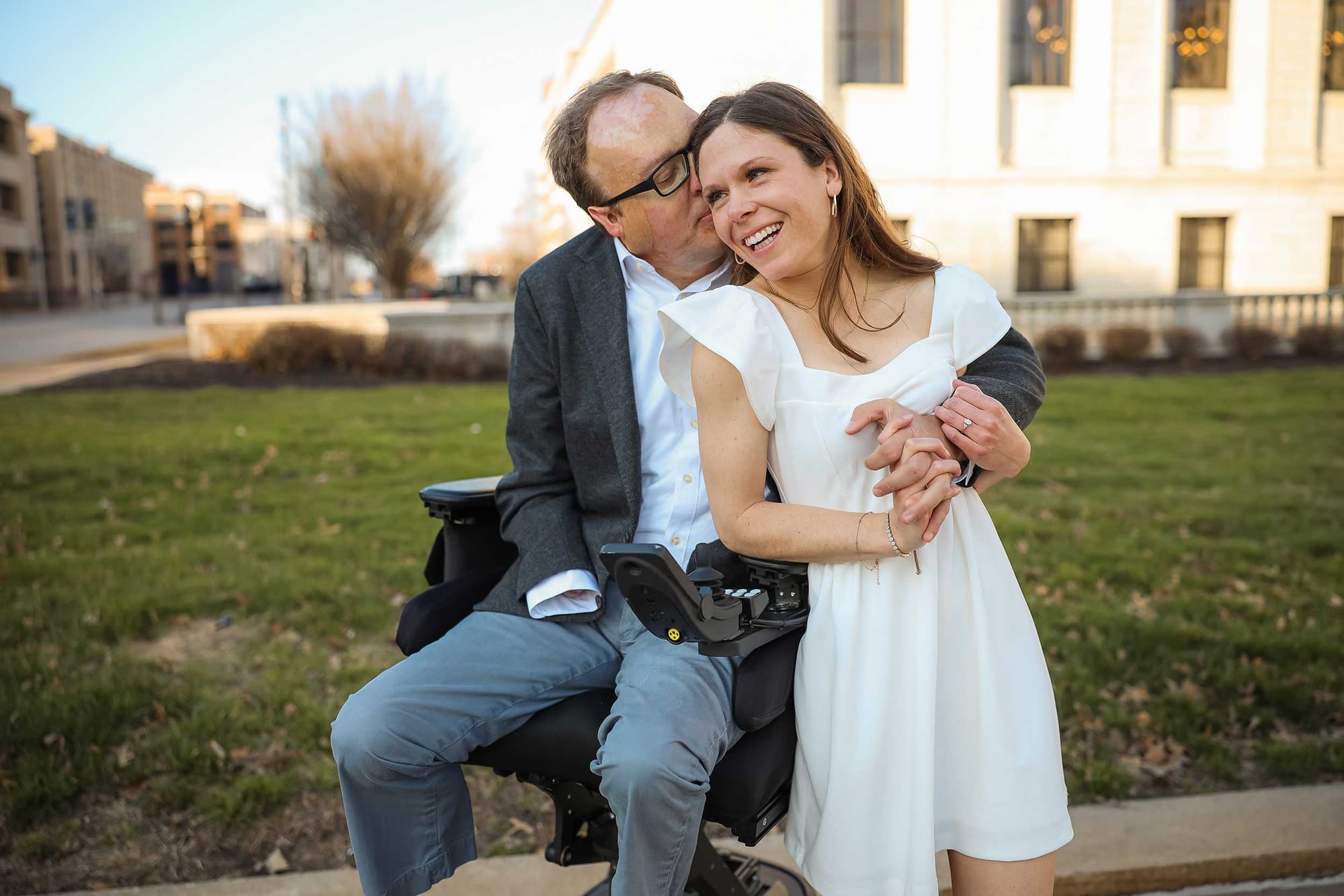
To understand the full picture, the scene requires a bit more context. John and Stevie were on their second date, enjoying a quiet breakfast before heading out to spend the day at the Knoxville Museum of Art. Their first in-person date had taken place only the night before, but the connection between them had already carried them well past the introductory stages. Built on a foundation of a deep friendship and an ongoing long-distance relationship, the morning was filled with the simple, genuine excitement of sharing quality time together.
That peaceful atmosphere was abruptly broken when a staff member interrupted their meal. She expressed profound amazement that John was not only responsible for his own breakfast but had actually managed to retrieve his own juice from the serving station. Then came the remark that stopped time: "He doesn’t even have a whole body!" she exclaimed.
The comment was so pointed and so incredibly specific that it rendered them momentarily speechless. Stifling a spreading grin, Stevie offered a curt head nod and briskly left the restaurant, barely making it outside the front door before bursting into the first of many giggle-fits that John would come to witness throughout their relationship.
Finding humor in the absolute absurdity of everyday ignorance has become a standard dynamic for the couple. It is an approach that regularly elicits an eye-roll from Robert, though they attribute this reaction to normal teen angst rather than genuine disapproval. They know that Robert ultimately benefits from the shared humor they use to process these everyday moments.
Reflecting on that interaction afterward, Stevie often tries to visualize whether she would have reacted differently if she had been with Robert at the time, or if she would have expected Robert to respond differently altogether. Teaching a teenager how to navigate and respond to ableism is a continuous, mentally taxing endeavor. The process is deeply nuanced, highly complex, and frequently runs counter to many of the unspoken social rules that individuals unconsciously adopt while learning to function within society. Uncovering these hidden biases and equipping Robert with the tools to address ableism stands as one of the most recurring and vital conversations in their parenthood journey.
Society often dictates contradictory expectations. For instance, it is generally considered rude to ignore people, yet Stevie has taught Robert that he has full permission to simply walk away when faced with intrusive, condescending, or infantilizing comments.
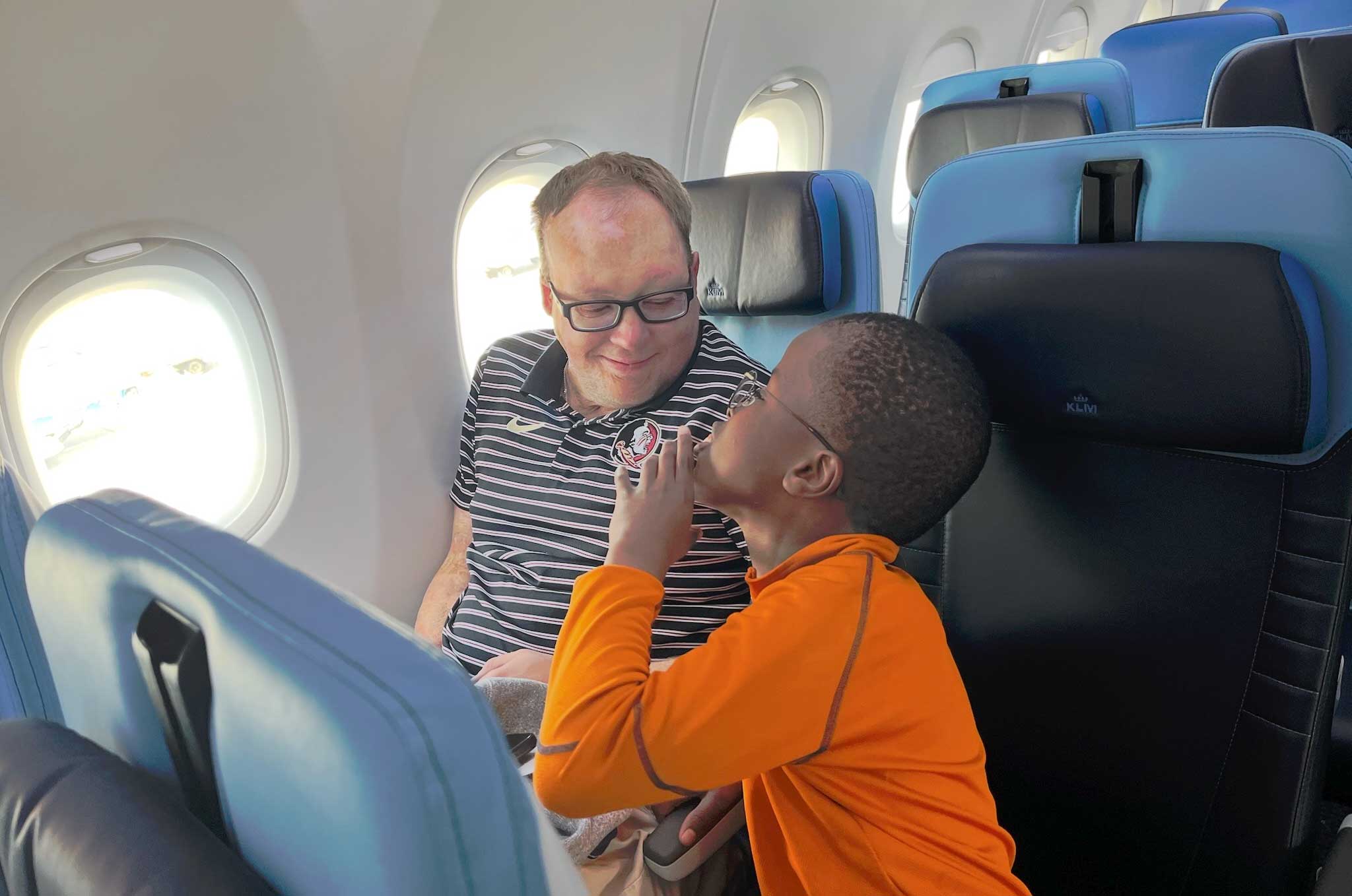
Similarly, people are traditionally conditioned to automatically submit to authority figures without question. However, John models and helps Robert practice prioritizing his own needs while critically evaluating which claims to authority are actually valid. A prime example occurs when airline wheelchair assistance staff demand that John and Robert exit an airplane before their personal wheelchairs have been returned to the jetbridge. Recognizing the unreasonable and inaccessible nature of the demand, they rightly decline to comply. John has documented these experiences extensively, including critical advice on how passengers should handle situations where airline staff threaten disabled travelers with police intervention.
External pressures also manifest in the form of unwarranted demands for personal information. People frequently expect disabled individuals to offer detailed explanations regarding their mobility aids and accommodations. To combat this intrusion, the family maintains a set list of prepared responses—such as firmly stating, "we don’t share personal medical information"—which are practiced and ready for deployment when needed.

Another deeply ingrained social expectation is the automatic delivery of gratitude. "Thank you" is universally taught as the mandatory response whenever someone offers help. However, Stevie has explicitly told Robert that he is entirely justified in pulling away without so much as a glance if an unauthorized stranger tries to grab his wheelchair. This dynamic of forced gratitude for basic accessibility was explored in depth in Stevie’s article, Reasonable Accommodations and How Much Gratitude is Too Much?, which questions whether thanksgiving is truly warranted when disabled individuals are merely granted equal access.
Honesty remains a core value within their household, with one delightfully absurd exception: inventing entirely fictitious, wildly exaggerated tales about how Robert or John acquired their disabilities. To shut down intrusive and repetitive "What happened to you?" questions from curious strangers, John has actually resorted to explaining that his leg amputations were the result of a dramatic shark attack.
Some critics might argue that parenting would be simpler if they adopted a single, uniform response strategy for Robert, or if they removed his agency in responding to avoid how he might be perceived by the public. But such an approach carries a heavy cost. Every decision made in the present must be weighed against its future impact. Parents are often forced to choose between helping mold a teenager who strictly follows societal rules and fits comfortably into an unspoken mold—at the direct expense of his personal dignity—versus raising a young person who may ruffle feathers but remains fiercely true to himself and capable of self-advocacy. For Stevie and John, the greater good in that equation is glaringly obvious.
Even so, tackling such a heavy and seemingly lofty social issue in the context of daily life can feel genuinely overwhelming. Responding to widespread systemic ableism on a personal, day-to-day level is exhausting work. To maintain focus and prevent burnout, Stevie relies on specific mental shifts that help guide her perspective.
One major mental shift involves changing how she views the work itself. Stevie has come to think of the fight against ableism much like doing the laundry: it is a continuous chore with no definitive endpoint, and accepting that reality is essential. Households are always caught in some stage of the laundry cycle—piling up dirty clothes, washing, drying, folding, and finally putting garments away. At times, the entire process is avoided for an embarrassing amount of time. At other times, there is a sudden push to power through multiple loads, dedicating an entire day to catching up. Yet, even when caught up, the clothes currently being worn will eventually need to be washed, and the cycle continues.
Recognizing this cyclical nature, rather than viewing the work through a rigid check-box mentality, provides a much more balanced viewpoint. Success does not require the complete and permanent eradication of ableism. Instead, the family addresses it incrementally—doing a little here, a little there, learning and practicing one response, and occasionally pivoting to an entirely new approach. When exhaustion sets in or bandwidth runs low, taking a break is treated as a natural part of the human experience.

Another crucial component of their strategy is continuous discussion. The primary takeaway for parents deciding how to teach their children to respond to ableism is the importance of consistently asking questions and examining responses together. Stevie is constantly engaging Robert with inquiries like, "What can we learn from this?", "What worked and what didn’t?", or "I noticed ___, how did that make you feel?" Because Robert’s responses and emotional processing evolve alongside his personal growth, his answers occasionally surprise her. The ultimate goal is not to discover a single magic fix, but rather to engage in collaborative problem-solving.
Rehearsing potential scenarios is also a key part of their preparation. Once a recurring problem is identified, the family actively practices their responses. They have used stuffed animals, acted out various hypothetical interactions, and even collaborated on drawing a comic book detailing a strategy they wanted to implement. For instance, boarding commercial airplanes historically served as a constant source of stress. Assistance staff frequently made assumptions regarding Robert’s physical abilities, attempting to move his wheelchair or make unilateral decisions about the boarding process without consulting him.
To address this, the family discussed the most effective approach and practiced it at home. Stevie would roleplay as an overzealous assistance staff member attempting to grab the wheelchair without asking, while Robert practiced responding clearly, calmly, and respectfully. This repetition builds essential muscle memory, ensuring that both maintain their composure and know how to act when facing high-stress environments in public.
Navigating the world as a family requires drawing upon a wide array of skills to counter ableism, yet there are still moments when they stumble, second-guessing whether a different approach would have yielded a better result. The constant pressure to evaluate everyday social interactions takes a mental toll. John and Stevie also recognize that what is deemed socially acceptable in response to ableism shifts depending on numerous intersecting factors, including age, race, gender, and the specific nature of a disability, all of which heavily influence the preconceived assumptions held by the public. By combining advanced planning with a willingness to experiment with different communication strategies, they have successfully helped bolster Robert’s confidence in standing up against ableism.



