
For individuals and families affected by Tuberous Sclerosis Complex (TSC), daily life often brings a complex array of challenges that extend far beyond physical health concerns. Among the most intricate and emotionally demanding aspects of the condition are behaviours that can be challenging, ranging from sudden tantrums to episodes of physical harm or self-destructive actions. Gaining a deeper understanding of why these behaviours manifest, identifying their unique triggers, and learning effective management strategies can profoundly improve the quality of life for both the individual and their caregivers.
What are behaviours that can be challenging?
In clinical and care settings, a behaviour is classified as challenging when it places the individual or those around them at significant risk of physical or emotional harm. These actions can manifest in various ways, including outward aggression toward others, acts of self-harm, or destructive episodes such as breaking, throwing, or damaging objects. While individuals living with learning difficulties or developmental disabilities experience these challenges more frequently, it is essential to recognize that anyone can display such behaviours under intense stress or distress.
Within the context of Tuberous Sclerosis Complex, these actions are frequently understood as a component of Tuberous Sclerosis-Associated Neuropsychiatric Disorders, commonly known as TAND. TAND encompasses a wide spectrum of behavioral, psychiatric, intellectual, and neuropsychological challenges that can affect individuals diagnosed with TSC. Recognizing that these actions are often a clinical manifestation of an underlying neurological condition, rather than a deliberate choice or behavioral failing, is a crucial first step for families and care networks seeking to address them constructively.
Why do people exhibit behaviours that can be challenging?
The roots of challenging behaviours are deeply individualized, with triggers varying widely from person to person. Often, an episode is precipitated by an overwhelming or stressful environment, such as a crowded room with excessive noise and bright lights. In other instances, the behaviour serves as an alternative form of communication, functioning as an urgent attempt to express a basic physical need like hunger, thirst, or discomfort. For individuals who face communication barriers or are entirely non-verbal, challenging behaviours can frequently become an outlet for pent-up frustrations, anxiety, or intense emotional distress that they cannot otherwise articulate.
When considering the daily obstacles faced by someone who lacks the verbal capacity to articulate their desires, needs, or boundaries, these challenging moments take on a clearer context. What may outwardly appear as unprovoked aggression or a sudden tantrum is frequently a distress signal from an individual who feels unheard, overwhelmed, or unable to navigate their immediate surroundings. By shifting the perspective from punishment or correction to understanding and interpretation, caregivers can begin to address the root causes of the distress rather than merely reacting to the outward manifestation.
How can I predict behaviours that can be challenging?
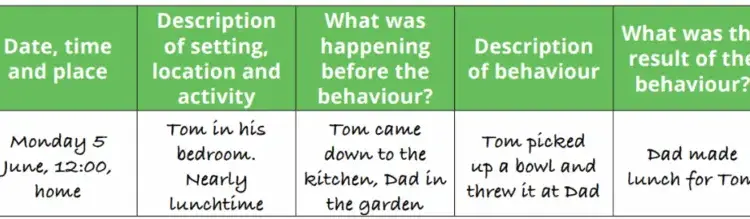
Anticipating challenging episodes before they fully materialize requires careful observation and systematic record-keeping. To better predict when these behaviours might occur, caregivers and support networks often maintain detailed logs of each incident. Important details to document include the exact location of the occurrence, the specific environmental events leading up to the behavior, the subsequent reactions of others in the vicinity, and a clear, objective description of the behavior itself.

A widely recommended and practical tool for this purpose is the ABC chart, which breaks down incidents into Antecedents, meaning the events happening immediately before the behavior; the Behavior itself; and the Consequences, or what happens immediately afterward. By systematically tracking these elements over time, families and professionals can identify recurring patterns, pinpoint specific environmental or emotional triggers, and develop proactive strategies to modify the surrounding environment or intervene earlier in the process.
How can I reduce behaviours that can be challenging?
Most individuals exhibit a personal early warning system that signals the gradual onset of a challenging behaviour. In the early stages, these indicators can be subtle and difficult to spot, often manifesting as minor repetitive actions, specific vocalizations, or sudden muscle tensing. Utilizing tools like the ABC chart can train caregivers to become more attuned to these minute shifts in demeanor. Recognizing these early warning signs allows support networks to intervene pre-emptively, altering the environment or providing reassurance to defuse the situation before it escalates into a crisis.
How can I support someone during the behaviour?
When a challenging behaviour is actively occurring, the demeanor of the caregiver plays a critical role in determining how the situation unfolds. It is vital to strive for composure, even when the behavior feels personally challenging or distressing. Adopting a gentle facial expression and speaking in a calm, measured voice can encourage the individual to mirror that relative tranquility. Caregivers should avoid overwhelming the person with a barrage of questions or demands and remain prepared to offer physical space if stepping back appears to help de-escalate the tension.
If the situation rapidly escalates to a level that poses an immediate danger to the individual or others, seeking emergency intervention is necessary. Because navigating these intense moments takes a heavy emotional toll, it is equally important for caregivers to practice self-compassion and acknowledge the difficulty of their role.
How can I support the person after the behaviour?
The aftermath of a challenging incident is often characterized by a tense and emotionally charged atmosphere for everyone involved. Facilitating a transition to a different environment or introducing a calming, distinct activity—such as taking a quiet walk—can be therapeutic and help reset the emotional tone of the room. Once a sense of calm has been fully restored, taking time to reflect on the incident can help prepare all parties for future occurrences, utilizing the insights gained through tools like the ABC chart.
Because navigating challenging behaviours can feel isolating and overwhelming for families and caregivers, professional guidance and a compassionate listening ear remain vital resources. Individuals seeking further information or support regarding behaviours associated with Tuberous Sclerosis Complex can reach out to the TSA Support Line by calling 0808 801 0700, sending an email to [email protected], or utilizing the available webchat services.



