As health insurance shoppers prepare for the upcoming plan year, major shifts are underway regarding how consumer resources are organized and distributed. The comprehensive set of Affordable Care Act (ACA) frequently asked questions has been officially discontinued and will no longer receive updates. In its place, officials have curated the eight most popular ACA FAQs, complete with Spanish translations, updated as of September 25, 2026, to guide individuals through the complexities of the ACA 2027 Marketplace plan year.
While these updated resources reflect current federal and state projections, experts continue to emphasize that policyholders should contact HealthCare.gov or their respective state-based health insurance Marketplace directly for personalized guidance tailored to their individual circumstances.
What Are Premium Tax Credits and How Do They Work?
At the core of affordability for millions of Americans are premium tax credits, which directly reduce the out-of-pocket costs for most Marketplace health plans. The financial assistance an enrollee receives depends heavily on two primary factors: household income and the prevailing cost of Marketplace health plans within their specific geographic region.
The Marketplace calculates an expected contribution that a consumer is required to pay toward a mid-range, or Silver, benchmark plan. This expected contribution operates on a sliding scale based on projected 2027 income. Enrollees with lower incomes receive more substantial financial assistance, while those with higher incomes see a scaled reduction in subsidies. The difference between the actual premium of the benchmark plan and the consumer’s calculated expected contribution determines the total amount of the tax credit.
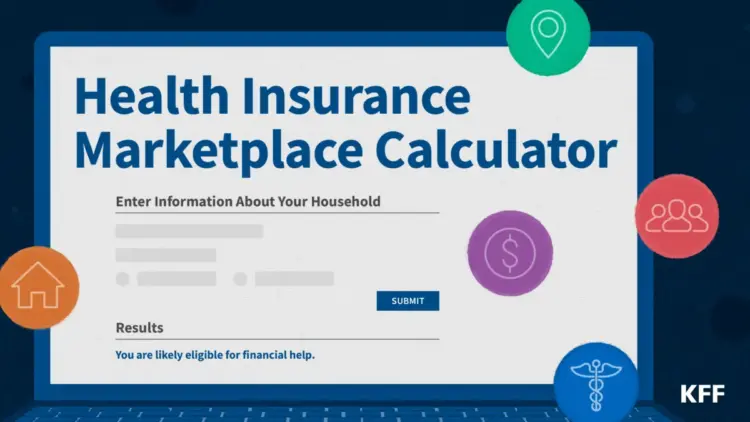
Consumers are never required to pay more than the actual premium for the plan they choose, and they can apply their calculated tax credit amount toward any Bronze, Silver, Gold, or Platinum plan offered through the Marketplace. However, these credits cannot be applied toward Catastrophic plans. To help consumers gauge their potential assistance, specialized tools like the Marketplace subsidy calculator offer reliable estimates.
Tax credits can be claimed as a lump sum at the end of the year, or consumers can opt for advance premium tax credits based on estimated income for the upcoming year. Selecting an advance credit means the federal government pays the subsidy directly to the insurance provider each month, leaving the insurer to bill the policyholder only for the remaining balance.
Because incomes can fluctuate, providing an accurate estimate is vital. When filing federal income tax returns the following year, the Internal Revenue Service (IRS) reconciles actual income against the advance credits received. Underestimating income and claiming excess tax credits results in a requirement to repay the difference to the IRS. Conversely, failing to claim the full credit entitled during the year allows filers to claim the remaining balance when submitting their tax return. Enrollees are strongly advised to report any mid-year income changes immediately to the Marketplace to adjust their credits and prevent burdensome repayments at tax time.
Income Eligibility and Federal Poverty Levels
Eligibility for these critical financial lifelines begins with the federal poverty level (FPL). Premium tax credits are available to individuals purchasing Marketplace coverage whose household income meets or exceeds this threshold.
When determining this eligibility, the Marketplace relies on Modified Adjusted Gross Income, commonly referred to as MAGI. Specific guidelines dictate which income streams count toward MAGI, ensuring a standardized assessment of financial need across different households.
Who Is Eligible for Marketplace Premium Tax Credits?
Beyond income thresholds, citizenship and immigration status play a decisive role in determining who can access subsidized coverage. Premium tax credits are available to U.S. citizens and a defined group of lawfully present immigrants who purchase Marketplace plans and maintain an income of at least 100% of the federal poverty level. For 2027, this baseline translates to $15,960 for a single adult or $33,000 for a family of four.
However, significant policy shifts are taking effect. Starting in 2027, eligibility for premium tax credits will be eliminated for several categories of lawfully present immigrants under the 2025 tax and budget law, leaving only specific immigration statuses eligible for subsidized coverage.
Furthermore, to qualify for premium tax credits, individuals must not be eligible for public coverage programs—such as Medicaid, the Children’s Health Insurance Program (CHIP), Medicare, or military health coverage—and must not have access to an affordable, qualifying health insurance plan through an employer. An exception exists if an employer-sponsored plan is deemed unaffordable because the employee’s share of the premium exceeds 10.22% of their income in 2027, or if the employer plan fails to meet minimum value standards. Individuals with incomes falling below 100% of the FPL typically do not qualify for premium tax credits and must check with their state Marketplace for alternative safety-net options.
Buying Insurance Outside of the Marketplace
Consumers also have the option to purchase health insurance outside of the Marketplace. Many insurance companies offering ACA Marketplace plans provide identical coverage options externally. However, premium tax credits and cost-sharing reductions cannot be applied to plans purchased outside the official exchanges.
ACA-compliant plans sold outside the Marketplace must still adhere to federal consumer protections. They are required to cover essential health benefits and cannot deny coverage, charge higher rates, or limit benefits based on pre-existing health conditions. These compliant plans can generally only be purchased during the annual Open Enrollment period, or via special enrollment periods triggered by qualifying life events such as the birth of a child or the loss of other coverage.
Conversely, the market also features non-compliant plans, such as short-term limited-duration policies and hospital indemnity plans, which often present lower upfront premiums by excluding individuals with pre-existing conditions and offering restricted benefits. Shoppers seeking ACA-compliant protection outside the Marketplace must explicitly communicate this requirement to insurers or brokers, though shopping directly through the Marketplace remains the safest method to guarantee ACA standards.
Employer Coverage and Family Affordability
A common dilemma arises when employers cover 100% of the premium for their workers but offer zero contribution toward the cost of adding a spouse and children. In such scenarios, workers cannot claim premium tax credits on the Marketplace for themselves since their individual coverage is fully paid. However, family members may still qualify for Marketplace subsidies if the required employee contribution for family coverage under the employer’s plan exceeds 10.22% of the household income for 2027.
Managing Mid-Year Plan Changes and Cancellations
Circumstances can also prompt policyholders to drop or alter their coverage mid-year. Individuals wishing to quit a Marketplace plan must formally notify both the Marketplace and their insurance provider. Simply stopping premium payments is strongly discouraged; while nonpayment eventually leads to termination, insurers may pursue collection efforts for perceived back-payments. Moreover, if the government continues disbursing advance tax credits to the insurer for even a month after coverage was intended to end, the policyholder may face an unexpected repayment obligation to the IRS.
Young Adults and Inter-State Moves
Young adults covered under their parents’ health insurance policies face unique considerations when relocating across state lines. Dependents are eligible to remain on a parent’s job-based plan until age 26, or until the end of the calendar year they turn 26 if the parents hold a Marketplace plan, regardless of geographic location.
The primary challenge in these situations involves provider networks. Parents’ plans frequently feature regional provider networks that may lack in-network medical professionals in a new state. When local care proves inaccessible, young adults can secure independent coverage. Moving qualifies as a life event that triggers a 60-day special enrollment window, allowing them to transition smoothly into a local plan tailored to their new home.