
As classrooms across the country welcome diverse groups of adolescents and young adults, educators are increasingly recognizing that friction is an inevitable part of the educational environment. Whether it is a disagreement among peers working on a collaborative science project, a student feeling isolated from a social circle during group assignments, or a learner experiencing frustration over constant interruptions, interpersonal friction frequently arises in middle and high school settings. Rather than viewing these flashpoints as disruptions to be eliminated, educational experts and classroom teachers are shifting their focus toward proactive conflict resolution. The ultimate objective is not to stop disagreements from happening altogether, but rather to provide students with the tools and strategies they need to independently manage conflicts in healthy, constructive ways.
In a typical secondary school classroom, communication breakdowns can easily derail group dynamics and impact the overall learning atmosphere. Students need to develop the capacity to talk through differing viewpoints with group members, communicate effectively with friends, and work through complex social problems with those around them. When schools treat conflict as an opportunity for growth rather than a behavior problem, they lay the foundation for long-term social and emotional development. Implementing these strategies proactively helps students navigate the intricate social hierarchies of adolescence while building resilience that extends far beyond the school walls.
Why Focus on Conflict Resolution Strategies?
Introducing structured conflict resolution initiatives into middle and high schools yields far-reaching benefits for adolescent learners. When teachers intentionally weave these supports into their daily routines, they are not merely addressing behavioral flare-ups in the moment. Instead, they are providing young people with essential life skills that foster healthier relationships, improve classroom engagement, and support overall emotional well-being. Focusing on these strategies changes the entire trajectory of how students interact with one another, transforming potentially volatile situations into teachable moments of mutual understanding.
Focus on Relationships
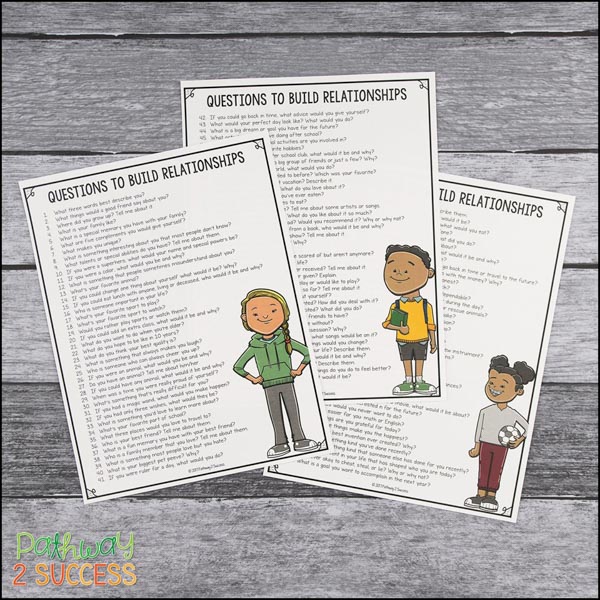
The essential starting point for building effective conflict resolution skills in any educational setting is establishing a strong foundation of relationships. Navigating interpersonal problems is inherently challenging, requiring continuous effort and patience from individuals of all ages. Consequently, it is critical for young adults to feel genuinely connected to their peers and teachers. When students experience a sense of belonging and community, the psychological safety of the classroom makes the difficult work of resolving disputes much more manageable. Educators often utilize daily group conversations and targeted relationship-building questions to open the door to meaningful discussions, helping students find common ground before conflicts ever arise.
Explicitly Teach Conflict Resolution Strategies
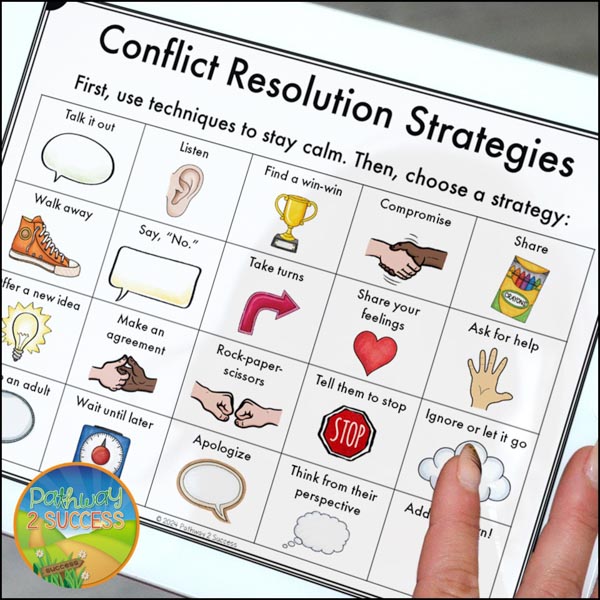
Teaching conflict resolution skills from the very beginning of the school year requires a proactive stance rather than a reactive one. This approach equips children and teens with the necessary mental framework to address problems before emotions escalate. A vital part of this educational process is helping students understand that conflict, in and of itself, is not inherently negative. Moderate disagreements are a natural part of human interaction; they help individuals communicate, articulate their personal needs, work collaboratively, and ultimately get their needs met in social environments.
Furthermore, educators emphasize that different situations call for different approaches. For instance, if two classmates have a difference of opinion regarding how to solve an academic problem, the appropriate strategy involves open dialogue and active listening so both parties can share their perspectives. Conversely, if a student feels pressured by a peer to share answers on an independent assignment, a completely different tactic is required. In that scenario, the student must learn to advocate for themselves by asserting a firm boundary. Finding the right approach for each unique situation requires guidance, discussion, and continuous practice within a supportive classroom environment.
Practice Active Listening
Active listening serves as a cornerstone of successful conflict resolution, defined as the intentional process of genuinely hearing, processing, and trying to understand another person’s perspective. For middle and high school students, this skill does not always come naturally, making dedicated practice essential. Educators can seamlessly integrate active listening exercises into existing academic curricula and content areas. By encouraging students to summarize their peers’ arguments before responding, teachers foster an environment where empathy and comprehension take precedence over immediate rebuttal and defensiveness.
Practice Calming Strategies
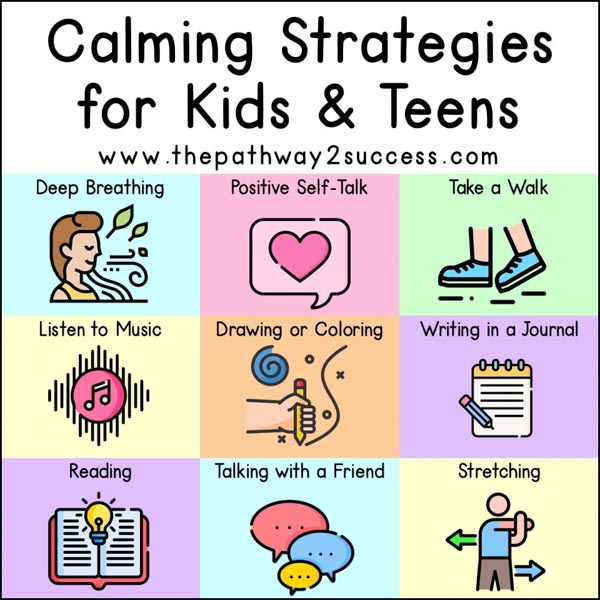
Effective conflict resolution is deeply rooted in neurobiology. To manage disputes productively, individuals must first achieve a state of emotional and physiological calm. When a student feels overwhelmed, threatened, or intensely upset, a primitive region of the brain known as the amygdala takes control. This triggers the classic fight, flight, or freeze response, which inherently promotes impulsive and reactive behaviors. In contrast, when a person is calm and relaxed, the prefrontal cortex—the area of the brain responsible for higher-level planning, impulse control, and rational decision-making—remains in charge.
Because adolescents and teenagers possess developing brains, they frequently require extra support and external scaffolding to activate their internal calm during moments of acute stress. Educators help students build this capacity by regularly practicing calming techniques such as deep breathing exercises, positive self-talk, brief peer consultations, and journaling. Incorporating these strategies as routine brain breaks between demanding academic tasks helps students build emotional regulation over time, ensuring they can access these vital coping mechanisms when high-stakes conflicts inevitably arise.
Discuss Conflict Scenarios
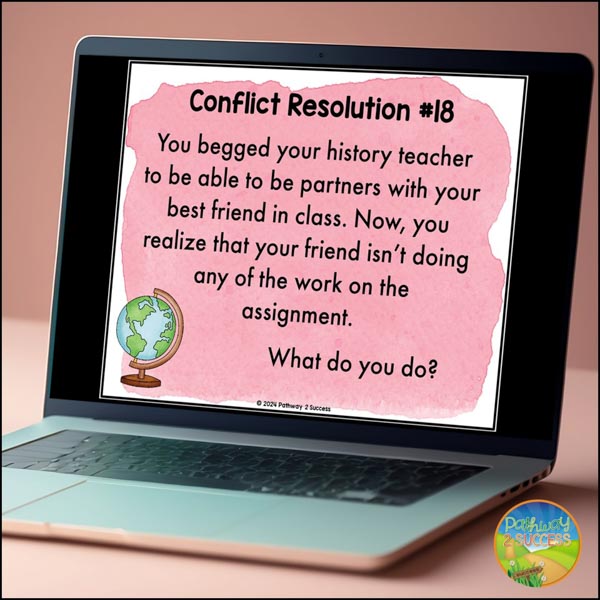
Utilizing structured conflict scenarios offers adolescents a safe, low-stakes environment to practice real-world problem-solving. The methodology involves presenting a hypothetical or past real-life situation, analyzing the underlying problem, and brainstorming a variety of healthy strategies to resolve the tension. Because most complex interpersonal conflicts have multiple viable solutions, reviewing scenarios encourages lively classroom discussions about the potential consequences of different choices and actions.
Hold Class Meetings
Regularly scheduled class meetings provide another valuable mechanism for strengthening conflict resolution competencies. These gatherings offer a semi-structured forum where students and teachers can collectively address classroom dynamics, troubleshoot ongoing social challenges, brainstorm alternative strategies, and participate in choosing peaceful solutions that benefit the entire community.
Encourage Self-Advocacy
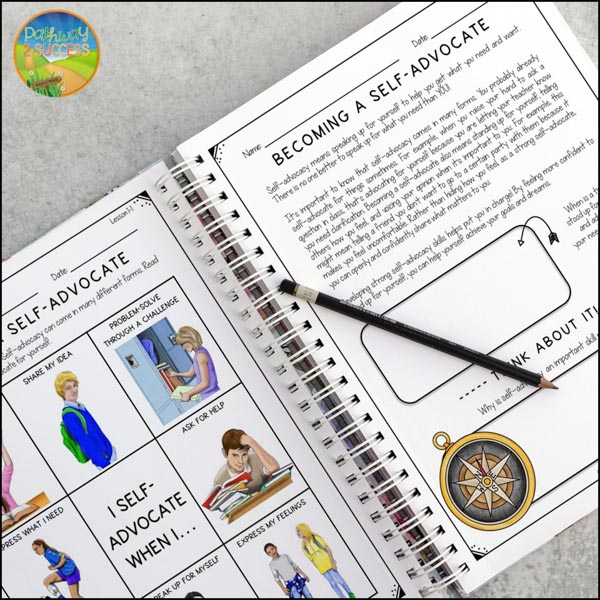
Self-advocacy and conflict resolution are deeply intertwined developmental milestones. As teens navigate the complexities of peer relationships, they must possess reliable methods to articulate and defend their own boundaries and needs. Self-advocacy might manifest as politely asking an instructor for clarification when an academic concept is unclear, or standing firm and saying no when pressured into an uncomfortable social situation. Teaching these self-advocacy behaviors helps students transition toward greater independence and personal responsibility.
Integrate Group Work Activities
Purposely incorporating collaborative group work into the weekly schedule provides students with authentic opportunities to apply their conflict resolution skills in real time. Before dividing students into teams, educators often review key communication and problem-solving strategies, reminding learners of constructive ways to handle disagreements before diving into shared tasks.
Practice Disagreeing Respectfully
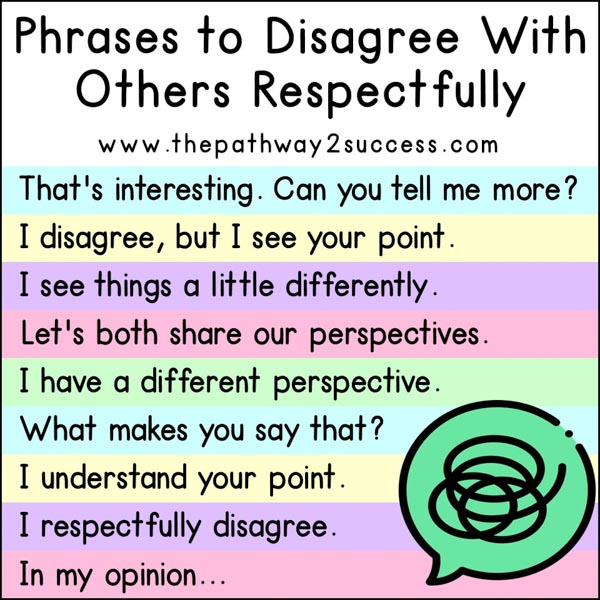
Disagreements are an unavoidable facet of daily life, whether people are debating artistic preferences, musical tastes, or the best methodology for tackling a shared assignment. Helping students learn how to voice opposing views without resorting to hostility or disrespect is a vital educational duty. Equipping learners with polite, assertive conversational phrases allows them to express divergence of thought while preserving the dignity of their peers. Engaging with high-interest, non-threatening topics—such as discussing favorite genres of music, historical inventions, or ideal travel destinations—gives students a fun, engaging platform to practice these respectful disagreement skills.
Use Visual Reminders
To ensure conflict resolution strategies remain at the forefront of students’ minds, many classrooms utilize visual reminders, such as dedicated posters and interactive bulletin boards. These visual anchors serve as constant, passive prompts for students to reflect on peaceful problem-solving options as they move through their daily routines.
Give Daily Reflection Time
Incorporating brief reflection periods into the final minutes of the school day allows students to look back on their interactions, evaluate what approaches worked well, identify areas for personal growth, and take accountability for their own actions. This routine promotes self-awareness and personal responsibility, rounding out a comprehensive approach to classroom conflict management.
Ultimately, addressing conflict in middle and high schools is not about eliminating disagreements entirely. Through deliberate instruction, supportive structures, and continuous practice, educators can guide young adults toward managing inevitable conflicts in the healthiest and most constructive ways possible.



