

Purchasing a medical alert system is widely recognized as a direct investment in personal safety and aging in place, but navigating the various payment options often requires precise and up-to-date information. Many seniors and their family caregivers naturally assume that federal healthcare programs will automatically foot the bill for personal emergency response systems, commonly known as PERS. However, the reality of healthcare coverage in the United States remains heavily fragmented.
For families researching how to pay for medical alert systems, coverage depends entirely on a series of specific variables, including an individual’s specific health insurance plan, their state of residence, and their veteran status. While the marketplace for safety technology has expanded significantly, public and private health programs have been slow to uniformly adopt these devices into their standard reimbursement frameworks.
Examining what government entities and private insurance companies cover reveals a complex patchwork of policies. Original Medicare, which encompasses Parts A and B, offers no financial coverage for personal emergency response systems. The Centers for Medicare & Medicaid Services do not classify these monitoring devices as durable medical equipment. Because federal guidelines do not deem them strictly medically necessary under traditional policies, beneficiaries must pay entirely out of pocket if Original Medicare is their sole form of health coverage.
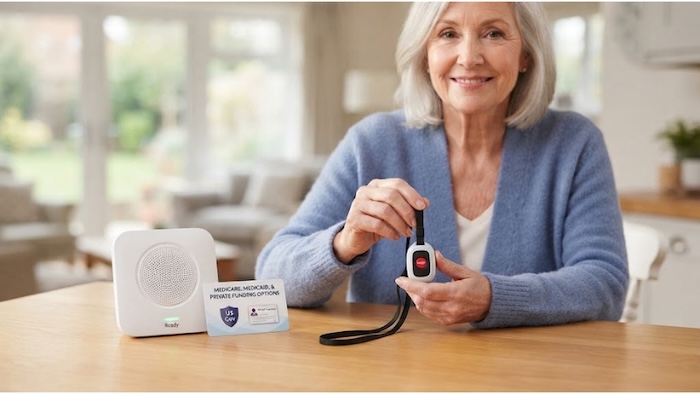
The financial landscape shifts somewhat when examining Medicare Advantage plans, often referred to as Part C. Because private insurance companies administer these alternative plans, they possess the flexibility to offer supplemental health benefits that go beyond standard Medicare parameters. Some Medicare Advantage providers cover partial or complete costs for medical alert systems as a preventive measure designed to reduce costly hospital readmissions following falls or sudden medical episodes. Seniors enrolled in these plans must review their specific summary of benefits documents or contact their insurance providers directly to confirm whether a chosen device qualifies for supplemental reimbursement.
State-administered Medicaid programs offer a more robust avenue for coverage, though qualification remains highly conditional. Under Medicaid’s Home and Community-Based Services waivers, commonly known as HCBS waivers, numerous states absorb the cost of medical alert systems. These initiatives are deliberately structured to help older adults age safely in their own homes rather than forcing a transition into a costly nursing facility.
Because Medicaid is administered locally at the state level, coverage rules fluctuate dramatically depending on geography. Seniors or their advocates must apply for specific waiver programs available within their home states. When an individual is approved under an HCBS waiver, Medicaid typically pays the monthly monitoring fee directly to the equipment vendor. At the same time, these state programs frequently restrict beneficiaries to a pre-approved list of equipment brands and service providers.
Veterans face arguably the most direct and reliable path toward full financial coverage. The Department of Veterans Affairs provides medical alert systems to eligible veterans at zero out-of-pocket cost. Rather than purchasing a system independently and seeking reimbursement later, a qualifying veteran must request a formal medical consult with their VA primary care provider.

If the treating provider determines that a personal emergency response system is clinically necessary for the veteran’s safety, the VA orders the equipment directly through an approved commercial vendor. Under this arrangement, the federal government covers both the physical hardware and the ongoing monthly monitoring fees without placing a financial burden on the veteran or their family.
When government assistance programs are unavailable or denied, families often turn to alternative funding methods to reduce out-of-pocket expenses. Flexible Spending Accounts and Health Savings Accounts can occasionally be used to purchase health-related safety technology, depending on the specific rules governing an employer-sponsored plan or the presentation of a formal letter of medical necessity from a physician. Additionally, local community organizations and Area Agencies on Aging frequently provide resource guidance or localized grant programs designed to assist older adults with safety equipment purchases.
The emotional and physical toll of caregiving is often compounded by the bureaucratic hurdles of dealing with insurance providers. Healthcare advocates emphasize the importance of researching coverage options long before a physical crisis or a severe fall occurs. Proactive planning allows families to contact insurance representatives well in advance, clarifying whether modern mobile or in-home medical alert systems qualify under specific supplemental policies or state-level waivers.
For many older adults, a reliable medical alert system serves as an essential requirement for maintaining independence and aging safely at home. Industry experts note that the monthly cost of monitoring services remains negligible when weighed against the devastating physical, emotional, and financial toll of an undetected medical emergency or delayed response time.

As the population ages and healthcare technology continues to evolve, the demand for accessible safety infrastructure remains high. While federal and state programs slowly adapt to the needs of seniors aging in place, understanding the nuances of Medicare Advantage, Medicaid waivers, and VA benefits remains an essential step for caregivers seeking to protect their loved ones without straining their personal finances.



